‘How NIMASA Addressing Maritime Insecurity, Other Challenges In Two Years’
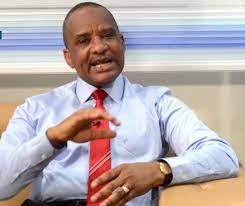
Despite the negative impacts of COVID 19 on major drivers of the wealth of countries, and the global economy at large, the Nigerian Maritime Administration and Safety Agency (NIMASA) has rather recorded positive results two years after odds of the pandemic, and how the agency has addressed major industry challenges while enhancing maritime safety, security and shipping development in the country under Dr Bashir Jamoh-led NIMASA in two years. Excerpts:
As industries, sectors, agencies and other economic drivers across the world negatively impacted by the COVID-19 in the last two years, so is with the Nigerian maritime sector as the challenges associated with the pandemic proved to test the character of its managers.
In fact, President Muhammadu Buhari appointed new leadership at NIMASA in March 2020, and the Dr Bashir Jamoh led team had barely taken over the mantle of leadership when the World Health Organization declared COVID-19 a global pandemic. And virtually all the countries across the world went into lockdown. In fact, the new leadership at NIMASA was less than two weeks in office when the Presidential task force declared a total lockdown in Nigeria.
However, a technocrat in the person of Dr Jamoh with about three decades of experience to steer the affairs at NIMASA, perhaps explained why the NIMASA Management was able to hit the ground running with a clear vision of enhancing maritime safety, security and shipping development in the country.
Jamoh Strategies
After taking over the office from his predecessor, Dakuku Peterside, Dr Jamoh announced that his administration has hit the ground running with a tripod mapping framework he dubbed, 3-S, namely Maritime Security, Maritime Safety and Shipping Development, essentially designed to rejig the maritime sector and redirect its primary aims and objectives to gain traction, while not neglecting its revenue making components.
Critically, looking at the implantation of the tripod mapping framework, the agency has been able to record a lot of successes both in the Maritime space and outside, under the leadership of Dr Bashir Jamoh.
Addressing Maritime Insecurity in Nigeria and the Gulf of Guinea
Discharging its core of maritime safety mandate, the Agency continues to improve its port and flag state functions, as the performance of the Agency in the last four years showed that a total port state inspection in 2019 stood at 726 vessels of the 5,035 vessels calls which represent 10per cent improvement from the preceding year and 14.42 per cent of the of total ship call.
Although, this is however short of the 15 per cent requirement under IMO by 0.8per cent of which it is working hard to surpass, however, the total port state inspections in 2020 was 510 of 4,728 vessel calls. (COVID-19 lockdown impacted negatively on the Port State Inspections).
In 2019, the Agency performed a total of 2,580 flag state inspections representing 2,123 renewal inspections, 276 condition surveys and 181 Random Flag State Surveys. This showed a 49 per cent increase from the 1,737 Total Flag State Inspections carried out in 2018 comprising 1,241 Flag State Renewal Inspections, 381 Condition Surveys and 115 Random Flag State Surveys. However, the decrease in 2020 is attributed to the impact of the COVID-19 Pandemic.
The agency in 2021 deployed the most modern technology using the instrumentality of the Deep Blue Project to implement the first S of the tripod, which is security, to stem the tide of piracy and other forms of criminality in the country’s waterways.
The objective is to keep the waterways secure for all maritime activities to thrive, thereby positioning Nigeria’s economy on the path of rapid growth.
Passage of the Suppression of Piracy and other Maritime Offences Bill Establishment of integrated national maritime surveillance and security infrastructure International Ship and Port Facility Security (Code) Implementation: The implementation of the International Ship and Port Facility Security (ISPS) Code has steadily impacted the level of security in the nation’s port areas and facilities.
“On maritime security, in 2019 The Suppression of Piracy and other Maritime Offences (SPOMO) Act came into law. This Act provides the legal teeth for the war against piracy in the Nigerian maritime environment. “The further zeal to keep our maritime space secured, promote socio-economic development and leaving no stone unturned, led to the launch of the Integrated National Security and Waterways Protection Infrastructure popularly referred to as the Deep Blue Project.
“On Maritime Safety, the Vessels calling on Nigerian ports are regularly inspected and the applicable international Conventions standards are implemented. Similarly, we have improved the standards of examination and certification of seafarers and declared war against forgery of certificates bearing in mind that maritime safety is only achievable where you have a competent crew.
“Furthermore, the Agency is set to remove wrecks in our waters as arrangements have been concluded for wrecks and derelicts recovered to be recycled in partnership with Bayelsa State Government and the Nigerian Railway Corporation.
“We are also concerned about the prevention of maritime pollution and the protection of the sea, fishing resources and sea mammals, some of which are on the endangered species list. The Agency is raising safety standards on Nigerian waters in line with IMO regulations and is intensifying efforts in achieving a pollution-free marine environment.
Meanwhile, the Agency has spearheaded the institutionalisation of the collaboration between her and other frontline maritime agencies for improved maritime safety and security and efficient port operations.
Marine Pollution Prevention and Control
The Agency disclosed that Nigeria signed a Memorandum of understanding(MoU) with the Maritime Transport Coordination Centre (MTCC) on Climate Change for Africa, to commence activities towards ensuring GHG emission reduction in the maritime sector with an emphasis on achieving 0.5 per cent Sulphur Oxide (SO2) in Bunker fuel oil.
With the MoU, NIMASA has taken on the following responsibility; Awareness creation; Establishment of bunker (fuel oil) supply register; Accreditation of laboratories for testing bunker oil; Capacity building on the emission of reduction; and Establishment of Compliance monitoring and Enforcement Team (CMET).
It also announced that it had produced a manual for the admissibility of claims under the IOPC fund. The manual is to contain the price index for determining the magnitude of claims for settlement in case of oil pollution.
Resuscitation of GMDSS Equipment, Indigenous Shipping Capacity Development
NIMASA is currently engaging international stakeholders, including BIMCO, INTERTANKO, INTERCARGO, International Chamber of Shipping (ICS) and Oil Companies International Maritime Forum-OCIMF, under the auspices of NIMASA/Industry Maritime Security Work Group (NIWG) to entrench coordinated response to piracy attacks
In the process of reducing the cost of ship repairs and maintenance, NIMASA procured the fifth-largest Modular Floating Dockyard in Africa.
It stated that the milestone achievement was made possible under the Cabotage Vessel Financing Fund (CVFF), designed to provide financial assistance to Nigerian Operators in domestic coastal shipping to own vessels and enhance their competitiveness.
NIMASA disclosed it was still engaging with the Ministries, Departments and Agencies (MDAs) to entrench appropriate fiscal and monetary policy initiatives to pave way for the competitive participation of indigenous operators in shipping activities in Nigeria.
Its engagements are seeking to achieve the following and more; A push for the change in terms of trade from FOB to CIF for the affreightment of crude oil (NNPC); Single-digit interest rate for the maritime sector (CBN/NEXIM BANK/AFRIEXIM); Concessional foreign exchange rate for ship acquisition (CBN); Engagement with Office of the Vice President/Economic Management Team, while it continued engagement with state governments to buy into its cargo support initiative aimed at creating cargo pool for affreightment by indigenous operators.
Other initiatives NIMASA is undertaking for the development of indigenous capacity in shipping include repositioning of the Nigerian Ship Registration Office (NSRO), for ship tonnage growth, even as the records show that the Nigerian Ship Registration Office recorded 13.8 per cent tonnage growth from 2018 to 2019. The trajectory of growth was negatively impacted by the global COVID-19 pandemic.
Examination and Certification
To reduce certificate forgery and enhance employment of Nigerian seafarers in the maritime industry, NIMASA reactivated the Online Seafarers Certificate of Competency (CoC) Verification Platform.
The Agency records show that in 2021, a total of 829 officers sat for examinations; while 264 of them passed and received their certificates, 565 of them failed and 246 certificates were revalidated. In 2020 however, 610 officers took examinations and only 251 passed and received certification, while 359 of them failed. For 2020, only 132 certificates were revalidated.
For the Ratings who took the examinations in 2021, 926 (74%) of the 1,251 candidates passed and received their certificates, while only 325 (26%) of them failed. There was no difference in the percentage passed and failed in the 2020 examinations for the Ratings as 990 (74%) of the 1,327 candidates who sat for the examinations passed and were certified, while 337(26%) of them failed.
Of significant mention is the Agency’s enforcement of safety regulations on barges and tug boats (Operation Sting Ray), ISO 9001 Quality Assurance Certification for the operation of the Maritime Safety Department Approval of ISO 9001:2015 Quality Management System for the Maritime Safety and Seafarers Standard Department by Bureau Veritas (BV) in April 2020, Revival of the Global Maritime Distress and Safety System (GMDSS) equipment – Necessary for sending an alert in an emergency. The GMDSS is to ensure the safety of life at sea.
Human Capacity Development
The Agency remodelled and commissioned the NIMASA Knowledge Centre E-Library, which is open to staff, students/researchers and external stakeholders/maritime operators to increase the knowledge base of the Nigerian Maritime Sector. While making the statutory financial contribution to the Maritime Academy of Nigeria, Oron, it is also undertaking the Nigerian Seafarers Development Programme (NSDP), under which it has trained over 2600 Nigerian seafarers in various maritime institutions in the UK, Egypt, Philippines and Malaysia. Recently, the Agency secured the placement of over 400 cadets on board ships for the mandatory SEA-TIME training to make them globally competitive and employable.
A significant aspect of its human capacity development initiative is the staff sponsorship on long-term training abroad to build internal capacities in various aspects of the maritime industry, at the prestigious World Maritime University.
Special Intervention: Covid-19 Response And CSR
The Executive Management of NIMASA recognised the significant impact of the Corona Virus (COVID-19) Pandemic on the transport sector in particular and the global socio-economic activities in general, hence, set up a multi-disciplinary committee within the Agency to provide an informed risk assessment with appropriate responses.
A major intervention of the Agency in ensuring the continued flow of trade was the declaration of Seafarers as KEY WORKERS to facilitate vital crew changes and excuse duty. Nigeria was among the first maritime nations to declare such and was commended by the IMO.
The Agency donated 30 Million Naira to the Federal Government Committee on COVID-19 Intervention; it donated 20 Million Naira cash to the Lagos State COVID-19 Intervention Task Force, Provided human capital/personnel support, making available medical personnel, drivers, logistics officers as well as deployment of the Agency’s fire brigade trucks to fumigate Apapa and environs.
Similarly, the Agency presented relief items to victims of flood disasters across the nation. Also, internally displaced persons as a result of the insurgency were not left out of Agency’s Corporate Social Responsibility. The Agency made such provisions to 20 states across the six geo-political zones of the country.
Commendations, Awards and Recognition
The IMO in December 2020 applauded NIMASA’s efforts in the fight against piracy in the Gulf of Guinea Region.
The Specialised Organ of the United Nation had earlier supported NIMASA’s action declaring Seafarers as key workers to facilitate crew changes during the COVID-19 induced international lockdown.
Recently, the IMO gave institutional backing to NIMASA’s Marine Litter Action Plan. These and many more are evident of the Agency’s collaboration with the IMO.
In recognition of his giant strides, Dr Bashir Jamoh has been named Public Service Personality of The Year, 2021 by Top 10 Magazine.
Making the announcement, the publisher Top 10 Magazine, Tony Iji, said the choice of Dr Jamoh as the Public Service Personality of the Year was in recognition of his achievements in NIMASA within a short time.Also, Dr Bashir Jamoh has received the prestigious Zik Leadership Prize in Public Policy for 2020.
The organisers of the award, the Public Policy Research and Analysis Centre (PPRAC), said Jamoh was honoured for his giant strides in repositioning the agency with initiatives that had inspired positive change in the maritime sector.
About The Author