‘How Emefiele has been sustaining Nigeria’s economy through interventions, currency stabilization’
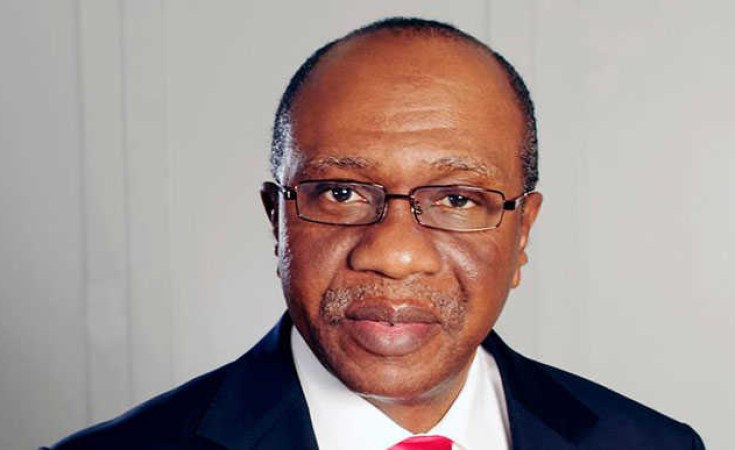
Godwin Emefiele CBN Governor
The Central Bank of Nigeria (CBN) under the leadership of Godwin Emefeile has been sustaining the nation’s economy through monetary policies and various bank interventions, which have been able to keep the economy afloat. As part of its efforts being apex regulator of the economy, the central bank has been rolling policies and interventions to help keep the country’s currency stable, while improving the nation’s economic growth.
In addition to its core functions, CBN has over the years performed some major developmental functions, focused on all the key sectors of the Nigerian economy.
For instance, industry stakeholders and experts at the just concluded seminar for finance journalists spoke on how the apex regulator has been ensuring stability in the financial industry, as well as proffering strategies on how its different policies can strengthen the Naira.
Specifically, the Central Bank Governor, Mr Godwin Emefiele, explained that the bank has implemented measures to cushion the impact of the drop in the supply of foreign exchange on the economy.
He, therefore, listed some of these measures to include, the introduction of demand management approaches to conserve the reserves and support the domestic production of certain goods; the encouragement of manufacturers to consider local options in sourcing raw materials by restricting access to FX on some items.
Additionally, Emefiele said the CBN also established an Investors and Exporters Window (I&E), to allow for the purchase and sale of Forex at the prevailing market rate.
He said, “As a result of our demand management policy, the naira has remained largely stable at the I & E window, particularly since the discontinuation of FX allocation to Bureau De Change operators along with the convergence between the CBN and NAFEX rates.
“Banks are now able to meet the demands of their customers seeking forex for SMEs, school fees, medical and PTAs. Our current account deficit has narrowed significantly due to a surplus position in the goods account.
“The surplus position in the goods account is occasioned by a reduction in imports, increase in crude oil and gas export receipts and improvement in remittances. Remittance inflows have been supported by our ‘Naira for Dollar’ scheme, and we have seen a surge in remittance inflows.”
The Governor said the initiative of the CBN tagged “PAVE’ an acronym for Produce, Add Value and Export, is expected to make Nigerians consume what they produce, add value to it, and even export the surplus.
“It is an initiative akin to South-East Asia’s much referenced export-led industrialization policy which changed the economic fortunes of countries such as South Korea, Taiwan, Malaysia and Singapore.
“PAVE is designed to be the key for fast-tracking a bucket of substitutes to Crude oil export. It encourages backward integration for the local production of select items,” he added.
Interventions
In the area of interventions, Mr Emefiele stated that the various interventions by the apex bank have helped to keep the economy afloat
The apex bank, which had in the last three years lifted the nation’s currency with about $89million, noted that, as a result of the bank’s demand management policy, “the Naira has remained largely stable at the I & E window, particularly since the discontinuation of FX allocation to Bureau De Change operators along with the convergence between the CBN and NAFEX rates.”
He said banks are now able to meet the demands of their customers seeking forex for SMEs, school fees, medical and PTAs.
The apex bank governor also disclosed that remittance inflows have been supported by the bank’s ‘Naira for Dollar’ scheme, adding that, it has also resulted in a surge in remittance inflows. In its effort to reduce foreign exchange demand pressure and facilitate investment, he said, the CBN, on April 27, 2018, signed a 3-year bilateral currency swap agreement of $2.5 billion, equivalent to ¥15.0 billion or N720 billion with the Peoples Bank of China (PBoC.)
“It is heartening to note that these policies are yielding positive results in terms of meeting genuine demand for foreign exchange and exchange rate stability,” he stated.
Whilst stating that the Covid-19 pandemic had impacted economies, and disrupted business activities globally, Emefiele who w represented by the deputy governor, Corporate Services, Adamu Lamtek, said Nigeria, like most commodity-dependent countries, was not spared the deleterious impact of the pandemic, given our dependence on crude oil export as a major source of revenue and foreign exchange.
“PAVE is expected to make Nigerians consume what they produce, add value to it, and even export the surplus. It is to mitigate against future severe consequences of shocks beyond our control that we must all join hands to ensure the success of PAVE. It is a clarion call to patriotism.
“It is an initiative akin to South-East Asia’s much referenced export-led industrialization policy which changed the economic fortunes of countries such as South Korea, Taiwan, Malaysia and Singapore. PAVE is designed to be the key for fast-tracking a bucket of substitutes to Crude oil export. It encourages backward integration for the local production of select items
“Despite the headwinds associated with the pandemic, the Central Bank has worked very hard to ensure that Nigeria remains a vibrant economy with a diversified mix of opportunities across sectors such as ICT, Manufacturing, Solid Minerals, Trade and Agriculture. Notwithstanding these modest achievements, we cannot afford to rest on our oars as the work is far from over.
“I am mindful that our goals may appear ambitious to some, but I am resolute and determined that we can achieve it. Only recently, in consultation with the Banking Community, the CBN announced the Bankers’ Committee ‘RT200 FX Programme’, which stands for the ‘Race to $200 billion in forex Repatriation’.
“The RT200 FX Programme is a set of policies, plans and programmes for non-oil exports that will enable us to attain our lofty yet attainable goal of $200 billion in forex repatriation, exclusively from non-oil exports, over the next three to five years.”
Meanwhile, the Central Bank of Nigeria(CBN) has, in the last three years, supported the nation’s currency(Naira) with about $89million.
According to data sourced from the CBN, the apex bank’s intervention in the first quarter of 2019 was $10.6 million, while the intervention was $7.3million in Q2 even as $10 million was injected into the forex system in the third quarter of 2019 and $10.4 million in Q4 2019.In the first quarter of 2020, however, $13.7 million was injected in Q1, 2020; $4.9 million in Q2, 2020; $4.3 million in Q3 and $5.6 million in Q4 2020.
In the first quarter of 2021, the banking regulatory body defended the Naira with $5.2 million, intervened with $6 million in Q2, 2021; $5.3 million in Q3, 2021 and $5.1 million in Q4, 2021.
According to him “Being a developing economy, our approach to monetary policy must incorporate context. We do this by innovating around the use of available instruments. We understand that monetary policy must coordinate well with fiscal policy towards addressing the numerous developmental challenges our nation faces. Fortunately, the enabling statute envisages this and empowers us to intervene where and when necessary.”
“Under my watch, the bank has done this through various development finance initiatives. And with the benefit of hindsight now, we can safely say that the outcomes have so far justified our approach.
“Let me also remind us of the commitment I made while unveiling my vision for the CBN. It is on record that I had pledged to build a Central Bank that is professional, apolitical and people-focused.
“My mission was and still is, to bequeath a Central Bank that focuses on building a resilient financial system that can serve the growth and development needs of our beloved country, Nigeria.
“For us, the CBN was to act as a financial catalyst by targeting strategic sectors that could create jobs on a mass scale and reduce the country’s import bills.
“To solve the immediate and long-term economic challenges of the country, we needed to create an enabling environment with appropriate incentives to empower innovative entrepreneurs to drive growth and development.”
He argued that the IMF will agree that the over N300billion disbursed to over one million homes helped to catalyse consumption expenditure that has helped Nigeria to return positive in GDP even though GDP is still fragile.
“IMF knows that even our intervention to manufacturing is helping and we have facts to show so,” he added.
In his presentation at the seminar, Obadan said Nigerians should start reducing their huge appetite for importation as this is increasingly pushing pressure on the naira.
He said Nigerians import what the country has a comparative advantage in producing, such action is affecting businesses and the economy negatively.
To improve foreign exchange earnings and achieve exchange rate stability, Obadan said there is a need to target the management of the demand and supply side of the foreign exchange equation.
Particularly, he called for the revival and rebuilding of the productive sectors of the economy to achieve higher capacity utilisation and competitive manufactured exports.
He also said there is a need to vigorously implement the development finance interventions of the Central Bank targeted at increasing non-oil export earnings such as the RT200 FX Programme, 100 for 100 Policy on Production and Productivity, Export Development Fund, and Non-oil Export Stimulation Facility among others.
He advocated strong government encouragement of local refining of petroleum products for both domestic consumption and exports as well as reducing foreign exchange demand to import refined petroleum products.
The MPC Member also called for strong and effective surveillance of the foreign exchange market by the monetary authority to check round-tripping of foreign exchange from the Deposit Money Banks to the parallel market as well as increase the sourcing of local raw materials and revival of the capital goods industry.
According to him, the promotion of fiscal and monetary discipline and harmony is vital as it will check excessive official demand for foreign exchange.
Obadan also called for the creation of an enabling environment for productive capital inflows, especially foreign direct investment as well as actively promoting restoration of confidence in the economy to check capital flight.
He said, “Let’s rationalise imports structure to manage demand for foreign exchange. As may be permitted by supply considerations, use the stock of external reserves to support the exchange rate through increased funding of the foreign exchange market.
“Use moral suasion to encourage Nigerians to patronize homemade goods and reduce their high propensity for the importation of all kinds of goods and services.
“Import only when it is necessary. They should also eschew unhealthy speculation in foreign exchange as well as rent-seeking behaviour and adopt positive attitudes towards ensuring a stable exchange rate for the naira.”
In his submissions at the event, Fasua said the government needs to come up with productive policies to strengthen the value of the naira.
“The problem lies in economic complexities. We need to move beyond mere primary products to adding value. Our biggest imports are technology and then PMS,” he added.
In his comment, Chukwu said without the right human capital, Nigeria cannot become a productive economy.
He said, “We need an education system that will develop the competence of those that will make up the productive sector of the. We must develop our agricultural capacity to enable us to have a comparative advantage. We need supporting infrastructure to boost production capacity.
“If we don’t have the right human capital, our population will not be productive and you won’t be able to attract the right type of investments to boost production. To fix the country, we must have the right human capital with supporting infrastructure.”
About The Author