Germany Deploys $4.37bn for African Green Energy Projects
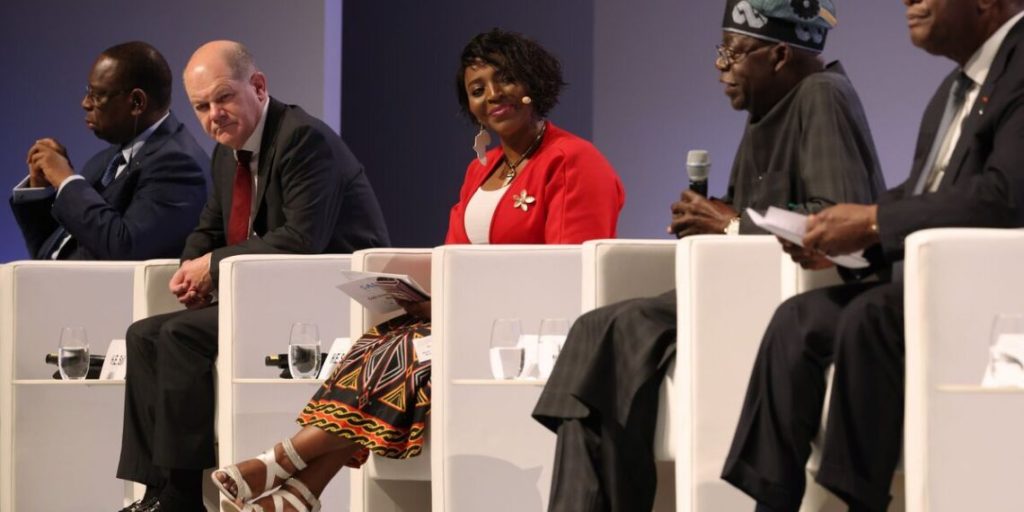
The Government of German is planning to invest 4 billion euros ($4.37 billion) in African green energy projects until 2030.
This, according to Chancellor, Olaf Scholz, is to help countries in Africa benefit more from their wealth of raw materials.
Scholz discussed the pledge at a news conference on the G20 Compact with Africa summit taking place in Berlin, but did not mention any specific projects but said the materials used in green energy should be processed in the African nations they come from.
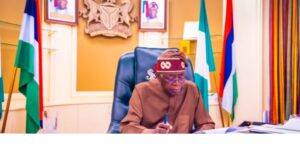
Meanwhile, President Bola Tinubu separately met with Olaf Scholz on the sidelines of the G20 Compact with Africa Economic Conference on Monday, noting that Nigeria’s determined pursuit of German investment in targeted sectors of the Nigerian economy was focused on critical growth-enabling industries in energy, transportation, and electric power production, transmission, and distribution.
This was revealed on Monday in a statement signed by Chief Ajuri Ngelale, Special Adviser to the President on Media and Publicit.
Acknowledging Siemens AG’s success in positively transforming the quantity and quality of Egyptian electric power supply, Tinubu stated that the staggered and unsteady implementation of the Siemens-supported Presidential Power Initiative (PPI) would take on new urgency with a more deliberate process of project execution, even as he recognized the need to embrace Siemens technology in all aspects of the project for project sustainability.
“For me, I am very committed to pursuing all aspects of the Siemens Power project and the skill development opportunities that will emerge from that project for our talented youths who can participate in sustaining the industry,” Tinubu affirmed.
The President expressed his keen interest in the role Siemens can play in modernizing and expanding Nigeria’s rail network by providing ultra-modern trains and railways that can more than double the speed of existing 100 km/hour standard-gauge systems currently operating in Nigeria.
Responding to Tinubu’s remarks, the German Chancellor declared preparedness, but with an acknowledgement of the necessity to overcome administrative and budgetary barriers caused by governance issues arising from previous administrations in the industry.
“I know that there is a lot of work that has been done. There is already a lot of electricity production in Nigeria, but it is not reaching the population. Of course, this has to do with the need for the provision of stations and infrastructure on the grid. Siemens has developed the plan and is ready to deepen implementation, but it is now up to your new government to take the follow-up action that you are now committed to taking.
“On the railway plans, Siemens will be very happy to do this when more progress is made on the power project, which has already started,” the German Chancellor said. The Nigerian President brought the German leader’s attention to the importance of his business community focusing on value-added processing in Nigerian solid minerals, agricultural goods, the automobile industry, and other job-creating areas of the economy.
“Everything the world requires in terms of business environment reforms are underway in Nigeria. Perhaps our foreign investors are still a bit paranoid that those old Nigerian issues are intractable. But my track record speaks for itself. I have transformed an entity before now. I am here to do it again, and I will,” the president stated.
The German Chancellor nodded in affirmation and stated that, “There is nothing too unique about the growth of China. It came down to a lot of investment from overseas that leveraged cheap and skilled labor with adequate internal infrastructure and shipping infrastructure for imports and exports to flow easily. These things are possible in Nigeria. You even have abundant natural resources. Step by step, it is achievable, Mr. President.”
The leaders of Africa’s and Europe’s largest economies agreed to expand collaboration on the use of advanced biometric systems and border control technology to combat irregular migration, even as they agreed that investments in labor-intensive industries will go a long way toward addressing the root causes of the problem.
Tinubu later met with Frank-Walter Steinmeier, the German Head of State and Federal President, before attending the Compact with Africa Summit of Heads of State and Government.
On German Government intervention in Africa, the Chancellor said: ‘This creates jobs and prosperity in these countries. And the German industry gets reliable suppliers.’
Compact with Africa is based on an initiative launched by Germany during its chairmanship of the Group of 20 leading rich and developing nations. It aims to improve the economic conditions in the participating countries in order to make them more attractive for foreign private investment.
Scholz said, Germany should become a long-term and reliable partner to countries in Africa.
Africa is our partner of choice when it comes to intensifying our economic relations and moving toward a climate-neutral future together, he said.
About The Author