Dangote Cement to Tackle Africa’s Waste Climate Change Issue
Group managing director of Dangote Cement Plc, Mr. Arvind Pathak said, the cement giant is leading the campaign for save the environment through sustainable production of cement with the utilisation of Alternative Fuels (AF).
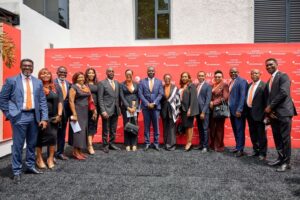
Pathak stated this at the 12th Africa Cement Trade Summit in Abidjan, Cote d’Ivoire.
Pathak said cement production is an energy-intensive process which consumes thermal energy of about 3.3GJ/tonne of clinker produced, and its electrical energy consumption is in the region of about 90 – 120kWh /tonne of cement.
He noted that decarbonisation is no longer an option but a necessity, with the use of alternative fuels, such as municipal, agricultural, and industrial wastes, in the place of fossil fuels, which have been effective in emissions reduction.
Pathak was delivering a paper titled ‘Utilisation of Alternative Fuels as a Strategy for Sustainable Cement production in Africa’ at the Summit organised by the Singapore-based Center for Management. The summit has in attendance cement companies’ chief executives, Cement Industry Service Providers and other critical sector stakeholders from across the world.
According to the Dangote Cement chief executive, who was represented by the Group’s head of Sustainability, Dr. Igazeuma Okoroba, Alternative Fuel as opposed to fossil fuels emit less CO2 when combusted and that agricultural biomass are known to be carbon neutral.
He noted that with the level of cement consumption worldwide reaching 4.2 billion tonnes in 2020 and as population is projected to grow by 12‑23 per cent in 2050 due to rapid urbanisation, the demand for cement will also grow, therefore the need to prioritise the inclusion of alternative fuels in fuel mix is crucial to address climate change concerns.
He said the cement industry, which provides a vital material to meet Africa’s infrastructure deficit, generates seven per cent of the world’s CO2 emissions as the cement value chain involves the intensive use of energy for raw materials’ mining, crushing, mixing, drying, firing, clinker grinding, packaging and dispatch to customers.
This, he posited, places a critical demand on fuel sourcing and controlled energy usage, as almost every stage of the cement value chain produces CO2 emissions, with the bulk of emissions emanating from the firing process during clinker production in the kiln.
Pathak revealed that the company’s goal is to continuously improve performance on energy efficiency, waste management, water consumption, and monitoring of greenhouse gas emissions.
He noted that, as urbanisation contributes to increase waste generated, Sub-Saharan Africa is predicted to become the prevalent region globally in terms of total waste generation, if the current trend persists. Low-income countries have also been at the receiving end of hazardous wastes from waste trades, which further compounded the waste situation.
About The Author