Petrol Price Hike Forces Transporters to go for Electric, CNG Vehicles
Samuel Mobolaji
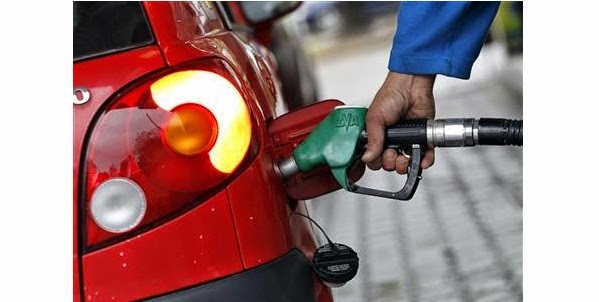
As the price of Premium Motor Spirit (PMS), also known as Petrol, increased by over 400 per cent in the last 18months, Uber, Bolt, and other ride-hailing service providers may consider electric vehicles or a compressed natural gas (CNG)-powered vehicles for their businesses.
It could be recalled that, aside from the price hike, petrol supply system hiccups is also a challenge for motorists, especially, those offering ride-hailing service, hence, fueling their plan to explore alternative technology and sustainable solutions.
Speaking on this development, Business Partnerships and Proposals Manager, Amalgamated Union of App-Based Transporters of Nigeria (AUATON), Comr. Jolaiya Seun Moses, expressed that, its members are exploring alternative technology and sustainable solutions.
“The removal of fuel subsidies has severely impacted our industry,” he noted. “Many of our members can no longer operate due to high fuel costs, many lost vehicles to car owners, and, most importantly, no profit to take home again. This issue prompted us to explore alternative solutions. We are now considering two viable options: converting to compressed natural gas (CNG) or transitioning to electric vehicles (EVs).
“As of now, we have partnerships in the area of CNG and now, partnering in the area of EV for our members so that they can explore these options that would make them have a good take-home.,” he pointed out.
Moses, who is also the association’s national treasurer, highlighted the benefits of exploring EV. To him, “An average driver spends nothing less than N35,000 on fuel daily, not to mention those who work full days. But with EV and from the whole analysis, what you spend is between N2,500 and N4,000. So, when we compare the difference, we would be saving nothing less than N31,000 per day, and will increase our profit.
“Some of our members that have converted their vehicles to CNG have been able to improve on their profits and take home. So, the difference is crystal clear between using CNG and petrol.
“As I am talking with you, I am driving currently on CNG. CNG is sold for N230 per mmc. It used to be N200, but now N230. So, what this means is that, for every 20mmc that my vehicle uses in a day, I don’t have to spend more than N4,600. So, in terms of profitability, you can’t compare.”
“So, we believe CNG and EV are the game changers for our riders, who will now enjoy riding in new, noise-free cars. Our members struggled to maintain petrol-powered cars. However, EVs have fewer components, consisting mainly of batteries and body systems. This means fewer issues, no oil changes, and reduced maintenance needs. And I am sure our members and riders will appreciate the cost savings and convenience,” Moses added.
The recently concluded West Africa Sustainability Forum, organised by Clean Tech Hub Nigeria, served as a pivotal platform for discussions surrounding the advancement of EVs in the region. The event brought together key stakeholders from various sectors, including government officials and industry experts, to critically evaluate the potential of EVs as a sustainable transportation solution for West Africa.
Speakers discussed the importance of establishing robust regulations and supporting local manufacturing capabilities to ensure the safe and efficient adoption of EVs in West Africa. The significant economic benefits of transitioning to electric mobility, including job creation, reduced dependence on fossil fuels, and improved air quality, also made for conversations.
While public-private partnerships were identified as a key strategy for financing the necessary infrastructure, such as charging stations, to support the widespread adoption of EVs, strategies for attracting investment into clean energy projects and mitigating risks associated with these ventures were explored. Emphasis was placed on the importance of regional cooperation to accelerate the adoption of EVs and address shared challenges.
Some players in the automotive market have already begun investing in EVs and CNG vehicle production. For Innoson Vehicles on its LinkedIn, the experts at the conference said.
“For years, petrol cars have been the heart of our roads, and they still are. But now we are expanding the family. The world is moving toward a more sustainable future, and Innoson is proud to be at the forefront of this shift in Nigeria and Africa. Our electric vehicles represent the best of modern innovation without sacrificing the luxury, safety, and reliability you’ve come to expect from us. At Innoson, we are not just about moving forward; we are about giving you the best, whatever you choose to drive,” it read.
Another player in the EV space is the chief executive officer of SAGLEV Motors, Dr. Olugbenga Faleye, who said, it feels impossible to make a living in e-hailing now without going to EV. “One cannot make a profit using an internal combustion engine (ICE) at this period in time. Data are available to back it up. So, the best way to go is EV, because it will reduce maintenance costs, reduce power costs, and more importantly, it is environmentally sustainable.
“To prove to you, an electric vehicle will break down at least 70 to 80 percent less than your ICE car. There are so many things that you will fix in ICE that an EV will never even heard of. It doesn’t use transmission,” he stressed.
About The Author