Nigeria’s Gas Sector Struggles Persist Despite Vast Reserves
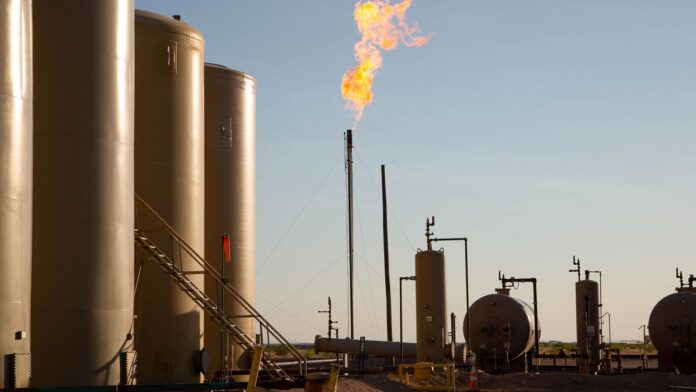
Gas and oil
Samuel Mobolaji
Despite holding over 200 trillion cubic feet (Tcf) of proven natural gas reserves, Nigeria continues to grapple with underutilisation, poor infrastructure, and investment hurdles that threaten its energy ambitions.
Speaking at the 6th West Africa LPG Expo in Lagos, the chairman of the National Gas Expansion Programme (NGEP), Prof. Mohammed M. Ibrahim, highlighted key challenges hindering the full exploitation of Nigeria’s gas potential.
He pointed to outdated infrastructure, environmental concerns, and inconsistent policies as major obstacles to maximising natural gas for domestic and export use.
Nigeria’s gas fields, including Bonga, Amenam, and Utorogu, remain underdeveloped due to aging pipelines, processing limitations, and political instability. Ibrahim noted that insufficient midstream and downstream infrastructure restricts gas availability for power generation, industrial production, and economic diversification.
“High capital costs for exploration, pipeline construction, and processing facilities continue to stall progress. Although the Petroleum Industry Act (PIA) 2021 introduced a Midstream and Downstream Gas Infrastructure Fund to ease financing, challenges persist due to limited local manufacturing capacity for critical equipment. Environmental degradation in the Niger Delta—driven by gas flaring, oil spills, and soil contamination—has also fueled tensions with local communities,” Ibrahim said.
While government incentives such as tax breaks and import duty waivers aim to attract foreign investment, regulatory uncertainty and slow implementation remain deterrents. Ibrahim warned that Nigeria’s dependence on a single gas stream—Compressed Natural Gas (CNG)—poses risks to long-term energy security, calling for a diversified approach to gas utilisation.
To unlock Nigeria’s gas potential, he advocated for stronger public-private partnerships, enhanced local capacity, and stricter regulatory compliance. Expanding small-scale gas distribution centres and investing in local equipment manufacturing could accelerate development and reduce costs, he added.
“The National Gas Expansion Programme (NGEP) is driving reforms to transition Nigeria from an oil-reliant economy to a gas-powered future. However, without decisive action to resolve infrastructure deficits, environmental risks, and investment bottlenecks, Nigeria risks falling short of realising the full benefits of its vast gas reserves,” he cautioned.
About The Author