Investors Lose N120bn as NGX Slips 0.18% on Cautious Trading
Samuel Mobolaji
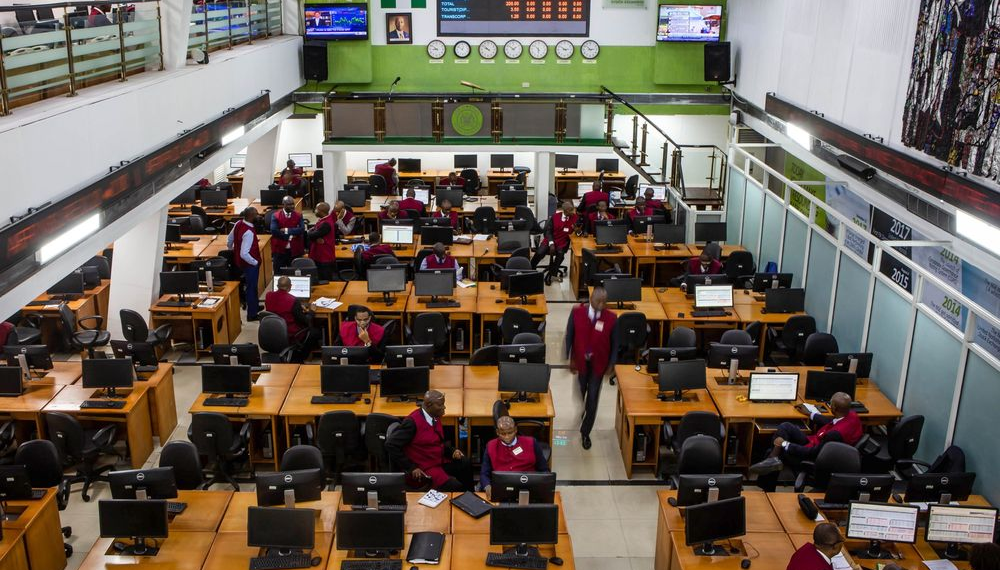
The Nigerian Exchange (NGX) reversed previous session gains on Tuesday, as the All-Share Index declined by 0.18 per cent to close at 104,187.00 points, wiping off N120 billion in market value to settle at N65.47 trillion.
The dip, driven largely by declines in heavyweight financial stocks, reflected softening investor sentiment amid cautious trading.
Despite the drop in key indices, overall market breadth remained positive at 1.50, as more stocks advanced than declined, suggesting underlying resilience in select equities. However, trading volume slumped 18.23 per cent to 376.61 million units, even as transaction value rose by 17.64 per cent to N11.89 billion—highlighting increased activity in higher-value equities.
Guaranty Trust Holding Company (GTCO) led activity on both the volume and value charts, trading 62.88 million shares valued at N4.10 billion. The stock, however, shed 1.74 per cent, contributing to the overall market weakness. The Financial Services sector once again dominated both volume and value tables, underscoring its continued influence on daily market performance.
Read Also: FG, Julius Berger to Tackle Third Mainland Bridge Defects with German Engineering Support
In terms of deal count, the market saw a 37.10 per cent uptick, suggesting heightened participation from investors seeking opportunities amid price corrections.
Meanwhile, activity on the NASD Over-the-Counter (OTC) market continued to decline, with the NASD Security Index dropping 0.10 per cent to 3,277.39. Market capitalisation also fell to N1.89 trillion. Trading volume plummeted by 28.42 per cent to 1,854.49 units, while the value of transactions dipped sharply by 74.83 per cent to N26.51 million.
Analysts say investors may be cautiously repositioning ahead of expected first-quarter earnings releases and macroeconomic updates, particularly from the Central Bank of Nigeria. With mixed signals in key indicators, the equities market may remain volatile in the near term.
About The Author