NCAT to Tackle Inadequate Infrastructure

The Rector, Nigerian College of Aviation Technology (NCAT), Zaria in Kaduna State, Dr. Danjuma Adamu Ismaila, has given assurance of the institution’s readiness to address the dearth in infrastructure in order to meet the surge in enrollment for the over 200 aviation industry programmes run by the college.
Ismaila disclosed this yesterday at the opening session of the League of Airports and Aviation Correspondents (LAAC) Course being held in the college.
He said, despite some challenges, including inadequate accommodation, the college is striving hard to position itself as the leading centre for manpower development in the country.
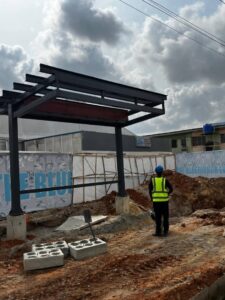
He said the construction of a 150-room additional hostel is currently on, affirming that the management is concluding plans to acquire a Boeing 727 flight simulation facility to boost the recurrent training of pilots in the country.
The rector said that if many facilities are provided, there may be no need for aviation personnel to travel overseas for training, given the capacity of the college to close the huge gap in training needs.
He spoke of plans by the management to expand courses offered in the college to reflect evolving trends and technology in the global air travel space.
He said NCAT is embarking on an aggressive carbon emission programme in line with the directives rolled out by the global aviation regulatory body, the International Civil Aviation Organisation (ICAO).
He said the college by adopting environmentally friendly sustainability programmes, carbon credits FFFT could be earned.
The rector said the college has continued to achieve many feats with the training of scores of air traffic controllers from neighbouring countries in the English Language, one of the requirements by ICAO.
He said the college will continue to pursue decarbonization programmes by switching to solar and other sources of power and energy other than fossil fuels.
In his remarks, Chairman of LAAC, Comrade Idris Suleiman, urged NCAT management to continue to design programmes to meet the fast-evolving trends for airlines, aviation agencies and other players in the value chain.
The LAAC chairman said,” This gathering marks not just the start of another training session, but it is a reaffirmation of our collective commitment to excellence, capacity building, and responsible journalism within the aviation sector.
“The role of aviation correspondents, particularly in an evolving industry like ours, cannot be overstated. You are the bridge between the industry and the public—the narrators of our progress, our challenges, and our aspirations.
“This training course is therefore an opportunity to deepen understanding, strengthen professional ethics, and explore new trends in global aviation.
Ladies and gentlemen! The global aviation industry has, in recent times, witnessed fluctuations and undeniable changes in the level of patronage, expectations and realignments. Airlines and regulatory authorities have had to review business decisions and policies. The toughness of the global economy was reflected in aircraft fleet renewals, cancellation of aircraft orders, changes in delivery dates by manufacturers and other effec.ts
“Back home in Nigeria, despite the challenges of excruciating airlines operating costs, operational and environmental constraints, more local airlines have received Air Operators’ Certificates within the last one year, according to the NCAA, while some other AOCs are being processed.
“The vision of investment in airports in the form of concessions is being piloted by the Federal Ministry of Aviation and Aerospace Development. These and other developments call for more training in the sector, and they represent more opportunities for NCAT to harvest the ripe field of training adventures in the industry.
“As a nation, there exist opportunities for Nigeria to make progress in terms of its aviation development. LAAC, therefore, wishes to use this forum in the spirit of patriotism to appeal to the various stakeholders and aviation authorities in the country to sustain their commitment towards the overall development of the sector.
“We live in a time when aviation is undergoing rapid transformation—driven by technology, sustainability goals, safety imperatives, and an increasingly interconnected world.
As such, aviation journalists must be equipped not only with factual accuracy but also with a nuanced appreciation of the technical and policy frameworks that govern this dynamic industry.
“Having undergone this training over and over, you can confirm that the difference in the knowledge and skills gathered from this training has, to a large extent, been reflected significantly in our coverage and reportage of the industry events continuously.
“We are confident that this year’s training will further boost professionalism in our reportage and practice as aviation media practitioners and journalists, while further empowering us to play our role as the fourth estate of the realm.
I dare to say that the entire aviation industry in Nigeria has benefited immensely from the relationship between LAAC and NCAT over the years.
It is on this basis that I wish to reassure you that LAAC will continue to support NCAT in pursuing its goals and objectives and ensuring that NCAT asserts its rightful position in the global aviation training market.
“Rector Sir, I will not end this speech without commending you, the entire management of NCAT, for the unhidden improvements in infrastructure around the college. But there is still room for improvement t,,hough, as we have only stepped into the second quarter of the year 2025.
I wish to also applaud the college for once again serving as a beacon of knowledge and technical expertise.
During our stay for this training, I appeal to our course lecturers, residents of NCAT and the Zaria community to accord us the usual hospitality that we have enjoyed over the years during the programme.
“I encourage my colleagues and all participants to approach the training with curiosity, commitment, and an open mind. Engage fully, ask questions, and make the most of this valuable learning experience.
The insights you gain here will not only enrich your reporting but also enhance public understanding and confidence in our aviation systems.
I plead that we remain focused and demonstrate the expected level of discipline and good conduct during our stay.
“On behalf of LAAC, I commend NCAT for this important initiative and extend my best wishes for a successful and impactful training programme.”
About The Author