Sailing Toward Safety: Lagos Rallies West, Central Africa for Regional Ferry Reform
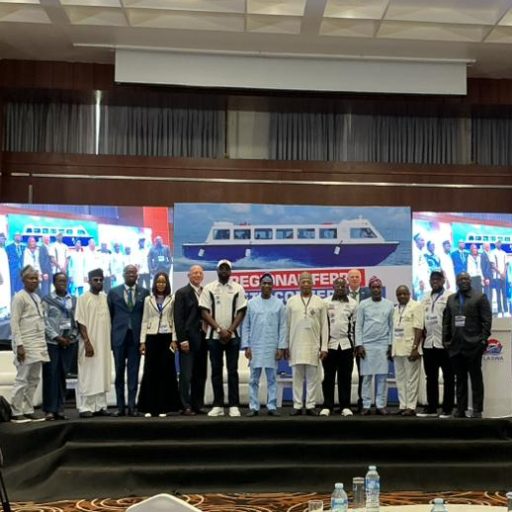
In a powerful call for innovation, partnership, and policy alignment, Lagos State has taken the helm in steering West and Central Africa toward a safer, smarter future in ferry transportation.
At the opening of the 2025 Regional Ferry Safety Conference hosted by the Lagos State Waterways Authority (LASWA), the Lagos State Governor Babajide Sanwo-olu who was represented by his deputy Dr. Obafemi Hamzat, addressed stakeholders from across the continent, issuing a clarion call for collective action to enhance safety on inland and coastal waterways.
“This conference is not merely timely; it is essential,” Hamzat said, addressing maritime leaders, ferry operators, and policymakers gathered in Lagos. “Ferry transportation is no longer a luxury—it’s a lifeline for cities like Lagos with over 25 million residents.”
Hamzat described Lagos as Nigeria’s “vibrant commercial heart,” highlighting the state’s aggressive investments in water transport infrastructure—modern jetties, digital monitoring systems, and the first-ever Inland Waterways Monitoring and Data Management Centre. He also announced the deployment of locally-built Omi Bus ferries, designed to improve both capacity and resilience.
But the Deputy Governor’s central message was clear: ferry safety is a regional responsibility.
“Whether it’s Lagos, Lomé, Accra, or Dakar, we must share safety data, standardize training, and adopt advanced technologies like GPS, radar, and smart ship design,” he said. “Let this gathering spark partnerships and solutions that will outlive the conference.”
Backing this regional approach was Lagos State Commissioner for Transportation, Mr. Oluwaseun Osiyemi, who painted a broader picture of how coastal cities across Africa are grappling with rapid population growth and overburdened road systems.
“Ferry services are no longer an option; they are an urgent necessity,” he said. “Under Governor Babajide Sanwo-Olu, we’ve shifted water transportation from a support system to a central pillar of urban mobility.”
Osiyemi underscored the need for regional collaboration and shared responsibility, stressing that ferry-related incidents in one country can undermine public trust in water transport across the entire sub-region.
“Every African passenger deserves to board a ferry knowing they’re protected by robust, standardized safety systems,” he declared.
The conference, themed “Charting Safer Waters: Advancing Ferry Safety Through Innovation, Collaboration, and Integrated Transport Solutions,” continues with technical sessions, policy discussions, and strategy building aimed at harmonizing safety frameworks across borders.
According to LASWA Managing Director, Mr. Oluwaseun Emmanuel, the event is more than just a meeting of minds—it’s a movement.
“This is a mission to unlock the full potential of ferry transport,” he said. “Lagos is not just a host, it’s a working model of what’s possible when government, communities, and private operators align around safety and sustainability.”
International backing came from Dr. Paul Adalikwu, Secretary General of the Maritime Organization of West and Central Africa (MOWCA), who linked the conference to previous milestones like the Libreville Action Plan and the 48th Interferry Conference held in Morocco last year.
“We are not here as individuals but as a community committed to making ferry travel not only efficient and accessible, but safe,” Dr. Adalikwu said. “The solutions must be collective—no single voice can carry this alone.”
Dr. Adalikwu praised Lagos State for its swift readiness to host the conference without prior budgetary allocation and commended its multimodal transport integration as a model for the region.
Over the next two days, stakeholders will engage in deep-dive sessions aimed at crafting unified operational standards, scaling technology solutions, and mapping out sustainable financing models.
For Lagos and its regional partners, the hope is that this conference becomes a launchpad for lasting transformation, not just in ferry operations, but in how Africa views water as a vehicle for progress.
As Mr. Osiyemi aptly concluded:
“Let us sail forward not just with speed, but with safety, purpose, and unity.”
About The Author