IFC Commits Over $6bn to Drive Africa’s Digital Economy at GITEX Nigeria 2025
…as NITDA DG Calls for Stronger Government-Private Partnerships
The International Finance Corporation (IFC) has reaffirmed its commitment to Africa’s digital transformation, disclosing that it has invested more than $6 billion in the continent’s digital infrastructure over the past decade.
Delivering her keynote at the inaugural GITEX Nigeria session in Lagos, Dahlia Khalifa, IFC’s Regional Director for Central Africa and Anglophone West Africa, said the institution is scaling up efforts to strengthen broadband, fiber connectivity, and data centers to position Africa as a competitive digital hub.
“Infrastructure is the foundation, but entrepreneurship is the engine,” Khalifa noted. “To seize this opportunity, we need reliable broadband, robust data centers, and modern digital infrastructure. IFC is helping to unlock this future by mobilizing capital at scale.”
She revealed that in 2024 alone, IFC invested more than $1 billion in connectivity, including $100 million for Raxio Group’s data centers and support for WIOCC’s fiber expansion in Nigeria, the Democratic Republic of Congo, and South Africa. In Lagos, the IFC-backed Rack Centre is already setting new benchmarks for green data facilities.
Khalifa stressed that such investments are essential as Africa’s digital economy is projected to contribute $180 billion to GDP by 2030 and create over 230 million jobs in Sub-Saharan Africa. She added that overcoming challenges such as high technology costs, infrastructure gaps, and limited financing requires stronger public-private partnerships.
Also speaking, the Director-General of the National Information Technology Development Agency (NITDA), Kashifu Inuwa, highlighted the government’s role in creating an enabling environment through the Nigerian Startup Act. He explained that the Act was developed in a collaborative process with innovators, academia, civil society, and private sector players to strengthen Nigeria’s tech and innovation ecosystem.
“The government is not just the creator of all this data, but a partner in the process,” Inuwa said. “The Startup Act was created in a collaborative manner, bringing together innovators, entrepreneurs, and policymakers to design how we want our ecosystem to be.”
He noted that the Act established a consultative forum — a platform where government, industry, and innovators co-create and propose policies. These proposals are escalated to the National Council on Digital Innovation and Entrepreneurship, chaired by the President and Vice President, alongside key ministers, regulators, and private sector representatives.
“For me, it is more like a partnership. How can we work together to create this? Today, Nigeria has a legal and institutional framework that enables the ecosystem to thrive,” Inuwa added.
Beyond infrastructure and regulation, IFC is also backing entrepreneurs through its Venture Capital Platform and Startup Catalyst Program, which support more than 100 startups in fintech, healthtech, edtech, and e-commerce. Firms such as TradeDepot, Andela, and Wave Mobile Money are among the beneficiaries, creating jobs and expanding access to digital services across the continent.
Khalifa positioned Nigeria as “ground zero” for Africa’s AI revolution but stressed that responsible regulation, skills development, and private sector investment are crucial to ensure inclusivity.
“By harnessing AI and digital technologies responsibly, and by building the right partnerships, Africa can shape a digital economy that is inclusive, innovative, and globally competitive,” she said.
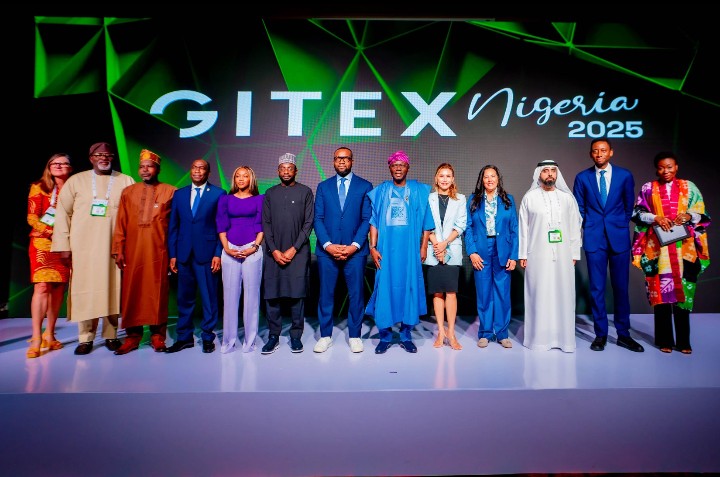
The GITEX Nigeria summit, hosted in Lagos, convenes government officials, investors, technology leaders, and entrepreneurs to explore how Africa can leverage technology and AI to drive sustainable growth.
About The Author