Global Investors convene with West African Ministerial Delegations & Industry Leaders to Set the Agenda for Industrial Transformation at West Africa IMT 2026
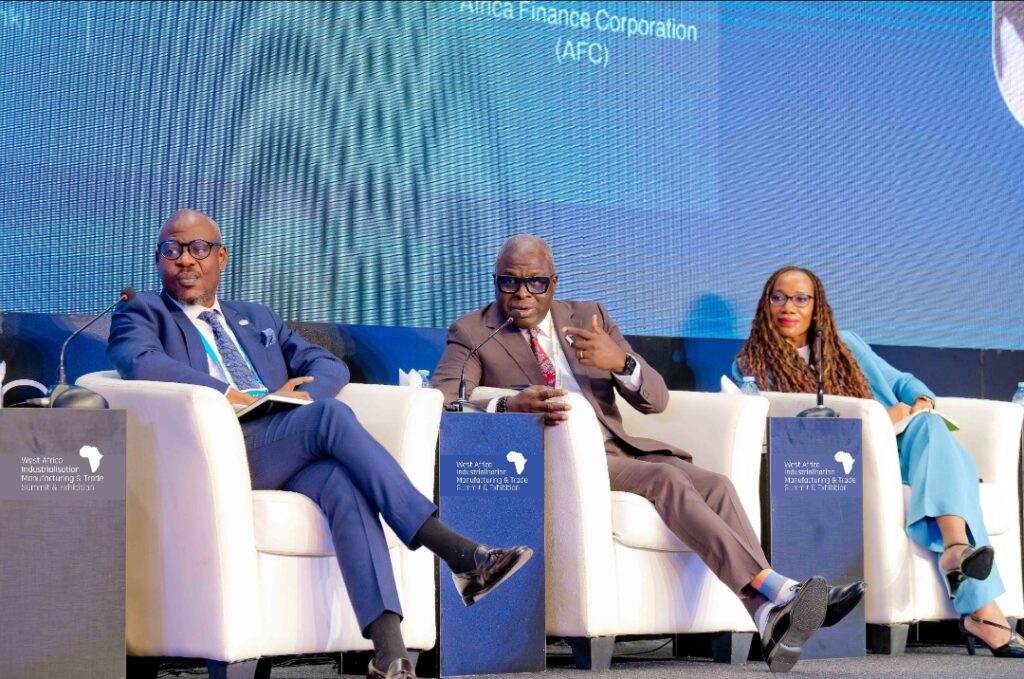
The West Africa Industrialisation, Manufacturing & Trade Summit & Exhibition will convene regional and international investors, policymakers, development finance institutions, and industrial leaders at the Landmark Centre, Lagos, on 3–5 March 2026.
The summit comes at a pivotal moment as West African governments move from macroeconomic stabilisation and trade reform toward execution-focused industrial growth, manufacturing investment and job creation. Themed “Accelerating West Africa’s Sustainable Industrial Revolution for Economic Prosperity,”
West Africa IMT 2026 is positioned as a policy-to-project platform focused on converting regional trade opportunities into factory-level investment, resilient value chains and measurable industrial capacity within the next 12–18 months.
Recent changes to national industrial and trade policies across the region have sharpened this urgency. In Nigeria, the Federal Government’s National Industrial Policy (NIP), unveiled in January 2026 has reinforced the shift toward manufacturing competitiveness, value addition and industrial execution.
At the continental level, the African Continental Free Trade Area (AfCFTA) has transitioned from policy negotiation to implementation, with emphasis on digital trade, industrialisation and practical delivery. Together, these shifts have moved the conversation decisively from access to outcomes.
Confirmed participants include H.E. Sen. John Enoh, Minister of State for Industry, Nigeria, alongside industry ministers from Benin, Senegal and Ghana.
The summit will also host key stakeholders from Nigeria, Kenya, South Africa, Egypt, the United Kingdom, France, Italy, Austria, China, India, Singapore, the United Arab Emirates, the United States, Canada, and over 15 additional countries, reflecting growing international interest in West Africa as an emerging industrial and manufacturing hub.
West Africa IMT 2026 arrives at a decisive policy inflection point. AfCFTA implementation timelines, persistent energy and logistics bottlenecks, and constrained availability of medium-term industrial capital mean the next 12–18 months are critical for translating regional trade integration into on-the-ground production capacity.
The summit is structured to confront these constraints directly through a combination of ministerial leadership panels, country spotlights, investor roundtables and technical workshops focused on regulatory clarity, risk mitigation and financing structures.
Programme discussions will prioritise four immediate areas of action: aligning national industrial frameworks with AfCFTA market rules and rules-of-origin; securing reliable energy and gas solutions that underpin manufacturing competitiveness; mobilising blended finance and de-risking instruments for medium-scale manufacturers and industrial parks; and reducing cross-border trade transaction costs through pragmatic regulatory fixes. These priorities run across the Strategic Conference, Technical Seminar and finance-focused sessions.
Delegates should expect a programme deliberately designed to move beyond aspirational dialogue. Ministerial roundtables will be paired with investor-facing panels and technical deep dives, ensuring that political direction is translated into bankable project pipelines, implementable reforms and measurable next steps for governments, financiers and industry participants.
About The Author