Gov. Lawal Rolls Out Fertiliser, Input Support for Zamfara Dry Season Farmers
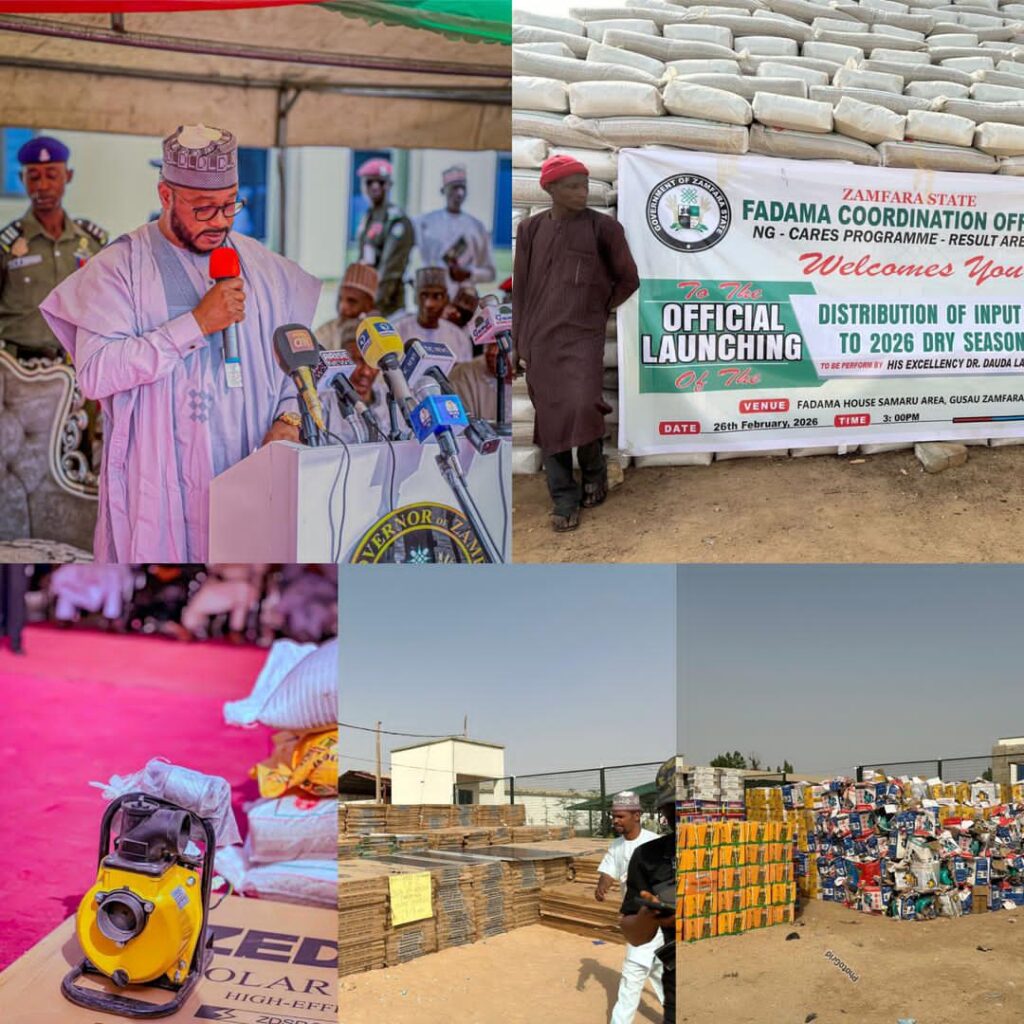
Governor Dauda Lawal has commenced the distribution of fertilisers and other critical farm inputs to dry season farmers across Zamfara State as part of efforts to improve food production and strengthen the state’s agricultural base.
The flag off ceremony was held at the Fadama III facility of the Ministry of Agriculture in Gusau, where the governor reaffirmed his administration’s resolve to reposition agriculture as a driver of economic growth and food security.
The intervention targets smallholder farmers with a range of inputs aimed at raising yields and encouraging sustainable practices.
According to a statement by the governor’s spokesperson, Sulaiman Bala Idris, the initiative is structured to enhance productivity, curb post harvest losses and support dry season cultivation.
Items distributed include 3,920 bags of NPK fertiliser to promote healthy crop growth, 1,956 bags of urea fertiliser to boost nitrogen supply, 3,920 litres of herbicide for weed control, 1,956 litres of insecticide to guard against pests, and 3,920 sachets of seed dressing chemicals to improve seed performance and early plant development.
Speaking at the event, Lawal described farming as the foundation of the state’s economy and stressed the importance of equipping farmers with the right tools.
“Agriculture remains the backbone of our economy. Our duty is to ensure that farmers have access to the inputs and support needed to succeed,” he said, noting that the programme focuses on maximising dry season farming potential.
The governor also highlighted the contribution of the NG-CARES programme to agricultural interventions in the state, explaining that previous support initiatives had provided farmers with improved seeds, agrochemicals and technical guidance.
He added that the administration is addressing security concerns affecting farming communities to create a safer environment for agricultural activities.
Lawal urged beneficiaries to make effective use of the inputs and called for collaboration between government and communities to increase local food production and reduce dependence on imports.
Farmers who attended the launch expressed optimism that the timely support would improve their harvests during the dry season and enhance their livelihoods.
About The Author