NECA projects slow positive growth in economy

The Nigeria Employers’ Consultative Association (NECA) has projected a slow but positive growth closing of the economy at 2.2 per cent to 2.5 per cent.
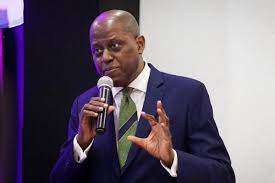
President of NECA, Taiwo Adeniyi, disclosed this in his address at the 64th annual general meeting of the employers’ body.
He noted that there is growing concerns of stagflation. Where inflation rate is high at 17.9 per cent, food inflation at 22.72 per cent, economic growth rate slows, and unemployment remains steadily high (33.3 per cent), second highest after Bosnia & Herzegovina and Namibia (33.4 per cent).
He warned that the combination of rising unemployment and prices and low growth, often described as “stagflation,” could trigger significant social unrest.
The International Monetary Fund (IMF) had earlier predicted a 2.5 per cent growth and 16 per cent inflation rate by end 2021,
The employers’ body also said it expects the Monetary Policy Committee (MPC) to introduce tighter monetary options to curtail the rising inflationary trend.
Adeniyi, who highlighted some policy recommendations and future outlook in charting new economic directions for the country’s long-term growth stated that more effort was needed and greater political will critical for the economy to continue on the path of steady growth.
According to him, curtailing rising insecurity and regional agitations would bring to the fore a positive policy direction in the next two quarters. He said, following the government’s constrained fiscal space, investment in critical sectors would drive economic recovery and sustain growth momentum in the medium term.
He maintained that attracting and retaining investments into critical sectors in Nigeria would require a stable environment, where policies are fairly predictable or at least policy uncertainties are reduced to the barest minimum.
For Nigeria to become strong and robust, the NECA president emphasised the need to achieve high and steady economic growth.
He reasoned that Nigeria, which required more than just a resurgence of the economy, must also increase inclusiveness of growth, arguing that, for decades, the nation had battled to create inclusive growth, with the economy on a shaky growth path since recovering from the 2016 recession and the COVID-19 pandemic that threw it back into another recession in 2020.
He said, “With the devastating impact of the twin phenomena of poverty and unemployment, as the level of insecurity continued to accelerate, the conversation for achieving inclusive economic recovery has never been more important.
“Government and relevant stakeholders must work together to address the constraints to value-chain development in high-growth and employment-elastic sectors such as manufacturing, construction, trade, health, professional services with information and communication technology and renewable energy sectors as growth enablers.”
About The Author