OPEC Set to Pronounce Major Output Cut to Boost Market
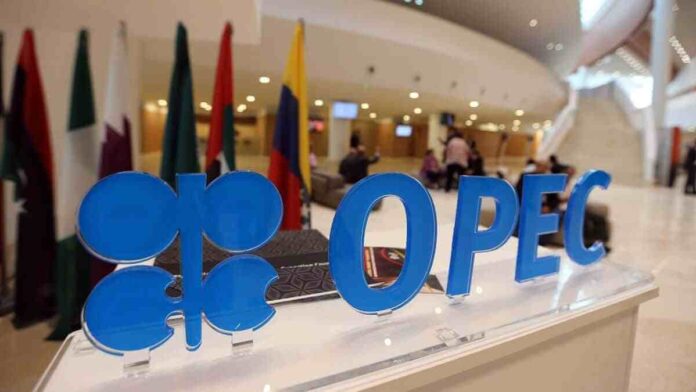
The Organisation of Petroleum Exporting Countries (OPEC), may be looking at announcing a major output slash to boost oil market.
An OPEC+ source told Reuters on Monday that the expanded cartel is considering bigger oil output cuts during its November 30 meeting, which was originally delayed for four days over a production quota dispute between OPEC leaders and African nations.
The unnamed OPEC+ source expected an option for a “collective further reduction” in oil production during the next meeting.
The source’s comments echo similar comments made earlier in November suggesting that additional cuts would be considered.
Last week, analysts increasingly chimed in to predict either an extension of the existing 1 million-barrel-per-day voluntary cuts or additional cuts to support prices which have fallen from highs of close to $100 per barrel in September to barely holding down $80 currently.
Late last week, reports emerged that OPEC+ was making progress in talks with its African producers over their oil output quotas next year after Angola and Nigeria requested a higher production ceiling next year. Both countries took a cut in their quotas at the June 2023 meeting of OPEC+ as they had consistently failed to pump to their quotas.
At the same time, for next year, the UAE is set to increase exports of its flagship Murban crude grade after negotiating a higher production quota in the OPEC+ deal. For years, the UAE, has argued it should be allowed to pump more than its current OPEC+ quota as it is raising its production capacity.
At the June meeting, the UAE won an upward revision of its quota that will take its production up by 200,000 barrels per day (bpd) to 3.219 million bpd for 2024.Earlier on Monday, the OPEC General Secretariat slammed the International Energy Agency (IEA) for its “moment of truth” report on the oil and gas industry released last week.
The IEA suggested that the world now has a stark choice between oil and gas and worsening climate change.
The OPEC criticized the Agency for vilifying the industry and ignoring cost and energy security issues.
Meanwhile , ahead of the delayed OPEC+ meeting on Thursday, there are indications oil supply is running ahead of demand, highlighting the thorny challenge facing the group as it prepares to set production policy for 2024.
With futures well down from September highs, widely watched timespreads for global benchmark Brent and U.S. counterpart West Texas Intermediate have softened, signaling ample supply, while U.S. stockpiles have jumped.
In addition, other more esoteric indications in the physical market, including differentials between specific grades, have been flashing warnings.
The global oil market is fixated upon the meeting of OPEC and its allies, who’ll need to address what analysts see as burgeoning global supply, as well as an internal dispute on quotas. At present, Saudi Arabia and Russia are expected to extend voluntary production cuts, and market watchers say deeper group reductions are also possible. Their decisions will have a profound impact on trading this quarter, as well as next year.
“Sentiment in the oil market remains negative. There is a growing possibility that we see a deeper cut from the broader group. In doing this, the group would provide good support to the market going into 2024,” said head of commodities strategy for ING Groep NV in Singapore, Warren Patterson.
Of primary importance is the structure of the futures curve. The gap between WTI’s two nearest contracts has dipped into a bearish contango, with near-dated prices at a 28-cent-a-barrel discount to later-dated ones. A month ago, the opposite pattern — backwardation — held sway, with a premium above 80 cents.
Brent’s prompt spread, meanwhile, fell into contango earlier this month for the first time since June, although it’s since recovered a little ground.
Longer-term spreads have also come off. Brent’s six-month gap was last at $1.05 a barrel in backwardation compared with nearly $4 a month ago.
In the U.S., stockpiles have been swelling. Inventories have rebounded since hitting the lowest this year in September, rising in five of the past six weeks.
Other indications of ample near-term supply include sour crude grades in the Mediterranean trading at ever-widening discounts. For one, Basrah Medium is now offered at a discount of about $2.50 a barrel to its official selling price, a level many traders deem very low. Prices of other grades including Johan Sverdrup have also sunk.
Asia’s appetite for oil is also softening, with the premium of Oman futures versus Dubai swaps declining this month. Spot differentials of key Middle Eastern grades including Murban have also been falling on weaker demand from buyers in the region, according to traders.
About The Author