Marketers Identify Poor Infrastructure as Bane of CNG Development
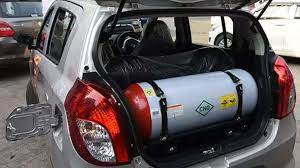
Former National Secretary of the Independent Petroleum Marketers Association of Nigeria (IPMAN), Mr Mike Osatuyi, who identified the gap, said inadequate infrastructure has continued to hamper the effective implementation of the Presidential Compressed Natural Gas (CNG) Initiative nearly two years after its launch.
Osatuyi raised concerns in an interview with journalists in Lagos, adding that this became important against the backdrop of ongoing queues at the CNG stations in Lagos and Abuja.
Osatuyi praised President Bola Ahmed Tinubu’s initial enthusiasm and patriotic drive to introduce CNG as an alternative fuel source at the beginning of his administration, noting that, had similar efforts been made two decades earlier, petrol consumption in Nigeria could have been reduced by as much as 50 per cent by now.
Highlighting the numerous benefits of CNG, he said, these include economic viability, environmental sustainability, reduced air pollution, lower transportation costs, and improved safety.
Osatuyi acknowledged the president’s appointment of a Minister of Gas and the establishment of the Presidential Initiative on CNG (Pi-CNG), chaired by Mr Zacch Adelabu Adedeji, who also serves as chairman of the Federal Inland Revenue Service (FIRS).
However, Osatuyi pointed out that, despite plans to deploy 200,000 new CNG-powered buses and tricycles nationwide, the infrastructure required to support this transition—such as conversion centres and CNG refuelling stations—remains grossly insufficient.
The current national budget allocation for the initiative, he said, fails to match the pace at which Nigerians are converting their vehicles to CNG, even amid high conversion costs.
He emphasised the need for broader consultation and education involving stakeholders in the oil and gas sector, stressing that the Pi-CNG Committee should not assume a monopoly of knowledge. Osatuyi drew attention to long queues at the limited number of CNG stations, likening the current situation to past fuel scarcity episodes.
“Vehicles often spend hours—and trucks, days—at CNG filling stations due to inadequate service capacity. Specific areas like Zuba-Kubwa Road, Abuja Airport Road, the Mountain of Fire area of Ibafon on the Ibadan Expressway, and the Ibadan Tollgate are just a few examples where users experience long wait times,” he noted.
According to him, the poor and uncoordinated implementation of the CNG initiative has turned it into a national embarrassment, despite its noble intent.
A longtime advocate for fuel deregulation and alternative energy, Osatuyi urged the government to study and replicate successful global models to accelerate Nigeria’s transition to CNG, calling on President Tinubu, in his capacity as Minister of Petroleum Resources, to intervene directly.
He proposed a cost-effective solution: allow existing IPMAN filling stations across the country to accommodate both CNG and traditional fuels such as petrol and diesel.
This, he argued, would eliminate the need for building entirely new CNG-dedicated stations and position Nigeria alongside leading countries in CNG adoption like China, Iran, India, and Pakistan.
A successful CNG rollout, Osatuyi concluded, requires a cohesive blend of government policy, economic planning, and infrastructure development—all of which are essential for long-term cost savings and energy security.
About The Author