“How Nigeria’s New 2026 Tax Law Will Affect Small Business Owners”
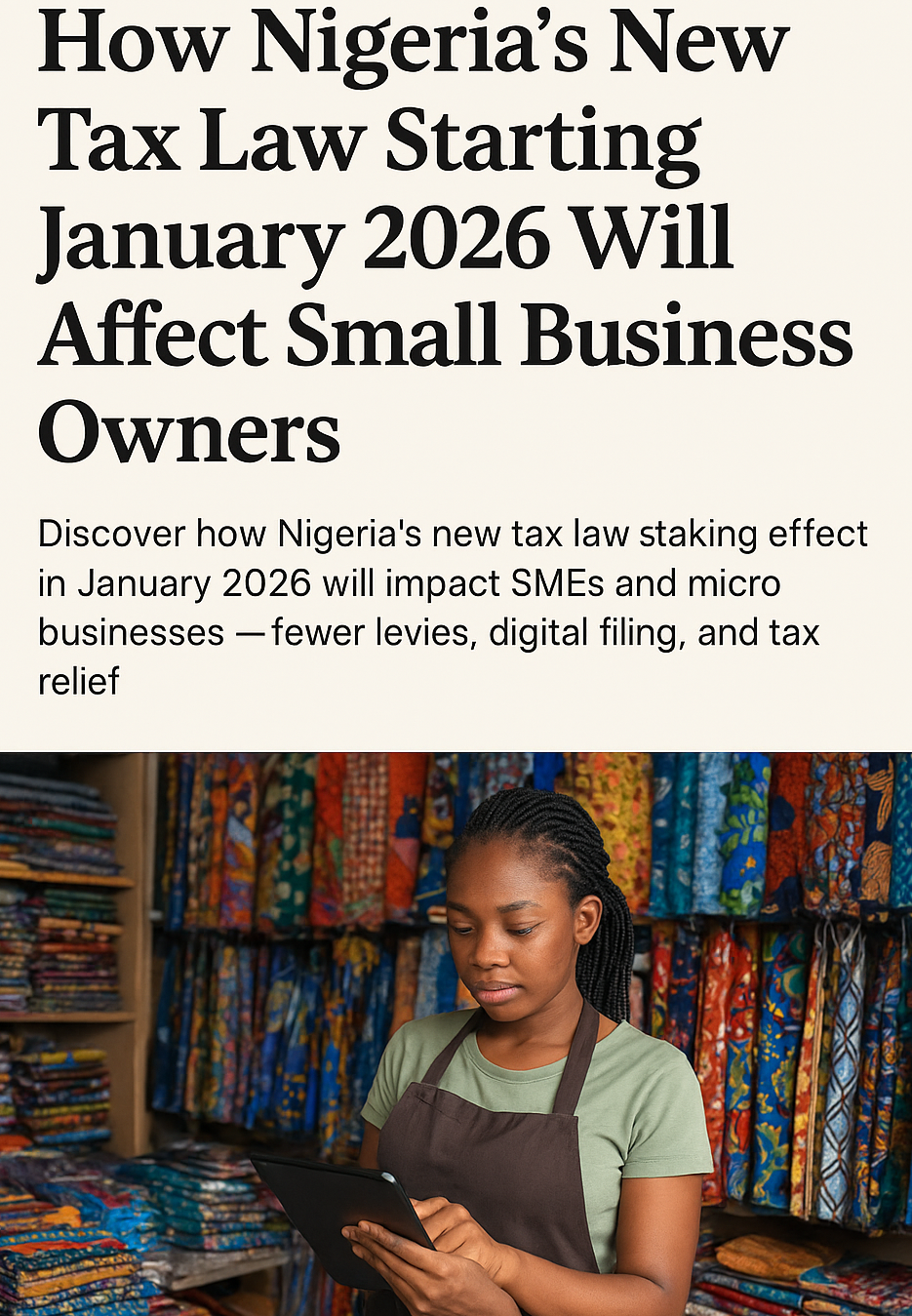
Tax Reform: What You Need to Know
Starting January 1, 2026, the Federal Government of Nigeria will roll out a new tax system under the Nigeria Tax Act 2025. The reform aims to make paying taxes easier, reduce multiple levies, and support small and medium enterprises (SMEs) — which form the backbone of Nigeria’s economy.
Why the New Law Matters
For years, small business owners have complained about multiple taxation, confusing paperwork, and inconsistent rules. The new law will merge key tax laws — including the Company Income Tax, VAT, Stamp Duties, and Capital Gains Tax — into one simplified structure.
The Federal Inland Revenue Service (FIRS) will also become the Nigeria Revenue Service (NRS), managing all tax collection under one system.
Big Benefits for Small Businesses
1. Tax exemption for small companies
Businesses earning below ₦100 million annually will not pay company income tax — freeing funds for growth and expansion.
2. No personal income tax for low earners
Individuals making less than ₦800,000 yearly will be exempt, benefiting artisans, market women, and freelancers.
3. Simpler, fewer levies
The reform eliminates many overlapping state and local government taxes.
4. Online filing system
Businesses can now register, file, and pay taxes digitally, reducing stress and delays.
5. Fairness and transparency
A new Tax Ombudsman will address complaints and protect small taxpayers from unfair assessments.
Challenges Business Owners Should Expect
While the law promises relief, some challenges remain:
- Low awareness among business owners
- Digital readiness issues for rural entrepreneurs
- Temporary confusion during transition
- Limited internet access in remote areas.
How to Prepare Before January 2025
✅ Get your Tax Identification Number (TIN)
✅ Keep financial records of sales and expenses
✅ Attend sensitization programs by SMEDAN or trade groups
✅ Use mobile apps for bookkeeping
✅ Follow updates from FIRS/NRS and tax consultants
Voices from the Street
“I used to pay three different taxes in one month — local, state, and market,” said Kemi Olayemi, a baker in Ibadan. “If this new law truly removes multiple taxes, that’s more money I can use to buy flour and hire another staff.
”Economic Outlook
Experts predict the reform could:
- Increase SME registration
- Boost employment
- Improve government revenue
- Build trust between citizens and tax authorities
However, success depends on effective communication, digital infrastructure, and consistent enforcement.
Nigeria’s 2026 tax law could redefine the way small businesses operate — with fewer levies, easier processes, and better accountability.
For many entrepreneurs, it may finally be the beginning of a friendlier tax era — if the government keeps its promises.
About The Author