H1 2020: Lower earnings weaken Sterling Bank performance as PAT drops

Sterling Bank Plc was one of the lenders in the country that bore the brunt of the coronavirus, which has disrupted economic activities globally, as the lower incomes it earned impaired its performance in the first half of the year.
Checks by BusinessLive show that the bank’s gross revenue went down by 2.8% to N70.2 billion in the first six months of 2020 from N72.3 billion it earned in the corresponding period last year, undermined by interest income which also declined by 4.3% and fees and commission income that fell 29.7%, despite a 242.8% growth in trading income.
The dip in fees and commission income was attributed to the downward review of electronic banking fees by Central Bank of Nigeria (CBN) during this period.
Consequently, Sterling Bank profit-after-tax plunged 4.38% to N5.41 billion in the half year of 2020, compared to N N5.41 billion it made in the same period last year.
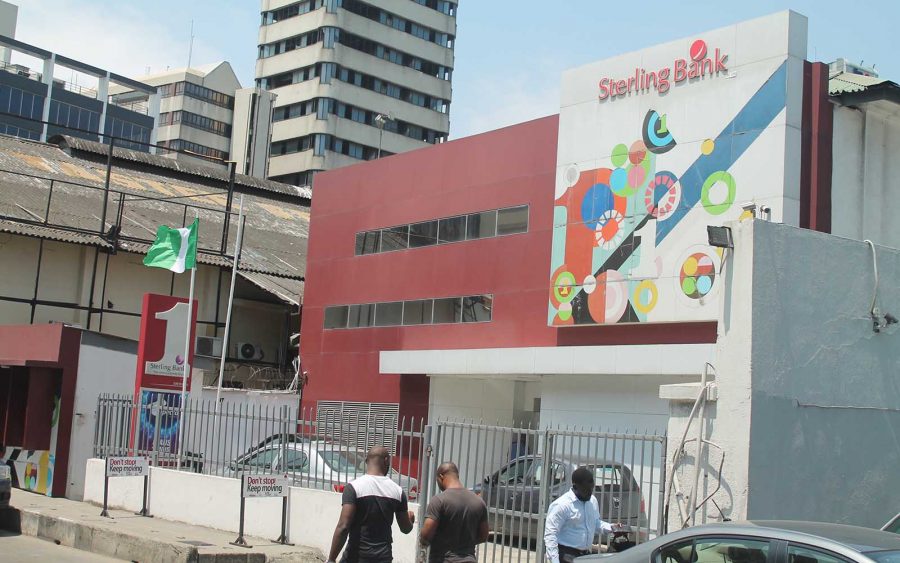
Ifeoluwa Feyisitan, Head of Investor Relations, Sterling Bank Plc while reacting to the bank’s performance told BusinessLive that the lender “remains committed to its defined risk appetite and risk acceptance criteria. However, the muted loan growth during the first half of the year was due to the slowdown in economic activities from COVID-19 pandemic response measures as well as related elevated risks in the macroeconomic environment.
“Opportunities for loan growth are becoming stronger because of the expected recovery in economic activities from the relaxation of Government restrictions, as well as the declining trend in COVID-19 infections. We are watching macroeconomic developments very closely, even as the Bank strives to continually support the recovery and growth of the economy.
Speaking further, the bank’s executive said: “Sterling Bank’s revenue is actually very strong, perhaps one of the strongest in this environment. But a good portion of the revenue has been financing the Bank’s investment in technology and digital assets which is an important part of the Bank’s strategy.
“Our business model which is hinged on 3 pillars; Agility, Digitization and Specialization has provided a stable foundation and positioned us for sustainable growth even during these times.
“The Bank’s focus is now to leverage these investments which have allowed us improve our internal processes, and achieve operational efficiencies that would result in a reduction in operating costs thus widening net revenues. The investments in our digital assets will allow us grow existing markets and create new markets in a more effective, more efficient, and more engaging manner. We envisage a good portion of our revenue will be driven by transactions across these platforms.
“We also believe there are five underlying areas which will critically shape our future and as such create real investment opportunities. We are investing in high impact sectors (Health care, Education, Agriculture, Renewable Energy and Transportation) leveraging on technology to impact both businesses and individuals alike because it is our belief that embedding positive societal impact into our operating model will not only improve customer engagement, but also directly correlate to positive financial returns,” she concluded.However, Ayodele Akinwunmi, senior relationship manager, Corporate Banking, FSDH Merchant Bank, said it was expected that banks’ performance would be hampered by the COVID-19 pandemic, which has crippled the country’s economy after the government declared a five weeks’ lockdown in March to curtail the spread of the disease.
He explained that the investors should not sleep over the decline of Sterling Bank’s bottom-line in H1 2020, as it is a temporary setback that it would overcome with the Nigerian economy recovering gradually.
“Things have not been so great for companies all over the world. We have seen big companies closed. And it is a bank that is financing these businesses, it is expected that their income will shrink. What is important is that it puts measures in place to ensure that the decline in revenue does not affect its continued operations,” she said.
Meanwhile, in the first six months of the year, the bank lowered its risk appetite as loans and advances dropped marginally by 0.6% to N615.1 billion in contrast to N618.7 billion it gave out in H1 2019.
Nevertheless, it attracted more deposit which went up 2.5% to N915.2 billion with its assets and increasing by 9.4% and 9.63% respectively to N1.29 trillion and N1.17 trillion during this period.
The bank’s Cash Reserve Ratio (CaR) of 15.6% and Liquidity Ratio of 33.5% were still above the regulatory threshold of 15% and 30% respectively.
Despite the slowdown in Sterling Bank’s performance, its Non-Performing Loan Ratio improved slightly to 2.1% from 2.2% in the first half of last year.
It also did well in lowering Cost-to-Income Ratio to 72.6% compared to 80.3% in the prior period, although Earnings per Share went down slightly to 19 kobo from 20 kobo.
About The Author