Equities market loses N1.67trn as sell-off deepens, 49 stocks decline
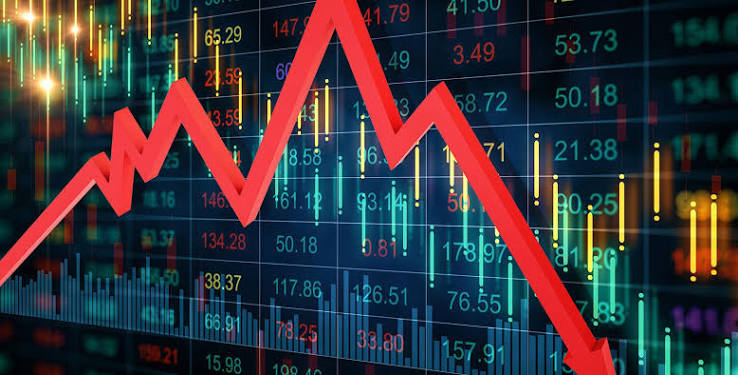
Nigeria’s equities market extended its losing streak for a third consecutive session, shedding about N1.67 trillion in market value as broad-based selling overwhelmed selected gains and pushed the market’s year-to-date return down to 55.66 per cent.
The NGX All-Share Index fell 1.05 per cent to 242,223.10 points, while market capitalisation declined by the same margin to N157.05 trillion, from the previous session’s stronger level.
The latest decline reduced the market’s year-to-date return from 57.31 per cent, underscoring the sharp shift in sentiment after months of strong gains.
Selling pressure was particularly heavy among major stocks. BUACEMENT fell by the daily limit of 10 per cent, while CADBURY declined 9.94 per cent and Nigerian Breweries lost 9.76 per cent.
The losses in these counters more than offset gains in CHAMPION, which rose 9.90 per cent, VFDGROUP, up 9.52 per cent, and UPDC, which gained 5.88 per cent.
Market breadth provided the clearest signal of investor sentiment. Forty-nine stocks declined against only 11 advancers, producing a breadth ratio of just 0.19x.
For investors, the breadth suggests that the sell-off was not confined to a few heavyweight counters but reflected broader risk reduction across the market.
Trading activity also weakened.
Total volume traded declined 29.04 per cent to 534.45 million units, while transaction value dropped 19.94 per cent to N22.28 billion.
STERLINGNG led the volume chart with 78.11 million units, while NESTLE recorded the highest transaction value at N3.20 billion.
The combination of falling prices, weak breadth and lower turnover points to a market in which investors are becoming more defensive after the exceptional gains recorded earlier in the year.
The alternative market moved in the opposite direction.
The NASD Securities Index gained 0.84 per cent to 4,533.41 points, while market capitalisation rose to N2.72 trillion.
Its year-to-date return improved to 27.93 per cent, from 26.87 per cent previously.
Trading activity strengthened significantly, with volume surging 364.59 per cent to 998,890 units, while transaction value rose 84.04 per cent to N61.18 million across 34 trades.
SDCSCSPLC gained 4.32 per cent to lead the advancers, while SDNASDPLC fell 11.06 per cent to record the biggest decline.
The pressure on Nigerian equities came amid a sharp increase in global oil prices and renewed concerns over energy supply.
Brent crude moved above $100 per barrel, reaching its highest level since late July, as escalating US-Iran attacks on shipping and energy infrastructure heightened fears of further disruptions to global oil flows.
Shipping through the Strait of Hormuz remained significantly below pre-conflict levels, while attacks on tankers and merchant vessels increased concerns over the security of one of the world’s most important energy corridors.
For Nigeria, higher crude prices could provide support for oil revenues, government finances and the country’s foreign-exchange position. However, a prolonged energy shock also carries inflationary risks by increasing fuel, transport, freight and production costs.
Global bond markets are facing similar pressure. The US Treasury announced plans to buy back up to $6 billion of longer-dated government debt, triple its normal buyback size, in an effort to improve liquidity in the 10-year and 20-year Treasury markets.
Despite the intervention, long-term US Treasury yields continued to rise as investors remained concerned about elevated government borrowing, persistent inflation and higher energy prices.
These global developments matter for Nigerian investors because higher international yields can increase competition for emerging-market capital and influence portfolio flows into domestic bonds and equities.
The latest NGX decline therefore comes at a sensitive point for investors. After a year-to-date gain of 55.66 per cent, the market has substantial gains to protect, while the increasingly negative breadth signals growing profit-taking and risk aversion.
The immediate question is whether the three-day sell-off develops into a deeper correction or attracts fresh bargain hunting.
With oil above $100, global yields rising and 49 NGX stocks closing lower, investors are likely to remain selective, focusing increasingly on earnings strength, dividend prospects, valuations and companies with the ability to withstand another period of higher operating and financing costs.
The sharper investor angle is the 1.05% NGX sell-off for a third straight session, wiping about ₦1.67 trillion from market value while 49 stocks declined. The rebound in oil prices offers some support for Nigeria’s external position, but it also raises inflation and interest-rate risks globally.
About The Author