How interest takes 61% of Nigeria’s $1.82bn external debt bill
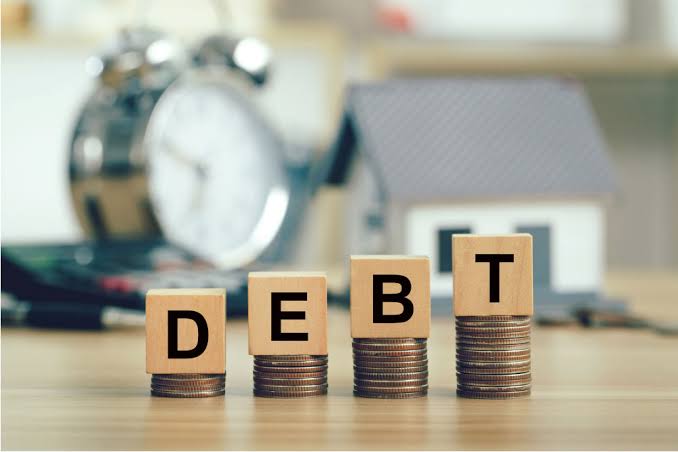
Nigeria spent $1.82 billion servicing its external debt in the first half of 2026, as rising interest payments absorbed more than three-fifths of the total, highlighting the growing pressure of debt obligations on the country’s foreign exchange earnings despite a decline in overall repayments.
Data from the Debt Management Office (DMO) showed that external debt service fell 21.5 per cent to $1.82 billion between January and June, from $2.32 billion in the corresponding period of 2025. The decline, however, was driven largely by a sharp reduction in principal repayments rather than lower interest costs.
Interest payments rose 12.2 per cent to $1.11 billion from $993.95 million a year earlier, accounting for 61.1 per cent of total external debt service. Principal repayments, by contrast, fell 50.7 per cent to $648.09 million from $1.31 billion.
Other charges and fees climbed 281.2 per cent to $61.75 million from $16.20 million, adding to the cost of servicing the country’s external obligations.
The figures expose a central challenge for Nigeria’s debt management: although the immediate repayment burden has eased, the recurring cost of borrowing is increasing, leaving less foreign exchange available for other public financing needs.
Commercial creditors received the largest share of payments, collecting $827.54 million, equivalent to 45.4 per cent of the total. Interest payments on commercial debt, largely associated with Eurobonds, increased by 11.7 per cent.
Eurobond investors alone received $645.16 million, representing 35.4 per cent of total external debt service, although this was 6.2 per cent below the $687.80 million paid in the first half of 2025.
Multilateral institutions received $676.12 million, or 37.05 per cent of total payments, down 50.2 per cent year-on-year. The decline was largely attributable to lower principal repayments, including the absence of the $816.29 million repayment to the International Monetary Fund recorded in the first half of 2025.
The International Development Association, the World Bank’s concessional lending arm, received $448.28 million, up 29.3 per cent from $346.81 million a year earlier, while the African Development Bank received $127.24 million.
Payments to bilateral creditors rose 16.7 per cent to $321.14 million from $275.08 million. China’s Export-Import Bank received $245.78 million, accounting for 76.6 per cent of bilateral debt-service payments.
The distribution of payments shows how commercial borrowing and development financing continue to place competing demands on Nigeria’s foreign exchange resources. While multilateral loans support infrastructure and development programmes, commercial obligations often carry higher financing costs.
For the economy, sustained increases in interest payments could constrain the government’s capacity to finance infrastructure, healthcare, education and other productive expenditure, particularly when domestic revenue remains under pressure.
The decline in principal repayments offers some temporary relief, but it does not necessarily indicate a lasting reduction in the debt burden. Future repayment schedules, borrowing costs and the ability of financed projects to generate economic returns will determine how manageable the obligations remain.
Nigeria’s debt sustainability will increasingly depend on stronger non-oil exports, higher foreign exchange earnings, improved revenue mobilisation and more disciplined borrowing. Without those improvements, lower principal repayments in one period may provide only temporary breathing space while interest costs continue to rise.
About The Author