NNPCL’s $60bn Investment Plan Faces Hurdles, Report Warns
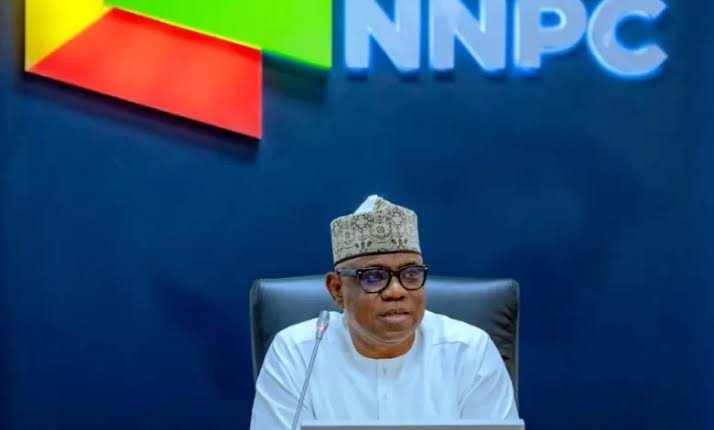
Group Chief Executive Officer of Nigerian National Petroleum Company Limited (NNPCL) Bayo Ojulari,
Samuel Mobolaji
The Nigerian National Petroleum Company Limited (NNPCL) may have to push for optimisation of non-operated assets to achieve new set targets as a new report identifies a number of sub-commercial and non-operated assets.
This is the findings released by Wood Mackenzie whi,ch notes that, te company could see its oil and gas production decline by as much as 50 per cent by the late 2030s.
Before the report, the newly appointed Group chief executive officer (GCEO) of the company, Bashir Bayo Ojulari, announced an ambitious target, to attract sectoral investments worth $30 billion by 2027 and $60 billion by 2030; raise crude oil production to over 2 million barrels per day, sustained through 2027 and attain 3 million by 2030.
Ojulari disclosed this while unveiling plans to expand refining output to 200kbpd by 2027, and 500kbpd by 2030; grow gas production to 10bcf per day by 2027, and 12bcf by 2030, and deepen energy access and affordability for all Nigerians.
But the new analysis by global energy research firm, Wood Mackenzie, warned of posthe sibilities of not getting such results.
In its recent podcast titled “A New Era for NNPC and Nigeria’s Upstream Oil & Gas Sector,” the consultancy firm said NNPCL’s portfolio is burdened by a large number of sub-commercial assets, which pose long-term viability concerns.
Using its new upstream benchmarking tool, Woodmac’s team of experts, including Ian Thom, Research Director for Upstream; Neivan Boroujerdi, Director of Corporate Research; and Mansur Mohammed, Head of West Africa Upstream Content, highlighted that while short-term production may improve slightly, output is expected to peak by 2026 before declining steeply.
“What is unique to NNPC is that, unlike a lot of the other National Oil Companies within our corporate universe and around the world, most of its production and its assets are non-operated.
“So it’s got big ambitions to grow its business, to grow the Nigerian upstream sector, but a lot of that will be reliant on a lot of other IOCs around the world, indigenous producers, where assets will have to compete for capital within a wider portfolio.
Meanwhile, President Tinubu has tasked the NNPCL to push towards achieving an ambitious set of goals by 2030, including raising oil production to 3 million barrels per day, gas output to 10 billion cubic feet per day, attracting $60 billion in investment, and refining 500,000 bpd domestically.
But Woodmac suggests these targets may be undercut by structural inefficiencies and fiscal hurdles.
On gas development, Woodmac flagged long-standing infrastructure constraints as a major bottleneck. It noted that Nigeria holds significant untapped gas reserves, especially in the Niger Delta, but less than 20 per cent of remaining volumes are considered commercially viable due to a lack of processing and transportation infrastructure.
“For instance, the OB3 pipeline, which should connect gas fields in the Eastern Delta to Lagos and other markets, has faced years of delay. Its completion could be a game changer,” the report said.
Operational costs are also a concern. Woodmac’s benchmarking tool shows that NNPCL has a higher cost base compared to its peers, driven by factors such as barrel losses, insecurity, and policy challenges like local content regulations.
“The Company must urgently address its cost competitiveness, especially if it wants to attract investors or consider an Initial Public Offering in the future,” the team warned.
About The Author