SEC: Abuja can raise N400bn for projects through capital market

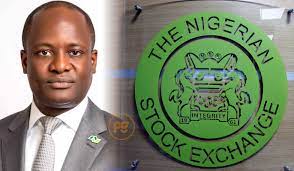
The Federal Capital Territory can mobilise hundreds of billions of naira to finance infrastructure without relying solely on annual budgetary allocations by using the capital market to unlock the value of its assets and future revenues, Director-General of the Securities and Exchange Commission (SEC), Dr Emomotimi Agama, has said.
Agama specifically identified the over N400 billion estimated cost of completing the abandoned Millennium Tower project as an investment opportunity that could be financed through a special purpose vehicle and offered to investors, rather than being treated entirely as a burden on the FCT budget.
He said the proposal was part of a broader capital-market financing model through which Abuja could raise long-term funds for roads, rail, mass transportation, housing, water infrastructure and other projects while spreading repayment over the useful life of the assets.
Speaking at the Abuja Business & Investment Summit and Expo (ABIE 2026) in Abuja, the SEC Director-General said the FCT should establish a long-term infrastructure bond programme backed by dedicated revenue streams including ground rents, tenement rates, tolls, parking fees and land-use charges.
“Cities are not built by budgets alone. Cities are built by capital markets,” Agama said.
He explained that the fundamental advantage of capital-market financing was its ability to match the long-term economic benefits of infrastructure with long-term funding.
“A budget can only spend what a single year has collected. A bond can spend what 30 years will collect,” he said.
The proposal could significantly alter the way Abuja finances infrastructure by shifting part of the burden from annual government revenue to institutional investors, pension funds and other long-term sources of capital.
Agama said the FCT could also issue green and sustainability-linked bonds to finance projects with environmental and social benefits, including mass transit, light rail, solar-powered street lighting, waste-to-energy facilities and water infrastructure.
Such instruments, he said, would allow Abuja to tap growing investor demand for assets linked to sustainable development while directing private capital towards projects that would otherwise compete for limited annual budgetary resources.
The SEC boss also proposed the establishment of an FCT Real Estate Investment Trust (REIT) to unlock value from the territory’s extensive property portfolio.
The structure would allow government-owned real estate assets to generate investment capital while giving ordinary Nigerians and institutional investors an opportunity to participate in Abuja’s property market.
He further urged Abuja Investments Company Limited (AICL) to consider listing some of its businesses on the Nigerian Exchange or establishing a listed infrastructure fund.
According to him, such a strategy could raise fresh capital without directly increasing government debt while also improving transparency, corporate governance and accountability.
The Millennium Tower, which has remained unfinished for years, provides what Agama described as a practical example of how capital-market financing could convert an abandoned public asset into an investable project.
Rather than financing the entire estimated N400 billion completion cost from the public purse, he proposed creating a special purpose vehicle capable of raising capital from investors.
“The question is not whether Nigeria can afford the Millennium Tower. The question is whether we will let ordinary Nigerians own it,” he said.
Agama also proposed an asset-recycling programme under which completed income-generating public assets could be securitised or concessioned to institutional investors, with the proceeds used to finance new infrastructure.
Potential assets identified for the programme include terminals, markets, commercial properties and the International Conference Centre.
Under the model, the government would unlock capital tied up in existing assets rather than repeatedly borrowing to finance new projects, while investors would receive returns from the underlying assets or their income streams.
The SEC chief also called on the FCT to explore regulated tokenised municipal securities that would allow citizens to invest directly in specific infrastructure projects through their mobile phones.
He said the model could potentially allow Nigerians to invest amounts as low as N10,000, broadening participation in infrastructure financing beyond large institutional investors and wealthy individuals.
The proposal comes as Nigeria’s capital market has expanded significantly and the SEC seeks to deepen its role in financing economic development.
Agama disclosed that total market capitalisation had exceeded N217 trillion as of May 2026, comprising about N160.5 trillion in equities and N56.7 trillion in bonds.
The size of the market, he said, provides a growing pool of domestic and international capital that governments and businesses can tap to finance productive assets.
Recent market reforms, including the migration to a T+1 settlement cycle and other measures aimed at improving market efficiency and participation, have also strengthened the infrastructure for capital-market transactions.
Agama said the recently enacted Investments and Securities Act 2025 had strengthened the legal framework for sub-national governments seeking to access the capital market, while enhancing investor protection and providing clearer regulation of digital assets.
He assured the FCT Administration that the SEC was ready to provide technical support in structuring, registering and regulating the proposed instruments.
The broader implication of the proposal is that Abuja would have to develop reliable revenue streams and bankable projects capable of generating sufficient returns to attract investors.
Agama acknowledged that access to finance alone would not guarantee successful infrastructure delivery.
“Money is not scarce; delivery capacity is scarce, and financing follows delivery capacity,” he said.
The challenge for the FCT, therefore, is not simply to borrow more money but to convert its land, property, infrastructure and future revenue streams into transparent, investable assets capable of attracting long-term private capital.
For Abuja, a successful shift towards capital-market financing could reduce pressure on annual budgets, accelerate infrastructure delivery and create wider public participation in assets traditionally owned and financed entirely by government.
It would also provide a potential model for other Nigerian sub-national governments seeking to finance infrastructure in an environment where public revenues remain under pressure, and competing demands on annual budgets continue to rise.
About The Author