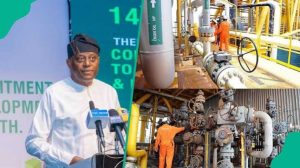
Nigeria’s export earnings rise 11.5% to $6.1bn, stakeholders seek value addition

Nigeria’s non-oil export earnings rose to a record $6.1 billion in 2025, representing an 11.5 per cent increase from the $5.46 billion recorded in 2024, but stakeholders in the trade and investment sector have called for deeper local processing to ensure the country captures more value from its exports.
They made the call at the 10th edition of Zenith Bank Plc’s International Trade Seminar on Non-Oil Export, themed, “Unlocking Value and Harnessing Growth,” where experts said Nigeria’s growing export poll
P earnings would have a greater impact on the economy if more raw commodities were processed into finished and higher-value products before being shipped abroad.
The $6.1 billion recorded in 2025 also represents a significant increase from the $612 million Nigeria earned from non-oil exports a decade ago, underscoring the growing contribution of the sector to the country’s foreign exchange earnings and economic diversification.
Group Managing Director and Chief Executive Officer of Zenith Bank, Dr Adaora Umeoji, said the growth in non-oil exports must translate into greater economic value for Nigeria, stressing that the country could no longer afford to focus solely on increasing export volumes.
She commended the Federal Government for its economic reforms and the Central Bank of Nigeria for measures aimed at improving foreign exchange stability and market confidence, but urged the country to accelerate efforts to develop local value chains.
“As we build on the progress recorded so far, it is important that, as a nation, we accelerate growth by creating more value locally and exporting finished products, rather than just raw materials,” Umeoji said.
According to her, Nigeria has significant opportunities to expand its non-oil export base, but the priority should now shift from simply exporting more commodities to increasing the value embedded in products before they leave the country.
The Minister of Industry, Trade and Investment, Dr Jumoke Oduwole, said Nigeria’s major challenge was to retain a larger share of the value generated from its exports.
“The question before us now is not simply how to export more, but how to retain more value in Nigeria from everything we export,” Oduwole said.
She said the ministry was focused on promoting competitive production, expanding local processing, connecting Nigerian businesses to larger markets and ensuring that financing, infrastructure and trade systems were available to support business expansion.
Oduwole also highlighted Nigeria’s position as an AfCFTA digital trade co-champion, saying the role could provide fresh opportunities for Nigerian businesses to access consumers and markets across Africa through digital platforms.
She urged financial institutions to move beyond financing individual export transactions and support businesses in building sustainable export capacity.
The minister also called on Nigerian businesses to invest in productivity, quality and skills development to improve their competitiveness in international markets.
Former President and Chairman of the Board of Directors of Afreximbank and Chairman of the Board of Directors of the Fund for Export Development in Africa (FEDA), Professor Benedict Oramah, said changing global economic conditions required African countries to rethink their approach to trade, production and financing.
Oramah said Africa needed to build stronger domestic demand and productive capacity rather than relying excessively on external capital and demand to drive economic growth.
“The question is whether Africa, and Nigeria within it, can build her own internal demand, participate effectively in global supply chains, build the capacity to finance her own trade and industries, and create her own markets,” he said.
Also speaking, Founder and Executive Chair of Plot Enterprise Ghana Limited, Mrs Patricia Poku-Diaby, said African economies could not achieve sustainable growth while remaining dependent on the export of unprocessed natural resources.
She urged African countries to transform their raw materials into finished products and develop strong indigenous brands capable of competing in international markets.
“The future of our economy will not be determined simply by what we grow or what we mine, but by what we transform,” Poku-Diaby said.
She said Africa must move from being a supplier of raw materials to becoming a continent of producers, processors, manufacturers and exporters.
The UK Minister of State at the Ministry of Housing, Communities and Local Government, Rt. Hon. Florence Eshalomi, represented by the Head of Trade Policy for UK Business, Innovation, Science and Trade, Ms Mujina Kaindama, similarly stressed the importance of value addition to Nigeria’s export strategy.
She said Nigeria’s entrepreneurial talent, innovation and creativity provided a strong foundation for the country to move further up the global value chain and generate greater economic returns.
According to her, processing raw materials, developing branded products and producing higher-value manufactured and agricultural goods would enable Nigerian businesses to earn more, create jobs and support sustainable economic growth.
The Secretary-General of the African Continental Free Trade Area Secretariat, Wamkele Mene, said the private sector would be critical to driving Africa’s industrialisation and economic transformation.
He said the success of the AfCFTA would ultimately depend on the ability of businesses to use the continental market to expand investment, increase productive capacity and create jobs.
“The success of the AfCFTA will ultimately be measured not by how many protocols and legal instruments have been signed, but by the extent to which our private sector can leverage the AfCFTA to access new markets, scale their investment and scale their productive capacity to create jobs across the continent,” Mene said.
The stakeholders agreed that the rise in Nigeria’s non-oil export earnings represented a significant opportunity to accelerate economic diversification, but warned that sustained gains would depend on stronger local value chains, improved infrastructure, access to affordable trade finance, adherence to international quality standards and increased processing capacity.
They maintained that moving beyond the export of raw commodities to value-added products would enable Nigeria to retain a greater share of its export earnings, deepen industrialisation, create employment and strengthen the country’s position in global and African supply chains
About The Author