CBN taps market for N700bn as Q3 Treasury Bill borrowing hits N5.8trn
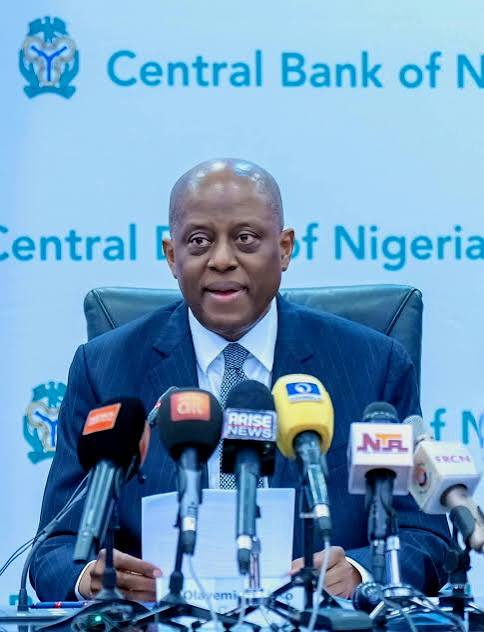
The Central Bank of Nigeria (CBN) is returning to the domestic debt market with a N700 billion Treasury Bills offer on September 2, 2026, as the Federal Government moves towards completing a N5.8 trillion Treasury Bills issuance programme for the third quarter amid strong investor demand and expectations of lower interest rates.
The latest auction, to be conducted on behalf of the Debt Management Office (DMO), comprises N100 billion in 91-day bills, N100 billion in 182-day bills and N500 billion in 364-day bills, making the one-year instrument the dominant target.
Authorised Money Market Dealers are required to submit bids through the CBN S4 Web Interface between 8:00 a.m. and 11:00 a.m. on September 2, with the results expected the same day and allotment letters due on September 3.
The latest offer forms part of the N5.8 trillion Q3 2026 NTB programme, under which the government plans to issue N900 billion in 91-day bills, N900 billion in 182-day bills and N4 trillion in 364-day securities.
The 364-day tenor therefore accounts for approximately 69 per cent of the entire quarterly issuance, underscoring the government’s preference for longer-dated domestic borrowing.
Of the N5.8 trillion scheduled issuance, about N2.64 trillion in Treasury Bills will mature during the quarter, leaving an estimated N3.16 trillion in net new borrowing after refinancing existing obligations.
The September auction comes after an unusually active August, during which the CBN repeatedly allotted amounts above advertised offers.
At the August 12 auction, investors submitted N4.4 trillion against N700 billion offered, with the 364-day bill alone attracting N4.19 trillion.
The apex bank raised the one-year stop rate by 24 basis points to 17.59 per cent, from 17.35 per cent previously.
However, at the August 26 auction, the CBN reversed course, cutting the 364-day stop rate by 44 basis points to 17.15 per cent.
The shift has heightened interest in the September auction, particularly as financial markets anticipate a possible reduction in the Monetary Policy Rate at the September Monetary Policy Committee meeting.
The Q3 programme has also had significant implications for banking-system liquidity.
Two notable maturity dates — July 22 and August 19 — released N378.43 billion and N429.23 billion, respectively, into the financial system without corresponding new issuance on those days.
The CBN subsequently returned to the market through Treasury Bills and Open Market Operations to absorb portions of the excess liquidity.
In August alone, the CBN allotted a combined N2.218 trillion against N1.4 trillion advertised, reflecting its willingness to take more funds from investors when market conditions allow.
The approach has allowed the apex bank to use government securities not only as a funding instrument but also as a tool for liquidity management and monetary-policy transmission.
Market participants are now watching the September auction closely for signals on the direction of yields.
Analysts have warned that maintaining elevated interest rates to attract foreign portfolio investors can impose high costs on the wider economy by increasing government borrowing expenses and raising the cost of credit to businesses.
Others argue that the continued issuance and liquidity management are necessary to contain money supply, support inflation control and preserve exchange-rate stability.
The latest auction is therefore occurring at a delicate point for monetary policy.
On one side, investors continue to show strong demand for high-yielding naira securities. On the other, expectations of monetary easing could encourage the CBN to begin lowering Treasury Bill yields and reduce borrowing costs.
The N700 billion September 2 offer will consequently provide an early indication of how the apex bank intends to balance those competing objectives.
For fixed-income investors, the 364-day bill remains the key attraction because it offers the opportunity to lock in returns before an anticipated rate-cut cycle.
For government, however, the size of the Q3 programme highlights the continuing reliance on domestic borrowing to finance fiscal requirements.
With N5.8 trillion scheduled for Q3 issuance, N4 trillion concentrated in one-year paper and about N3.16 trillion estimated as net new borrowing, the September auction will be closely watched as Nigeria approaches the final phase of its 2026 Treasury Bills programme.
About The Author