Africa’s 600m without power makes continent key to global energy security-Tegbe
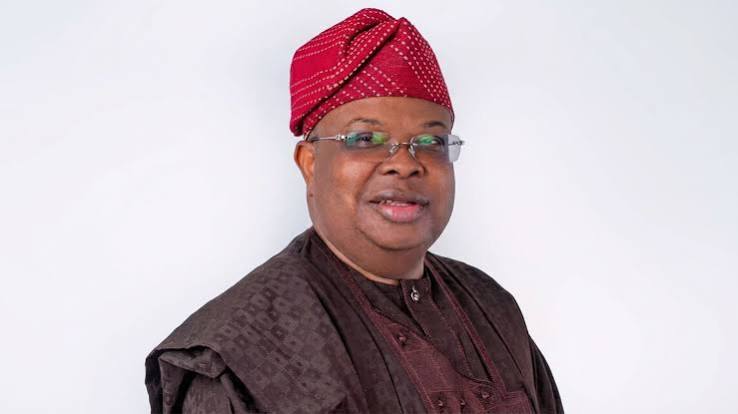
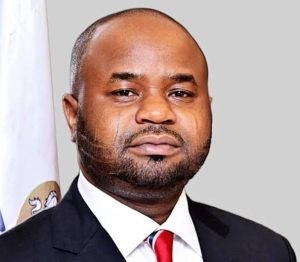
Africa is emerging as a decisive battleground in global energy security, with about 600 million people still lacking access to electricity, while the continent’s gas, critical minerals and vast renewable-energy potential increasingly place it at the centre of global energy geopolitics, Minister of Power Joseph Tegbe has said.
Tegbe made the remarks in Dubai while delivering the keynote address at the opening plenary of the Middle East Energy 2026 Leadership Summit, held under the theme “Energy Security and the Effect of Geopolitics” at the 50th edition of the summit.
He said energy security could no longer be measured simply by the size of a country’s oil and gas reserves, arguing that it now encompasses the resilience of electricity grids, critical-mineral supply chains, financing systems and institutions required to keep energy flowing during geopolitical and economic shocks.
“Africa is not at the margins of energy geopolitics; it is the fulcrum,” Tegbe said.
He positioned Nigeria as an important part of that global energy equation, citing the country’s more than 200 trillion cubic feet of proven natural gas reserves and its record of supplying liquefied natural gas reliably to European and Asian markets for more than two decades.
Tegbe also highlighted Nigeria’s Electricity Act 2023, describing it as one of the most significant reforms in the power sector in a generation.
According to him, the legislation ended the longstanding federal monopoly over electricity generation and distribution and opened opportunities for 37 emerging electricity markets across the country.
He said Nigeria’s reform agenda under President Bola Ahmed Tinubu was ultimately aimed at creating the confidence required to attract long-term capital, particularly through regulatory certainty, contract enforcement and bankable electricity offtake arrangements.
“Capital does not flee risk; it flees uncertainty. Investors will price risk all day long; what they cannot price is a rule that changes after the contract is signed,” Tegbe said.
The minister outlined four broad propositions for global energy leaders, stressing that diversification rather than diplomatic disengagement remains the strongest form of strategic protection against disruptions.
He also called for electricity grids to receive the same strategic attention historically devoted to fuel supplies, warning that a modern economy cannot achieve energy security without resilient transmission and distribution networks.
Affordability, he added, should be treated as a security issue, with the global energy transition designed around the differing economic circumstances and development needs of individual countries.
Tegbe said Africa’s enormous energy deficit also represented a major investment opportunity.
Beyond the 600 million Africans without electricity, he cited the continent’s mineral resources, abundant solar potential, youthful population and rapidly expanding energy demand as forces that would increasingly shape global energy markets.
He urged international investors and development partners to move beyond the traditional model of extracting African resources for export.
Instead, he called for greater investment in local mineral processing, manufacturing, technical skills and patient capital capable of building sustainable African energy industries.
“Nigeria has chosen to build. Africa has chosen to build. And we invite you, in the spirit of this remarkable city and this landmark fiftieth summit, to build with us,” he said.
Tegbe’s intervention comes as governments globally reassess energy security following a series of geopolitical disruptions that have exposed vulnerabilities in fuel supply chains, shipping routes, electricity networks and critical-mineral markets.
For Nigeria, the opportunity is to use its 200 trillion cubic feet gas resource base, growing electricity markets and renewable-energy potential to attract investment into infrastructure rather than simply export raw energy resources.
The minister’s participation in the Dubai summit is expected to continue with a ministerial fireside session on financing Africa’s power future under the summit’s Africa Spotlight programme.
For investors, Tegbe’s central message is that Africa’s energy deficit should not be viewed solely as a development challenge. With 600 million people lacking electricity, vast gas and mineral reserves and rapidly growing demand, it represents one of the world’s largest emerging energy-infrastructure markets.
About The Author