MTN, BOI commit N1bn to 200 women-led businesses as Y’ellopreneur tackles finance gap
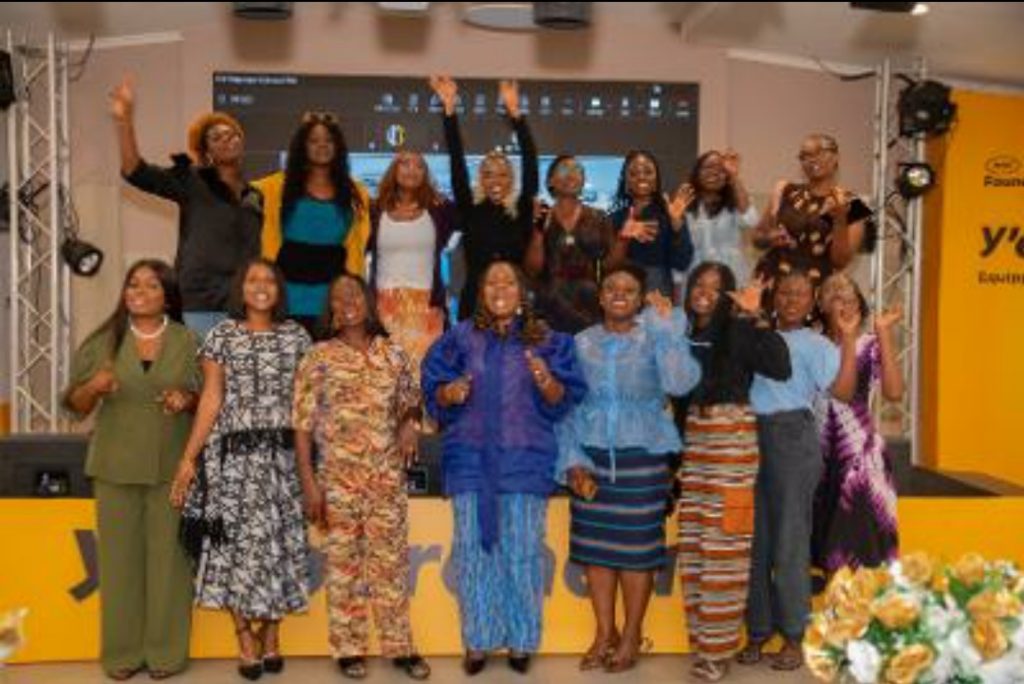
MTN Foundation and the Bank of Industry (BOI) have committed a combined N1 billion equipment-financing fund to help 200 Nigerian women entrepreneurs expand their businesses under the third edition of the Y’ellopreneur initiative, as the programme moves to address one of the biggest constraints facing female-owned enterprises, access to finance.
The fund, financed equally by MTN Foundation and BOI, provides eligible women-led micro, small and medium enterprises (MSMEs) with access to loans of up to N5 million each, alongside intensive business training and advisory support.
The initiative reached another stage on Tuesday, August 11, 2026, with a pitch session held at the MTN Rooftop Events Centre, Ikoyi, Lagos, following six weeks of intensive training at the Enterprise Development Centre of Pan-Atlantic University.
The training focused on strengthening participants’ business planning, management capabilities, market readiness and ability to develop bankable businesses capable of attracting and effectively utilising financing.
The pitch session featured 760 entrepreneurs, with as many as 200 female entrepreneurs to ultimately benefit from the equipment-financing support.
The intervention is significant given the financing constraints confronting women-owned businesses in Nigeria. World Bank research shows that women own about 40 per cent of the country’s MSMEs, but female-led businesses continue to face disproportionately high barriers to formal finance.
Its findings indicate that women-led businesses recorded a 56 per cent loan rejection rate, compared with just 17 per cent for male-led firms, underscoring the scale of the financing gap facing female entrepreneurs.
MTN Foundation and BOI are seeking to address that challenge by combining access to capital with business development and advisory support, rather than providing financing in isolation.
State Manager at the Bank of Industry, Dr Sandra O. Yoroh, said the training had helped participants better understand the importance of putting proper structures in place before seeking to scale their businesses.
“They understand what they need to have a structure in the business and what it means for a business to be properly structured,” Yoroh said.
She added that BOI would provide business advisory services and assess the enterprises presented during the pitch session, with the broader objective of helping participants build sustainable businesses.
For the entrepreneurs, the training has also provided practical lessons that could improve their ability to manage people, customers and operations.
Adejo Oladunni Olamide, Supervisor at Dunz Agro Food, an agribusiness involved in farming and food processing, said the six-week programme improved her understanding of business management and gave her a clearer path for expansion.
“The journey so far has been so innovative, from the learning to the application, to the pitching. Through this process, I’ve been able to acquire knowledge on business management, staff management, and customer management,” she said.
She expects the programme to improve the visibility of her business while helping her adopt a more productive approach to managing its growth.
The Y’ellopreneur programme covers a range of sectors, including agro-processing, light manufacturing, fashion, energy, waste management and digital services, reflecting the diversity of businesses operated by women across Nigeria.
By linking financing to business training, MTN Foundation and BOI are also attempting to reduce the risk that entrepreneurs receive loans without the capacity to deploy the funds effectively.
The model places business structure, financial management and market readiness alongside access to equipment financing, giving beneficiaries the tools to convert capital into productive capacity.
For Nigeria’s wider economy, strengthening women-led businesses has implications for employment, household incomes and enterprise development, particularly because many female-owned businesses operate within sectors with strong links to agriculture, manufacturing, retail and services.
The N1 billion matching fund therefore represents more than a financing intervention for 200 businesses. It is an attempt to move women entrepreneurs from survival-level operations towards more structured and scalable enterprises.
The success of the initiative will ultimately be measured by whether beneficiaries can use the financing and training to increase production, create jobs, expand market access and build businesses capable of sustaining growth beyond the programme.
About The Author