Dangote’s N2.15trn IPO: Mega listing puts NGX, investors to the test
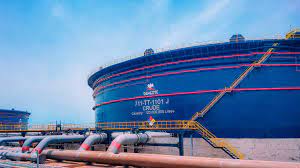
From transforming Nigeria’s dependence on imported petroleum products to emerging as one of the continent’s largest industrial assets, the Dangote Petroleum Refinery is now entering a new chapter as it prepares to invite the investing public into its ownership. With a potential ₦2.15 trillion ($1.63 billion) to be raised and an implied valuation of about $47 billion, the planned listing could reshape the size and structure of Nigeria’s capital market while forcing investors to answer a more fundamental question: how much is Africa’s largest refinery really worth?
The Securities and Exchange Commission (SEC) has approved an offer of 4.1 billion shares at ₦525 each, with the order book expected to open on September 14. The transaction is set to become Africa’s largest-ever initial public offering if completed as planned.
For the Nigerian Exchange, the significance goes far beyond the money raised. Dangote Refinery is not simply another blue-chip joining the market. Its scale, energy exposure and international earnings potential could materially change the structure of the NGX, attract new foreign and institutional capital and create a new benchmark for how Nigeria values strategic industrial assets.
But for investors, the excitement must eventually give way to a harder question: is a $47 billion valuation justified by the refinery’s earnings, cash flow and future growth?
That question is becoming central because the refinery has already attracted strong private-market interest. In July, it raised $2.5 billion in a private placement that was 3.7 times oversubscribed, with Africa Finance Corporation and other institutional investors participating.
The transaction marked a major vote of confidence in the asset, but it also established a valuation framework against which public investors will now judge the IPO.
The refinery is huge but size is not valuation
There is no dispute over the refinery’s industrial significance. Built at a cost of about $20 billion, the facility has a nameplate capacity of 650,000 barrels per day and reached full designed capacity in February. Management is targeting an expansion to 1.4 million barrels per day, which would place it among the world’s largest refining complexes.
That scale gives Dangote Refinery strategic importance well beyond its corporate balance sheet. It is reducing Nigeria’s dependence on imported refined petroleum products, supplying the domestic market and increasingly competing for export markets.
The investment case therefore contains a genuine growth story. But size alone does not produce shareholder returns.
According to independent valuation analysis by chartered accountant Adeshina Alayaki FCA, the widely discussed $40 billion-$50 billion valuation range looks aggressive relative to the refinery’s demonstrated economics before full audited IPO disclosures are considered. His preliminary fair-value estimate was $25 billion-$32 billion, with a central range of roughly $28 billion-$30 billion.
He warned investors against subscribing simply because the company carries the Dangote name or because it is Africa’s largest refinery.
That caution goes to the heart of the IPO. Investors are not buying the refinery’s history. They are paying for its future.
A giant asset creates a giant market test
The listing could transform the scale of the NGX. At an implied valuation approaching $47 billion, Dangote Refinery would rank among the largest companies in Africa and become considerably larger than many of the exchange’s existing blue-chip names.
The effect would be felt in market capitalisation, sector weightings and institutional portfolios.
Nigeria’s equity market has historically been dominated by banks, telecommunications companies and consumer businesses. The addition of a giant energy and industrial company would give the NGX a new heavyweight and materially strengthen the representation of the oil and gas value chain.
Index managers would also have to adjust to its presence. Institutional funds benchmarked against Nigerian or frontier-market indices could eventually have to allocate to the refinery, depending on its free float and index eligibility.
That could create sustained buying interest after listing. But there is another side to the story.
The same institutional investors buying Dangote Refinery may need to sell other Nigerian stocks to create liquidity for the purchase.
The IPO could therefore deepen the market while simultaneously draining liquidity from existing counters.
That makes its impact on the wider NGX difficult to judge until subscription data reveal how much money is genuinely coming into Nigerian equities from outside the existing market.
The retail investor finally gets access
The transaction also has enormous symbolic importance for Nigerian retail investors.
Dangote has positioned the public offering as an opportunity for Nigerians to own part of an asset that was previously available only to private shareholders and institutional investors. The company has also indicated that the IPO is intended to broaden ownership.
That could produce a major psychological shift in the domestic market. Millions of Nigerians who know Dangote mainly as a brand could now have direct exposure to the company’s refining business.
But retail participation will only become genuine wealth creation if investors approach the offer as an investment rather than a national-status purchase.
The refinery is strategic; The shares are still securities; Their value will ultimately depend on profitability, cash generation, dividends and growth.
That distinction is especially important because the offer price is high enough to invite close scrutiny.
Crude supply is an investor risk
One of the less visible issues investors will have to assess is crude supply.
Despite its location in Nigeria, the refinery has not depended entirely on locally produced crude. Reuters reported in August that roughly 30 per cent to 40 per cent of the refinery’s crude supply was being imported, including US WTI Midland, as the company navigated the challenges of securing domestic feedstock.
That matters because refining margins depend heavily on the relationship between crude acquisition costs and refined-product prices.
If local crude supply improves, the refinery could benefit from lower feedstock and logistics costs.
If imports remain necessary at scale, the company remains exposed to international crude prices, shipping costs, foreign exchange and global supply disruptions.
For investors, therefore, refinery capacity is only half the equation. The other half is the cost of keeping that capacity running profitably.
The 1.4m bpd expansion is both opportunity and risk
Dangote’s plan to increase capacity from 650,000 barrels per day to 1.4 million bpd provides one of the strongest arguments for the company’s long-term valuation.
If executed successfully, the expansion could materially increase revenue, exports and cash flow and strengthen Dangote Refinery’s position as a pan-African energy platform.
The IPO proceeds are intended in part to support that expansion.
But investors should also recognise what this means: part of the current valuation is effectively a bet on what the refinery will become, not simply on what it is today. That introduces execution risk.
Large expansion projects can experience cost overruns, financing pressures, construction delays and changing market conditions. The higher the valuation investors accept today, the more of that future success is already embedded in the share price.
Nigeria’s market gets a credibility test
The Dangote IPO is therefore also a referendum on the Nigerian capital market.
For years, policymakers have argued that the NGX needs larger, liquid, internationally relevant companies capable of attracting long-term capital.
This transaction could provide exactly that.
The refinery already has a scale that commands international attention. The private placement attracted strong institutional demand, while the company has secured a $1 billion underwriting programme, comprising a funded $600 million private placement and another $400 million underwriting commitment ahead of the IPO.
That gives the transaction a significant financial cushion. But the real test begins when ordinary investors start deciding what the shares are worth.
A $47bn question, not a $2.15trn question
For the market, the headline figure is ₦2.15 trillion; For Dangote, it is fresh capital for expansion; For the NGX, it is a chance to become deeper and more internationally visible. For investors, however, the most important figure is the roughly $47 billion implied valuation.
That is the price at which the market is being asked to believe in the refinery’s future earnings, expansion, export potential and ability to generate shareholder returns. And that is where the debate will become much tougher.
An independent analysis has already suggested that a $40 billion-$50 billion valuation may be aggressive, while Reuters has reported that analysts are questioning how the refinery’s valuation compares with established international refiners.
The strategic case for Dangote Refinery is compelling. The investment case must still prove itself.
That is why the September IPO could become one of the most important events in Nigeria’s financial-market history. A successful flotation would demonstrate that the Nigerian Exchange can mobilise billions of dollars for world-scale industrial companies, broaden domestic ownership and attract global capital into Nigerian assets.
A weak response, however, would expose the limits of domestic liquidity and force a reassessment of how much investors are willing to pay for Nigeria’s industrial ambitions. For Nigerian investors, the lesson is straightforward.
Do not confuse the refinery’s importance to Nigeria with the value of its shares
The first is strategic. The second must be earned through earnings, cash flow, dividends and growth. That is the real test Dangote Refinery will take to the Nigerian Exchange on September 14.
About The Author