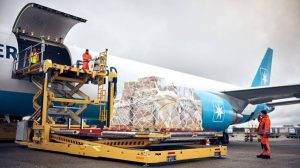
FAAN, customs agents move to fix air cargo bottlenecks at Lagos airport
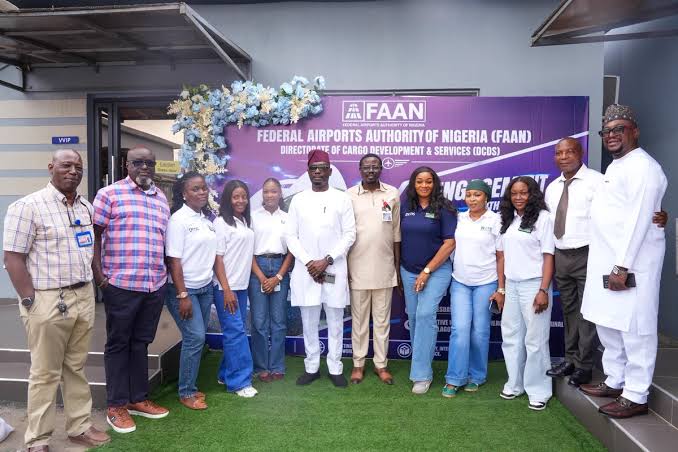
The Federal Airports Authority of Nigeria (FAAN) has moved to strengthen coordination with customs brokers and other operators in the air cargo value chain as it seeks to improve cargo clearance, compliance and operational efficiency at the Pilgrims and Cargo Terminal (PCT), Murtala Muhammed International Airport, Lagos.
FAAN, through its Directorate of Cargo Development and Services (DCDS), engaged the top 100 Licensed Customs Agents operating at the terminal in what participants described as a significant step towards improving relations between the airport authority and the customs brokerage community.
The engagement provided a platform for direct discussions on cargo movement, clearance procedures, operational efficiency, stakeholder relations, training, compliance and the broader business environment at the airport.
Representatives of the customs agents said the meeting was particularly significant because it allowed them to engage directly with FAAN on issues affecting their operations and contribution to the air cargo ecosystem.
The agents said they had not experienced a similar engagement of this scale with the airport authority in more than 30 years, despite their central role in facilitating cargo clearance and movement.
They welcomed the recognition of their contribution and used the meeting to identify operational challenges they believe require closer coordination among FAAN, customs brokers and other agencies operating within the cargo terminal.
Issues raised during the engagement covered cargo clearance and movement at the PCT, as well as challenges involving other departments, agencies and stakeholders across the wider cargo value chain.
The DCDS acknowledged the concerns and said the objective was not simply to listen to stakeholders but to establish a more structured and continuous mechanism for identifying operational problems and developing solutions.
The Directorate stressed that compliance, security, documentation, accountability and adherence to established procedures would remain essential to building a modern and competitive air cargo environment.
It also emphasised that different agencies within the terminal have separate statutory responsibilities and that issues requiring intervention by other departments or government agencies would be channelled through the appropriate institutional structures.
The engagement forms part of the DCDS’s broader stakeholder strategy, which recognises that airport cargo efficiency depends on more than physical infrastructure.
Airlines, ground handlers, customs agents, freight forwarders, regulators, security agencies and other operators must coordinate effectively if cargo is to move quickly and predictably through the system.
Delays or poor coordination at any point in the chain can increase cargo dwell time and operating costs, weakening the competitiveness of Nigerian airports as regional cargo gateways.
The DCDS said it was therefore seeking to move away from an essentially transactional relationship with cargo stakeholders towards a more structured partnership based on communication, accountability, service standards and measurable improvements.
The Directorate also used the engagement to outline its vision for a more efficient, secure, transparent and business-friendly cargo environment at the PCT, while stressing that stakeholder participation must be matched by compliance with applicable laws and airport procedures.
For the customs brokerage community, the meeting represents an opportunity to place operational challenges directly before the agency responsible for managing airport facilities and cargo development.
For FAAN, it provides a mechanism to obtain direct feedback from one of the key groups involved in cargo processing and identify areas where coordination can improve throughput.
The move comes as Nigeria seeks to strengthen its air cargo infrastructure and capture a larger share of regional trade, particularly for time-sensitive agricultural products, manufactured goods and other high-value consignments.
The success of the initiative will ultimately depend on whether the dialogue produces practical changes in cargo processing, faster resolution of bottlenecks and clearer coordination among the institutions responsible for moving goods through the airport.
FAAN’s latest engagement therefore marks the beginning of a more deliberate cargo-governance approach, with the potential to turn stakeholder cooperation into shorter clearance delays, stronger compliance and a more competitive air cargo business environment
About The Author