Smartphone ownership hits 75% as Nigeria’s digital economy expands
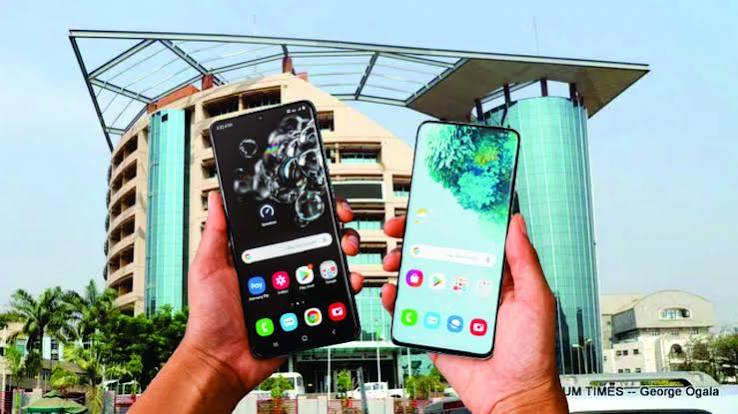
Nigeria’s smartphone ownership has risen to 75 per cent from 64 per cent in 2023, accelerating the shift of millions of consumers and businesses towards mobile banking, digital commerce, education, transportation and other online services.
The increase was reported in a new Nigeria Smartphone Study by KPMG, conducted in partnership with Orange Group Nigeria, which surveyed 13,251 respondents across 12 major Nigerian cities.
The findings point to smartphones becoming more than communication devices as businesses increasingly use digital platforms to reach customers, process payments, deliver services and expand beyond traditional physical markets.
KPMG said Nigeria’s large, youthful and entrepreneurial population was driving adoption, supported by improving connectivity and greater smartphone affordability.
The economic significance is already visible in the scale of digital activity. Nigerian Communications Commission (NCC) data cited by KPMG showed 157 million internet subscribers in May 2026, while monthly data consumption exceeded 1.5 million terabytes.
The NCC’s latest statistics show the expansion has continued. Mobile internet subscriptions reached 157.27 million in July, while data consumption rose to 1.66 million terabytes, the highest monthly figure in the available 2026 series.
The growing smartphone base is creating a larger addressable market for banks, fintech companies, online retailers, transport platforms, media businesses and technology companies. It is also lowering the barriers through which small businesses can reach customers, receive payments and operate outside conventional physical locations.
KPMG said smartphones were increasingly enabling economic participation, innovation and entrepreneurship as mobile applications spread across financial services, telecommunications, commerce, entertainment, education and transportation.
The development is particularly important for Nigeria’s financial sector, where mobile devices are increasingly becoming the main interface between customers and digital banking and payment platforms. For businesses, wider smartphone ownership also supports online sales, digital advertising, delivery services and remote customer engagement.
The expansion is taking place alongside the growing contribution of technology to the wider economy. KPMG said the Information and Communication sector accounted for 11.31 per cent of Nigeria’s real GDP in the first quarter of 2026.
But the growth in smartphone ownership masks a significant digital access gap.
More than one-third of mobile subscribers were still using 2G as of May, according to KPMG, highlighting differences in the quality and speed of connectivity available to Nigerians.
The broader challenge is even greater when actual internet usage is considered. GSMA has identified Nigeria as one of the countries with the world’s largest mobile internet usage gaps, estimating about 130 million people were living within mobile broadband coverage but not using mobile internet in 2024.
KPMG said affordability, infrastructure limitations, digital literacy and cybersecurity concerns could constrain the next phase of adoption.
That means the economic opportunity from higher smartphone ownership will depend increasingly on whether Nigerians can afford capable devices, access fast and reliable networks and develop the skills required to use digital services productively.
For Nigeria, the smartphone boom is therefore becoming an economic story as much as a technology story. The larger the population that can reliably use digital financial services, markets, education and business platforms, the greater the potential for technology to raise productivity, expand financial inclusion and create new channels of economic activity.
The next challenge is to ensure that the growth in smartphone ownership does not produce a digital economy in which access to the device expands faster than access to affordable, reliable and meaningful digital services.
About The Author