FG, Lagos move to unlock industrial growth with 24/7 power zone

The Federal Government and Lagos State Government have begun work on a dedicated power strategy aimed at delivering reliable electricity to homes, businesses and industries across Lagos, in a move expected to lower energy costs, improve industrial productivity and strengthen the commercial viability of the electricity market.
The initiative forms part of the Federal Government’s proposed 24/7 Energy Zones, which will initially target some of Nigeria’s highest-demand economic corridors, including Lagos, before expanding to the Abuja-Kaduna-Kano and Enugu-Port Harcourt axes. The government says the zones are designed to address weaknesses across generation, transmission, distribution and market liquidity rather than treating inadequate electricity as a generation problem alone.
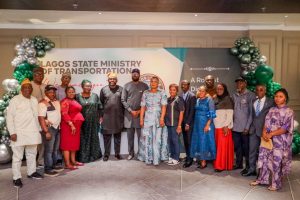
The Minister of Power, Joseph Tegbe, reached the agreement with Lagos State Governor Babajide Sanwo-Olu during a high-level technical meeting at Lagos House, Marina.
Tegbe said the Federal Government had engaged electricity distribution companies operating along the Lagos corridor and secured commitments to take up more available power and improve supply to consumers.
He identified four priority areas for the intervention: grid stabilisation, market liquidity, grid expansion, and governance and regulatory harmonisation.
The emphasis on distribution and market liquidity is significant because additional generation has limited economic value when electricity cannot be transmitted to demand centres or is not adequately taken up and delivered by distribution companies.
Tegbe said the government was therefore working to address the technical and financial weaknesses preventing available electricity from reaching households, commercial centres and industrial users.
The minister’s position reflects a broader shift in the power-sector strategy towards creating commercially viable demand centres. In a recent engagement with DisCos, he said the proposed Energy Zones were intended to close gaps at the distribution end, unlock commercial and industrial demand and strengthen DisCo revenue and collections.
For Lagos businesses, dependable electricity could have an immediate economic impact by reducing dependence on diesel and petrol generators, lowering production costs and improving the utilisation of factories, offices, shops and other commercial facilities.
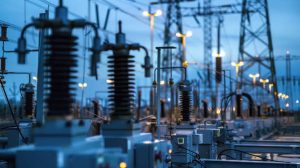
The Federal Ministry of Power has also identified grid stability as a foundation for improving generation, distribution and investment across the electricity value chain, with fresh investment planned to address recurring grid instability and voltage fluctuations.
Sanwo-Olu said Lagos was ready to work with the Federal Government to develop a competitive and collaborative electricity market capable of supporting economic growth and improving living conditions across the state.
To translate the agreement into implementation, the government will establish a Joint Technical Committee comprising representatives of the Nigerian Independent System Operator, Nigerian Electricity Regulatory Commission, Transmission Company of Nigeria, Rural Electrification Agency, Lagos State Electricity Regulatory Commission, Lagos Independent System Operator and other federal and state institutions.
The committee will report to a Steering Committee to be chaired by Sanwo-Olu and co-chaired by Tegbe.
The Federal Government’s wider power programme is also increasingly focusing on metering and reducing losses. Its Presidential Metering Initiative targets five million smart meters by 2027 and seeks to cut aggregate technical, commercial and collection losses from 40 per cent to 20 per cent.
For Nigeria’s largest commercial centre, the success of the Lagos Energy Zone would therefore be measured not simply by the hours of electricity supplied, but by whether reliable power lowers operating costs, raises industrial output, improves DisCo collections and makes electricity infrastructure more attractive to investors.
That would turn 24-hour electricity from a service promise into an economic input capable of supporting production, jobs and investment across Lagos.
About The Author