Naira seen at N1,330/$ by year-end as reserves top $55bn
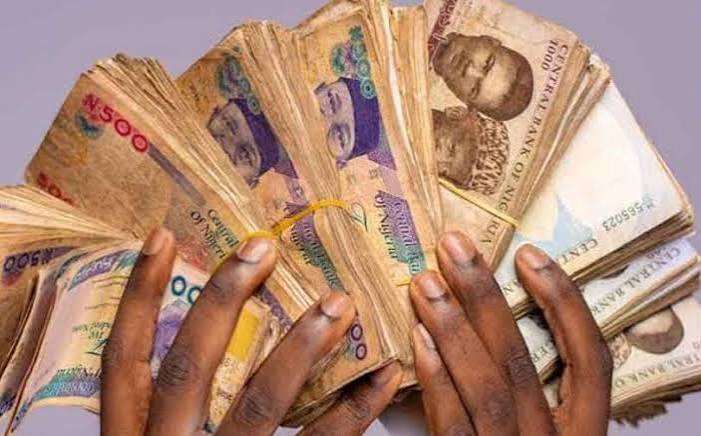
The naira is projected to close 2026 at around N1,330 per dollar, supported by rising foreign exchange reserves, renewed foreign portfolio investment and lower fuel import requirements as domestic refining expands.
The forecast is contained in Dangote Group’s H1 2026 Economic Report, which projects an average exchange rate of N1,385 per dollar for the full year, reflecting expectations that improving external liquidity will sustain the currency’s recent gains.
According to the report, the naira appreciated by about four per cent against the dollar in the first half of 2026, trading around N1,380 at the official foreign exchange market. It subsequently strengthened to about N1,330 in August.
The group projected quarterly averages of N1,405 per dollar in the second quarter, N1,340 in the third quarter and N1,330 in the fourth quarter.
The year-end forecast is broadly in line with recent market levels. The naira traded at N1,332.75 per dollar on October 7, according to data from the Central Bank of Nigeria (CBN). Meanwhile, Nigeria’s gross foreign reserves have risen above $55 billion, while net reserves reached $46 billion, strengthening the country’s capacity to meet external obligations and absorb foreign exchange shocks. <Cite refs={[“turn288316search5″,”
Dangote Group attributed the naira’s improvement to several factors, including higher foreign exchange reserves, positive real interest rates that have attracted foreign portfolio investors, and an improving current account position.
The expansion of domestic refining is another important factor. By reducing the need to import refined petroleum products, Nigeria can retain more foreign exchange that would otherwise be spent on fuel purchases abroad.
The country’s petrol import bill fell sharply to N87.40 billion in the first quarter of 2026 from N2.27 trillion in the corresponding period of 2025, according to National Bureau of Statistics data cited in the Dangote Group report. <Cite refs={[“turn563077view0”]}/>
The reduction provides an important channel through which domestic refining can improve Nigeria’s external accounts, although the overall benefit will depend on crude supply arrangements, refining costs, product pricing and the sustainability of local production.
The report also outlined different growth scenarios for the Nigerian economy in 2026. Under its downside scenario, tighter monetary conditions and weaker investor confidence could limit annual growth to 3.9 per cent. Under the upside scenario, stronger oil production and earlier monetary easing could lift growth to 4.4 per cent.
It suggested that stronger-than-expected second-quarter growth indicated that the drag from restrictive monetary policy might be easing sooner than previously anticipated. Improved implementation of capital spending and a gradual recovery in domestic demand could also support activity in the final quarter.
The World Bank has separately raised its 2026 growth forecast for Nigeria to 4.3 per cent, from 4.0 per cent in 2025, and projected annual growth of 4.4 per cent in 2027 and 2028. The lender cited improving macroeconomic stability, investor confidence and a gradual recovery in private investment. <Cite refs={[“turn563077view2”]}/>
Despite the improved outlook, sustaining the naira’s recovery will depend on the durability of foreign exchange inflows. Portfolio investment can strengthen liquidity quickly, but such funds may reverse when interest rates, exchange-rate expectations or global market conditions change.
For the economy, the more sustainable path lies in combining stronger oil receipts with rising non-oil exports, diaspora remittances, productive investment and lower dependence on imported refined products.
The N1,330 forecast therefore reflects growing confidence in Nigeria’s external position, but maintaining that level will require the country to turn stronger reserves and improved dollar liquidity into lasting foreign exchange earnings rather than rely excessively on temporary capital inflows.
About The Author