Fuel relief or hidden subsidy? Economist warns Tinubu’s petrol cushion lacks transparency
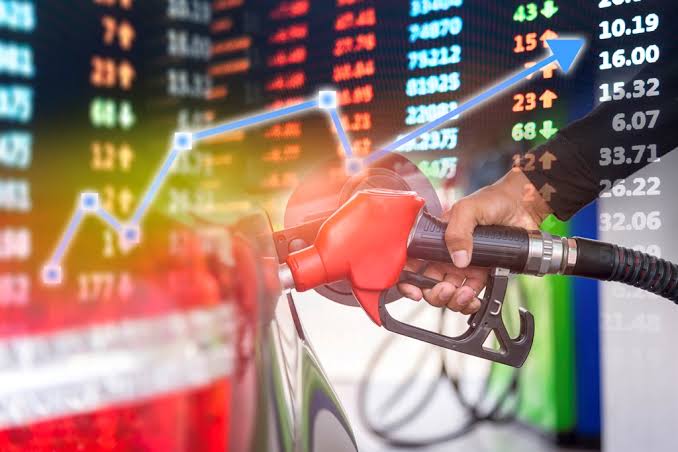
Fresh concerns have emerged over the Federal Government’s latest petrol price relief measures, with economist and policy analyst, Prof. Chiwuike Uba, warning that policy announcements without clear implementation frameworks risk creating uncertainty for investors, suppliers and consumers.
Uba, in a detailed assessment of the Presidency’s recent intervention aimed at cushioning the impact of rising fuel prices, argued that while temporary relief for vulnerable Nigerians is necessary, policymakers must provide clarity on financing, implementation and accountability mechanisms.
His intervention comes as the government seeks to balance its commitment to fuel subsidy removal with growing pressure from households and businesses grappling with the rising cost of living.
According to Uba, the central economic question is no longer whether Nigerians deserve relief but who ultimately bears the cost of that relief.
“A press release can announce a policy. Only transparent rules, credible financing and demonstrable results can make it one,” he stated.
Who pays for petrol stabilisation?
The economist raised questions over the government’s proposed 30-day petrol price intervention and the reported ₦1,350 per litre ex-gantry price ceiling.
While officials have insisted the measures do not amount to a return of fuel subsidies, Uba argued that the distinction between subsidy, price smoothing and deferred costs remains unclear.
“If suppliers are required to absorb losses and recover them later, the public deserves to know the recovery mechanism. If government assumes future obligations, there may be fiscal exposures that have not yet been disclosed,” he said.
According to him, price controls do not eliminate costs; they merely determine who bears them and when.
He warned that a poorly designed pricing mechanism could create supply distortions similar to those experienced under previous subsidy regimes, potentially resulting in shortages, distribution bottlenecks and unofficial market premiums.
“A ceiling suppliers trust may stabilise prices. One they consider commercially unsustainable could undermine supply,” he noted.
Economic reforms face credibility test.
The broader concern, according to Uba, is the credibility of Nigeria’s ongoing economic reform programme.
Following the removal of fuel subsidies and foreign exchange liberalisation, the government has repeatedly emphasised the need for market-driven reforms.
However, economists argue that frequent interventions without clearly defined rules could create policy uncertainty and weaken investor confidence.
Uba observed that recurring emergency measures may lead market participants to anticipate future interventions, complicating investment decisions in refining, storage, transportation and energy infrastructure.
“The failure of the old subsidy system does not automatically validate every alternative. Every intervention must be judged on its transparency, sustainability and effectiveness,” he said.
Transport fares, food prices remain key indicators
One of the strongest economic arguments raised by the economist centres on the disconnect between fuel prices and actual consumer welfare.
According to him, lower pump prices do not automatically translate into lower transport fares, food prices or household expenses.
In Nigeria’s largely informal transportation sector, fare increases are often implemented immediately after fuel price hikes but rarely decline at the same pace when costs moderate.
He argued that the government should establish monitoring mechanisms to track transport costs and food distribution expenses in order to determine whether consumers are genuinely benefiting from the intervention.
“Citizens will judge reform by transport fares, food prices, electricity costs and the survival of small businesses, not by policy announcements,” Uba said.
Investors seek clarity amid uncertainty.
The economist further noted that uncertainty surrounding implementation details could affect investment decisions across the energy value chain.
He said questions remain unanswered regarding the cost benchmark for petrol pricing, the duration of the intervention, the mechanism for recovering deferred costs and the treatment of potential losses by marketers and retailers.
Without such details, suppliers may struggle to price risks accurately while investors could delay capital commitments.
“Households may form expectations around benefits that do not yet exist. Suppliers cannot price risks under rules they have not seen, while investors may delay decisions when commercial arrangements remain uncertain,” he warned.
Beyond petrol: Inflation remains the bigger challenge
Uba also cautioned against linking short-term fuel interventions to expectations of rapid disinflation.
According to him, petrol prices represent only one component of Nigeria’s inflation basket.
Exchange rate stability, food supply conditions, monetary policy, fiscal discipline, productivity growth and logistics efficiency remain equally important determinants of inflation trends.
He stressed that even if inflation moderates, households may not necessarily experience falling prices.
“Disinflation is not the same as lower prices, and lower prices are not the same as restored purchasing power,” he said.
The real measure of success
For Uba, the ultimate test of the government’s intervention rests on three questions: who pays, who benefits and how success will be measured.
He urged authorities to publish pricing methodologies, define cost benchmarks, disclose potential fiscal exposures and establish measurable performance indicators.
With inflationary pressures, energy costs and weak consumer purchasing power continuing to challenge the economy, analysts say transparency around government interventions will be critical to sustaining public confidence in Nigeria’s reform agenda.
“The issue is not whether relief should be provided,” Uba concluded. “The issue is whether it is transparent, accountable and capable of delivering measurable reductions in the cost of living and doing business.”
About The Author