FMBN targets N750bn capital as housing loan approvals jump 191%
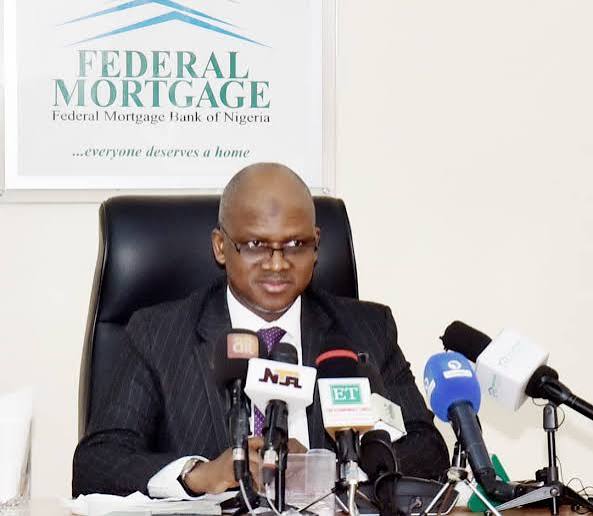
The Federal Mortgage Bank of Nigeria (FMBN) is seeking a N750 billion recapitalisation to expand affordable housing finance after approving more than N208 billion in housing and mortgage loans in 2025, highlighting the growing funding challenge facing Nigeria’s efforts to widen homeownership.
The bank’s Managing Director and Chief Executive Officer, Shehu Osidi, said its paid-up capital stood at just N2.56 billion, which he described as grossly inadequate to address the country’s housing deficit. The proposed recapitalisation would raise its targeted capital base to nearly 293 times its current paid-up capital.
The capital drive comes as the bank records a sharp increase in lending activity, with housing and mortgage loan approvals rising from N71.5 billion in 2024 to more than N208 billion in 2025, an increase of at least 191 per cent.
Speaking at the commemoration of his two years in office, Osidi said the bank was engaging the Ministry of Finance, Central Bank of Nigeria, Ministry of Finance Incorporated and Bureau of Public Enterprises on the recapitalisation, following approvals by the Federal Executive Council.
The target represents an upward revision from the N500 billion earlier pursued by the bank in 2025, reflecting the scale of capital required to finance housing development and improve access to mortgages.
Despite the increase in approvals, the amount actually disbursed remains a critical measure of delivery. FMBN said it released more than N120 billion in 2025 for housing construction, mortgage financing, home renovation, cooperative housing and Rent-to-Own schemes.
The bank also financed 6,911 affordable housing units during the year, achieving about 96 per cent of its target of 7,200 units under the Presidential and Ministerial Deliverables.
The figures point to expanding activity, but the recapitalisation remains central to whether the bank can sustain and significantly scale up its contribution to housing delivery. Greater capital would strengthen its capacity to support developers, finance mortgages and mobilise more long-term funding for residential construction.
Funding mobilisation has also improved. National Housing Fund (NHF) collections reached a record N152.4 billion in 2025, up 48 per cent from N103 billion in 2024. The fund provides a key source of finance for eligible contributors seeking access to housing loans.
FMBN is also widening its products to reach more potential homeowners. Its Diaspora NHF Mortgage Loan allows eligible Nigerians abroad to access up to N100 million at an annual interest rate of nine per cent, with a maximum repayment period of 10 years.
Osidi said the bank planned to introduce a non-interest mortgage product and a rent assistance scheme for federal civil servants before the end of October, broadening its housing-finance options.
The bank has meanwhile pursued operational reforms. It deployed its Core Banking Application in 2025, recovered about N19 billion in deductions it described as wrongful, and recovered N27.3 billion in delinquent loans over 2024 and 2025.
FMBN also reported a N19.5 billion operating surplus for 2025 in its management accounts, compared with N11.58 billion in 2024, although Osidi cautioned that impairment charges following the external audit could reduce the figure.
The wider economic stakes are considerable. Housing finance supports construction, building materials, manufacturing, transport and employment, while affordable mortgages can help households acquire homes without relying entirely on upfront cash payments.
The immediate challenge for FMBN is therefore to convert rising loan approvals and stronger fund collections into sustainable disbursements and more completed homes. Without a substantial strengthening of its capital base, the bank’s ability to finance housing at the scale Nigeria requires will remain constrained.
About The Author