FX, OMO dominate N551.23trn financial market turnover as banks tighten grip

Nigeria’s financial markets recorded N551.23 trillion in trading turnover between January and September 2026, but the concentration of activity in foreign exchange transactions and short-term monetary instruments highlights the dominance of liquidity management over longer-term financing in the country’s financial system.
Data from FMDQ Exchange’s January-September Market Turnover Report showed that transactions reached N551.23 trillion, equivalent to $403.08 billion, across 182 business days, with average daily turnover of N3.03 trillion.
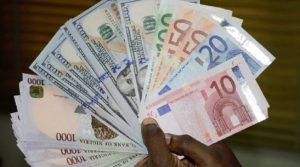
Foreign exchange transactions accounted for N190.80 trillion, representing 34.61 per cent of total turnover, while Open Market Operations (OMO) bills issued by the Central Bank of Nigeria contributed N163.42 trillion, or 29.65 per cent.
Together, the two segments generated N354.22 trillion, accounting for 64.26 per cent of all transactions recorded during the nine months.
The concentration deepened when repurchase agreements, or repos, were included. These accounted for another N75.60 trillion, taking the combined contribution of foreign exchange, OMO bills and repos to 77.97 per cent of total turnover.
Federal Government of Nigeria bonds recorded N46.67 trillion in transactions, while Treasury bills contributed N45.74 trillion. Foreign exchange derivatives accounted for N24.91 trillion, or 4.52 per cent of total activity.
The figures show that trading remains heavily concentrated in currency transactions and instruments used to manage short-term liquidity, reflecting the importance of exchange-rate management, interest rates and the Central Bank’s monetary operations to Nigeria’s financial markets.
The latest report suggests that about N54.62 trillion in additional turnover was recorded in September, following cumulative transactions of N496.61 trillion between January and August.
Foreign exchange turnover increased by approximately N19.4 trillion between the two reporting periods, while OMO transactions rose by about N16.5 trillion.
The scale of activity, however, should not be confused with fresh investment entering the economy. Turnover measures the value of transactions executed during a period and may include repeated trading in the same financial instruments. It does not represent new capital raised or funds directly channelled into productive businesses.
Trading was also highly concentrated among a relatively small number of financial institutions. Stanbic IBTC Bank ranked first among dealing-member banks, followed by First Bank of Nigeria and Coronation Merchant Bank.
The top 10 banks accounted for N415.85 trillion, representing 75.44 per cent of total market turnover. The three leading institutions alone handled N235.55 trillion, equivalent to 42.73 per cent of all transactions.
The remaining banks outside the top 10 accounted for N135.38 trillion, or 24.56 per cent of turnover, underscoring the substantial influence of major dealing institutions on market activity.
For the wider economy, the figures present a mixed picture. High turnover reflects an active financial market capable of facilitating large volumes of currency and securities transactions. Yet the dominance of foreign exchange and short-term instruments raises questions about how much financial-market activity is translating into longer-term financing for manufacturers, small businesses and infrastructure projects.
With businesses still seeking affordable credit to expand production and create jobs, the broader economic test is whether the growing depth of financial transactions can support a wider flow of capital into productive investment.
Nigeria’s financial markets are processing trillions of naira in transactions, but the ultimate measure of their contribution to economic growth will be how effectively they connect available capital with businesses that need it to expand output, create employment and strengthen the country’s productive capacity.
About The Author