Expert seeks rail-led logistics overhaul to cut Nigeria’s trade costs
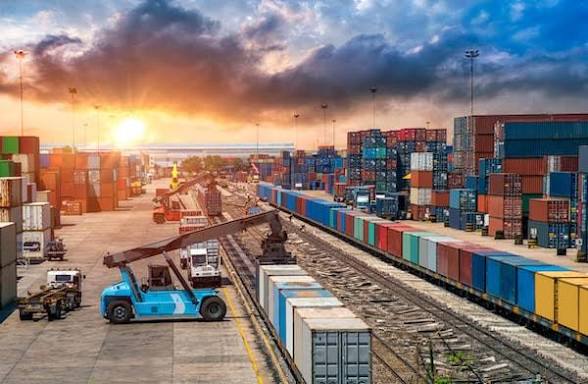
Nigeria’s transport infrastructure will continue to impose avoidable costs on businesses unless government integrates railways, seaports, roads and inland logistics centres into a single freight system, a transport expert, Dr Femi Ola Aiyegbajeje, has warned.
He said disconnected transport networks were undermining the economic value of infrastructure investments, raising cargo handling costs, delaying deliveries and weakening the competitiveness of Nigerian goods in domestic and international markets.
Aiyegbajeje, of the Department of Geography and Planning, Faculty of Social Sciences, University of Lagos, called for a rail-led multimodal transport strategy that connects ports with industrial centres, agricultural production zones, inland terminals and major consumption markets.
In a presentation titled “Rail-Led Multimodal Integration: Unlocking Efficient Transport, Trade Facilitation and National Connectivity,” he argued that Nigeria must move beyond building transport infrastructure as isolated projects and focus on how efficiently goods move from their point of production to their final destination.
“Rail creates national value when it works as part of an end-to-end logistics chain—not as an isolated asset,” he said.
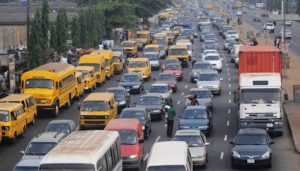
The proposal has significant implications for Nigeria’s trade and production costs, particularly as businesses contend with expensive transportation, infrastructure bottlenecks and weak links between production centres and markets.
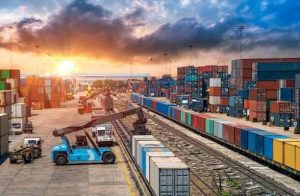
A port may have the capacity to handle substantial cargo volumes but still operate inefficiently if containers cannot be evacuated quickly. Similarly, railway lines can remain underutilised when freight terminals, train schedules, road connections and customer access are poorly coordinated.
Aiyegbajeje said the transport system’s efficiency should therefore be measured across the entire shipment journey rather than by the performance of individual roads, railways or ports.
Under his proposed model, rail would handle suitable high-volume freight over medium and long distances, while roads would provide flexible collection and last-mile distribution. Maritime transport would support international trade and bulk cargo movement, while aviation would serve urgent and high-value consignments.
He stressed that the objective was not to displace road transport or other modes, but to assign each a role based on cargo volume, distance, urgency, accessibility and total logistics costs.
The expert also urged policymakers and operators to assess the full door-to-door cost of moving goods instead of comparing railway tariffs with road haulage charges in isolation.
For businesses, the distinction is important because transport costs extend beyond the amount paid to a haulier or railway operator. Delays, cargo handling, storage, terminal access and unpredictable delivery schedules also increase the cost of getting goods to market.
These inefficiencies can push up the prices of food, construction materials and manufactured goods, while making locally produced products less competitive against imports. Exporters also face the risk of missed shipping schedules and higher costs when cargo cannot reach ports efficiently.
Aiyegbajeje said an integrated system could improve port evacuation, connect producers to larger markets, strengthen regional trade and make Nigeria’s transport network more resilient.
However, he cautioned that the benefits would depend on reliable railway operations, adequate cargo volumes, efficient terminal access, high equipment utilisation and sustained customer demand.
For Nigeria, the economic priority is to ensure that investments in rail, road and port infrastructure work together to lower the cost of moving goods. Without effective coordination, individual projects may deliver limited returns while businesses and consumers continue to bear the cost of an inefficient logistics chain.
About The Author