Car Ownership Turns Liability as Fuel Costs Crush Resale Values
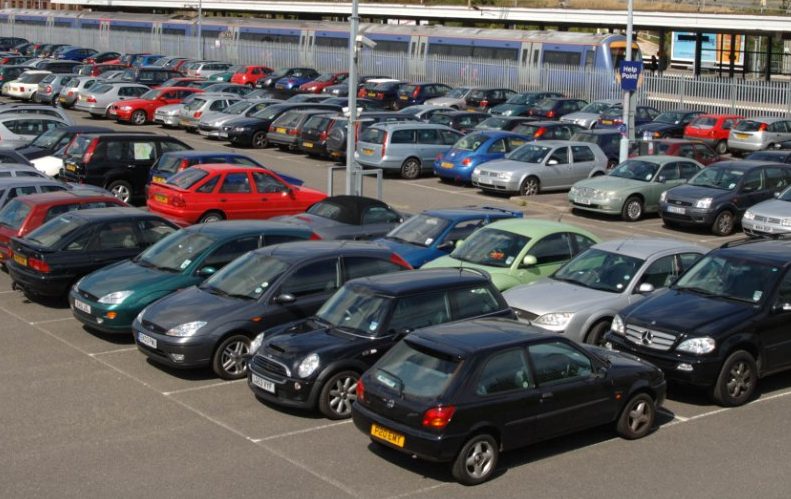
For decades, owning a car in Nigeria represented more than convenience. It was a symbol of financial progress, social status and independence, while many regarded vehicle ownership as an investment that could be converted into cash whenever the need arose.
However, that perception is gradually changing as rising petrol prices, expensive spare parts, maintenance costs and declining purchasing power force motorists to reconsider the financial implications of owning private vehicles.
What was once considered an asset is increasingly becoming a financial liability for many Nigerian households, particularly salary earners and small-business owners who depend on their vehicles for daily movement and business operations.
Findings from the automobile market indicate that the economics of car ownership are changing, with prospective buyers becoming increasingly cautious about purchasing vehicles, while existing owners are finding it more difficult to maintain them.
The situation is also influencing the prices of brand-new, foreign-used (Tokunbo) and Nigerian-used vehicles, as dealers contend with weakening demand and customers become more concerned about the cost of running vehicles than their purchase prices.
Although some market reports have continued to record relatively high vehicle asking prices, the growing pressure on buyers is creating a gap between sellers’ expectations and what prospective customers are willing or able to pay.
Falling demand changes the automobile market
One of the emerging consequences of the situation is the changing attitude of Nigerians towards vehicle purchases.
Previously, prospective buyers were more concerned about the brand, model, year of manufacture, appearance and resale value of a vehicle.
Today, fuel consumption, maintenance requirements, availability of spare parts and daily running costs are becoming equally important considerations.
This is particularly evident among buyers who are reconsidering large-engine vehicles and some older models that consume considerable quantities of petrol.
Even some four-cylinder vehicles, traditionally regarded as economical options, can consume considerable amounts of fuel depending on engine capacity, mechanical condition, transmission, driving conditions and maintenance history.
Consequently, buyers are increasingly looking beyond the purchase price to calculate how much they would spend keeping a vehicle operational.
For dealers, this changing purchasing behaviour presents a difficult business environment, with some reporting low sales since the increase in petrol prices.
Vehicles that previously attracted considerable interest may now remain longer in showrooms or car lots as prospective buyers negotiate aggressively or postpone purchases altogether.
The situation has also affected the resale market, where some vehicle owners are discovering that the amount buyers are willing to offer is considerably lower than their initial purchase prices.
Car owners caught between fuel costs and falling resale values
For existing car owners, the situation presents another dilemma: while the cost of maintaining vehicles continues to rise, selling them has also become increasingly difficult as prospective buyers offer prices far below owners’ expectations.
Mr Odewale, a Lexus RX350 owner, said he had been trying to sell his vehicle for about four months but had yet to reach an agreement with prospective buyers because of the low offers he continued to receive.
According to him, the amount buyers are willing to pay is considerably lower than what he originally spent to acquire the vehicle, making it difficult for him to accept the prevailing market valuation.
He recalled that the automobile market was previously more favourable to sellers, with vehicle owners sometimes making considerable gains when reselling their cars.
“I can’t sell it at that amount because I know how much I bought my car and how much I have spent on it. I would rather park it at home for leisure use than sell it at such a loss,” he said.
Odewale explained that he had instead resorted to using his smaller, two-plug vehicle for regular movement because it consumes less petrol compared with his Lexus RX350, which he described as a four-plug vehicle.
His experience reflects the difficult choices confronting some Nigerian motorists, who are now weighing the financial implications of keeping larger vehicles against the possibility of selling them below their expected value.
For Odewale, retaining the Lexus for occasional leisure use while relying on a more fuel-efficient vehicle for daily transportation appears to be a more attractive option than accepting what he considers an unfavourable resale price.
His experience also highlights an emerging contradiction in the automobile market: while buyers are becoming increasingly conscious of fuel consumption and running costs, existing owners are struggling to recover the money invested in their vehicles.
The result is a market in which some sellers would rather hold on to their cars than accept lower offers, while prospective buyers remain reluctant to commit substantial funds to vehicles they consider expensive to operate.
When a car becomes a liability
The argument over whether a car is an asset or liability has become increasingly relevant in Nigeria’s present economic environment.
From an investment perspective, most privately owned vehicles are depreciating assets. Unlike properties and certain financial investments, cars generally lose value as they age and accumulate mileage.
However, their usefulness can make them valuable assets, particularly for individuals who depend on them to generate income.
For commercial drivers, logistics operators, business owners and professionals whose jobs require regular movement, a vehicle can contribute directly to their earnings.
The situation is different for individuals who own private vehicles primarily for personal convenience but spend a significant proportion of their monthly income on petrol, servicing, insurance, repairs and replacement parts.
For such motorists, the financial burden can become substantial.
When vehicle maintenance, unexpected repairs, insurance and depreciation are added, the cost of ownership becomes even more significant.
This explains why some Nigerians are beginning to question whether maintaining a private vehicle is financially worthwhile when alternative transportation arrangements may cost less.
The fuel-efficiency dilemma
Another important consideration is the assumption that every small-engine or four-cylinder vehicle is automatically economical.
While many smaller-engine vehicles consume less fuel than larger-engine alternatives, fuel efficiency depends on several factors.
An ageing engine, faulty oxygen sensor, damaged fuel injectors, poor transmission, inadequate tyre pressure and irregular servicing can significantly increase fuel consumption.
Furthermore, traffic congestion, frequent acceleration and prolonged idling contribute to higher petrol consumption, particularly in major cities such as Lagos.
Consequently, motorists need access to reliable information about the actual fuel economy of vehicles before making purchasing decisions.
Electric vehicles: An alternative with its own challenges
As motorists explore alternatives to petrol-powered vehicles, electric mobility is gradually attracting attention, particularly among commercial transport operators.
However, the transition to electric vehicles is not without its challenges, as the cost of charging batteries and access to reliable electricity remain major considerations.
Mr Taiwo, a commercial electric vehicle driver in Meiran, Lagos, said the cost of charging his vehicle was becoming a major factor in assessing the financial benefits of electric mobility.
According to him, he currently spends about N13,000 daily to charge his vehicle, compared with approximately N9,000 he previously spent on petrol when operating a fuel-powered vehicle.
This represents an additional N4,000 in daily energy expenditure.
“I pay N13,000 to charge daily, but when I was using petrol, I used to spend N9,000 in a day,” he said.
However, Taiwo explained that electric vehicles offer advantages in other areas of maintenance, noting that he no longer has to purchase conventional engine parts, pay for regular engine servicing and undertake some of the maintenance associated with petrol-powered vehicles.
His experience highlights an important consideration in Nigeria’s electric mobility transition: although charging expenses may be higher for some operators, savings on engine maintenance and other mechanical components could improve the overall economics of ownership.
Nevertheless, the cost of charging remains a significant consideration that could discourage prospective buyers and commercial operators from embracing electric vehicles.
For electric mobility to become a financially attractive alternative, the government must address not only the acquisition cost of vehicles but also the cost of charging and access to supporting infrastructure.
Affordable charging tariffs, strategically located charging stations, reliable electricity supply and incentives for private investment in charging infrastructure are necessary to make electric vehicles more competitive.
The government should also encourage local assembly of electric vehicles, batteries and charging equipment to reduce dependence on imported components and lower long-term costs.
What the Federal Government must do
Although the Federal Government has introduced several interventions aimed at reducing vehicle importation costs, encouraging local automotive production and promoting alternative-energy transportation, more efforts are required to ensure that these policies translate into tangible benefits for ordinary Nigerians.
Rather than introducing more programmes without addressing existing implementation challenges, the government should strengthen its current initiatives, particularly the Presidential Initiative on Compressed Natural Gas and Electric Vehicles.
1. Deepen CNG conversion subsidies
The government should increase subsidies on CNG conversion kits and installation costs to make the programme affordable to ordinary vehicle owners, commercial motorists and transport operators.
Many motorists who are interested in converting their petrol-powered vehicles may be discouraged by the initial cost of conversion.
The government should therefore explore direct subsidies, interest-free financing and flexible repayment arrangements through accredited conversion centres.
2. Make CNG conversion facilities and refuelling stations more accessible
Beyond subsidising conversion costs, the government must ensure that CNG facilities are available across more states and major transport corridors.
Motorists should not have to travel long distances to locate conversion centres or refuelling stations after converting their vehicles.
The government should encourage private-sector investment in CNG infrastructure and ensure that existing facilities operate efficiently.
3. Reduce the cost of electric vehicle charging
The government should introduce incentives that will make electricity more affordable for electric vehicle operators.
Special charging tariffs for accredited EV charging stations, support for renewable energy-powered charging facilities and incentives for private investors could help reduce the daily cost of charging.
The experience of Taiwo, who spends N13,000 daily charging his vehicle compared with his previous N9,000 petrol expenditure, demonstrates why charging costs must be addressed if electric mobility is to become economically attractive.
4. Expand electric vehicle charging infrastructure
The Federal Government should work with state governments and private investors to establish more public charging stations in commercial centres, residential areas, motor parks and major highways.
Reliable charging infrastructure would reduce range anxiety and encourage more Nigerians to consider electric vehicles.
5. Introduce affordable financing for alternative-energy vehicles
Through institutions such as the Bank of Industry and other development finance institutions, the government should support accessible financing for CNG-powered and electric vehicles.
Affordable financing arrangements should also cover conversion kits, batteries and other essential components.
6. Strengthen local vehicle assembly
Nigeria’s automotive industry needs more than policies encouraging local assembly. Manufacturers require affordable access to foreign exchange, infrastructure, financing, technology and locally produced components.
The Federal Government should provide incentives that encourage local manufacturers to produce affordable small-engine cars, hybrid vehicles, electric vehicles and commercial vehicles.
7. Improve public transportation
One of the most effective ways to reduce dependence on private vehicles is to provide reliable, affordable and accessible public transportation.
Investment in mass transit buses, rail services, waterways and integrated transport systems would give Nigerians more options and reduce the pressure to own private cars.
The way forward
Ultimately, the question of whether a car is an asset or a liability depends increasingly on its purpose, operating costs and contribution to the owner’s financial well-being.
A vehicle that generates income, supports a business or significantly improves productivity may remain a valuable asset.
However, when its running costs consume a substantial proportion of household income, its financial benefits become questionable.
For Nigeria’s automobile industry, the changing market presents both a challenge and an opportunity.
Dealers may need to adjust their pricing expectations, offer more affordable vehicle options and provide buyers with reliable information about fuel consumption and maintenance requirements.
Manufacturers and local assemblers also need to focus on producing vehicles that reflect the economic realities of Nigerian consumers.
For the Federal Government, the challenge goes beyond introducing policies and programmes. It involves ensuring that existing interventions are properly implemented, adequately funded and accessible to the people they are designed to benefit.
The ultimate objective should be to make vehicle ownership economically sustainable rather than allowing the cost of keeping a car on the road to become another burden on already stretched household incomes.
The real measure of car ownership should no longer be how much a vehicle costs to purchase or the status it confers on its owner, but how much value it delivers compared with the money required to keep it on the road.
About The Author