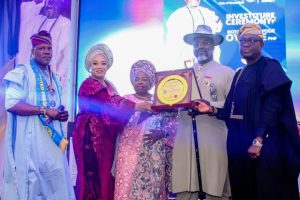
The biggest award went to Tony Niteon Nwose, founder of Niteon, who received the ₦60 million grand prize for an agricultural technology platform connecting African farmers to processors, financial services and international markets. His solution addresses an important challenge in African agriculture: helping farmers access the financing, buyers and commercial opportunities needed to participate more profitably in agricultural value chains.
The competition also recognised entrepreneurs rethinking how everyday problems can be solved. Emmanuel Adeboje of Acceede received ₦40 million for his education-focused solution, while David Lawani of All-Arbitrates secured ₦20 million for a digital platform designed to make arbitration and dispute resolution more accessible and efficient.
For Kabir Olaosebikan, the opportunity lies in finding economic value in waste. His startup, Craft Planet, received ₦40 million for converting plastic waste into sustainable building materials. Samuel Ayomide Shonubi’s SocialSign secured ₦30 million for technology designed to improve communication and digital accessibility through sign language, while Oluwaseyi Whyte Akinlolu’s Harthio received ₦20 million for a mental wellness solution.
Artificial intelligence was another major feature of the winning innovations. Kelvin Nnadi’s Neural Forge received ₦30 million for an AI-powered medical diagnostic solution, while David Campbell’s Nexa AI secured ₦20 million for technology helping businesses better understand customer interactions and identify growth opportunities. Uti Henry’s Vhorde received ₦10 million for IRIS, AI-powered smart glasses designed to help visually impaired people navigate their surroundings more independently.
Women-led startups also secured funding for solutions addressing healthcare access and business growth. Zainab Boluwatife Adeagbo’s MamaAlert received ₦20 million for its digital healthcare solution focused on improving women’s access to timely healthcare services, while Precious Zino’s URI secured ₦10 million for an AI-powered marketing platform helping businesses improve customer engagement and digital visibility.
These 11 winning teams emerged from a competition that attracted 5,329 participants and generated 1,632 ideas and solutions across seven pitch centres in Nigeria. Following the nationwide selection process, 59 participants emerged from the various centres, with 21 finalists advancing to the grand finale.
While startup competitions often generate excitement around new ideas, the bigger challenge for founders comes after the pitch: developing products that work at scale, attracting paying customers, building sustainable business models and securing the resources needed to grow.
That is what makes access to funding particularly significant. For an agritech startup, it could mean strengthening the infrastructure required to connect more farmers with markets. For a healthcare technology company, it could support further product development. For an accessibility-focused startup, it could create opportunities to reach more of the people its technology is designed to serve.
For Wema Bank, the ₦300 million commitment builds on an innovation programme that has grown considerably since its introduction in 2019. Hackaholics has recorded over 21,000 applicants, engaged more than 50,000 participants, supported over 10,000 startups across three countries and contributed to the development of more than 100 solutions.
The range of technologies recognised at Hackaholics 7.0 also offers an interesting perspective on where Nigerian innovators are directing their attention. Rather than concentrating on a single industry, the winning solutions address gaps in agriculture, healthcare, education, business services and social inclusion, with artificial intelligence increasingly appearing as a tool for solving practical problems.
The ₦300 million funding gives these entrepreneurs an opportunity to move their innovations forward. Whether those solutions eventually become widely adopted products and sustainable businesses will depend on what happens beyond the competition.
For Nigeria’s technology ecosystem, that is the more important story: not simply who won, but what these founders can build with the support they have received.