Microsoft warns Africa risks $1trn AI opportunity to foreign firms

Africa risks losing a potential $1 trillion economic opportunity from artificial intelligence by 2035 if the continent remains primarily an AI consumer rather than building its own technology, data and computing capacity, Microsoft has warned.
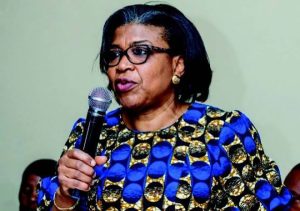
Akua Gyekye, Head of Government Affairs for Africa at Microsoft, issued the warning in Lagos, drawing on the company’s Global AI Diffusion Report for the first quarter of 2026.
She said generative AI adoption among working-age populations stood at 27.5 per cent in the Global North, compared with just 15.4 per cent in the Global South, highlighting a widening gap in access and use of the technology.
“The choices Africa makes now will determine whether it captures the value created by AI or simply consumes it,” Gyekye said.
She argued that African governments and businesses need the freedom to choose between frontier, open-source and specialised AI models rather than becoming dependent on a single technology provider.
According to her, technology companies have a role to play by providing cloud infrastructure, technical expertise, cybersecurity and responsible AI systems, but the ultimate objective should be to build lasting African capacity.
Gyekye cited African Development Bank estimates that inclusive AI development and deployment could contribute up to $1 trillion in additional GDP across Africa by 2035.
She said the figure represented both the scale of the potential economic gain and the cost of failing to build the infrastructure, skills and institutions required to capture it.
The Microsoft executive also stressed that cybersecurity must be treated as an integral part of AI adoption as the technology becomes embedded in government services, financial systems, healthcare and other critical infrastructure.
She highlighted LINGUA Africa, a $5.5 million initiative involving the Masakhane African Languages Hub, Microsoft’s AI for Good Lab, the Gates Foundation and Google.org, which seeks to address language barriers limiting AI inclusion across the continent.
Nigeria is already among Africa’s fastest adopters of AI, but the country faces the same structural challenge identified by Microsoft: rapid consumption without sufficient domestic capacity to develop and own AI technologies.
A Google report developed with Ipsos earlier this year found Nigeria emerging as a global leader in AI adoption, particularly in learning, work and entrepreneurship.
The country also ranked 38th globally in the second edition of the Global Index on Responsible AI, with a score of 45.93, making it Africa’s highest-ranked country.
However, concerns are growing over dependence on foreign AI systems.
A recent assessment of AI adoption in Nigeria warned that the country could become permanently dependent on foreign technologies unless it increases investment in indigenous AI models, local datasets and computing infrastructure.
At the business level, adoption is accelerating. The World Bank’s World Development Report 2026: The Promise of Artificial Intelligence found that formal businesses in Nigeria had reached AI-adoption levels comparable with those in the United States.
The contrast between high adoption and limited domestic capacity creates a strategic economic challenge for Nigeria.
Widespread use of foreign AI tools could improve productivity, but much of the value generated could accrue to overseas technology companies if Nigeria lacks locally owned models, infrastructure, intellectual property and specialised talent.
For Nigeria and the wider continent, the next phase of AI development will therefore be determined not simply by how many people use artificial intelligence, but by how much of the technology’s economic value Africa can create, own and retain.
About The Author