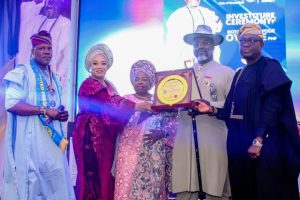
NIMASA: Nigeria’s 46% GoG Port calls strengthen case for maritime investment

The Nigerian Maritime Administration and Safety Agency (NIMASA) has called for increased investment in maritime infrastructure, shipping capacity and technology to translate Nigeria’s strategic position in the Gulf of Guinea into measurable economic gains, as the Federal Government intensifies efforts to modernise ports outside Lagos.
The Director-General of NIMASA, Dr Dayo Mobereola, disclosed that Nigeria accounted for more than 46 per cent of total port calls in the Gulf of Guinea in 2025, underscoring the country’s significance in regional maritime trade.
Mobereola, who spoke in his goodwill message at the 2026 World Maritime Day celebration in Lagos, said Nigeria’s maritime industry remained a strategic driver of international trade, investment, employment and industrial development.
He said the theme of the celebration, “From Policy to Practice: Powering Maritime Excellence,” highlighted the need to translate government policies and regulatory frameworks into tangible benefits for businesses, investors and the wider economy.
According to him, Nigeria’s share of regional port calls reinforces the need to strengthen maritime infrastructure, improve operational efficiency and develop the human capacity required to support growing maritime activities.
He stressed that maritime excellence must go beyond traffic figures to include safer waterways, efficient port operations, environmental protection, improved seafarer welfare and greater Nigerian participation in ship ownership and maritime asset management.
Mobereola said the agency had recorded notable progress in maritime security, international recognition and regulatory reforms over the past two years, with support from the Minister of Marine and Blue Economy, Adegboyega Oyetola.
He cited four consecutive years without reported piracy incidents in Nigerian waters, Nigeria’s re-election to the International Maritime OOrganisation(IMO) Council after a 14-year absence, and the lifting of United States Condition of Entry restrictions after 12 years.
Other achievements include the full automation of the Nigerian Ship Registry, the establishment of the Cabotage Vessel Financing Fund (CVFF) application portal and the implementation of the IMO Standards of Training, Certification and Watchkeeping for Seafarers Compliance Audit after 18 years.
The NIMASA DG said these developments could strengthen investor confidence, improve the competitiveness of Nigerian shipping and expand employment opportunities for local maritime professionals.
He also identified access to finance as a critical factor in developing indigenous shipping capacity, noting that maritime financing could enable eligible Nigerian operators to acquire vessels, expand their businesses and create jobs.
On port development, the Federal Government has reaffirmed its commitment to modernising Onne, Warri and Calabar ports, alongside ongoing efforts at Apapa and Tin Can Island ports.
The Minister of Marine and Blue Economy, Dr Adegboyega
Oyetola, speaking, said the initiative was part of efforts to establish a more balanced network of maritime gateways and stimulate economic activities across the federation.
He also reiterated the government’s commitment to proposed deep seaport projects at Agge, Bakassi, Bonny, Gateway, Ibom and Ondo.
According to the minister, connecting seaports, inland dry ports and production centres through integrated road, rail and inland waterway networks would bring cargo closer to producers and consumers, reduce haulage costs and strengthen exports.
He said the government was working with relevant agencies and investors to ensure that port development translated into functional infrastructure, efficient cargo handling, navigable channels and dependable transport connections.
Oyetola further highlighted the Nigerian Ports Economic Regulatory Agency Act, 2026, as part of efforts to strengthen economic regulation, promote fair competition and improve service delivery across the port system.
Mobereola, however, warned that sustaining the maritime sector’s progress would require continued investment, stronger collaboration among government agencies, technological innovation and modern infrastructure.
He called for stronger partnerships among regulators, terminal operators, shipowners, financial institutions, maritime workers and private-sector investors to unlock the economic opportunities of Nigeria’s Blue Economy.
The NIMASA chief maintained that the ultimate measure of maritime reforms should be their impact on productivity, business expansion, job creation and Nigeria’s competitiveness in global trade.
Meanwhile, the Chairman of the Senate Committee on Marine Transport, Senator Wasiu Eshinlokun, called for an end to attacks on seafarers in the Strait of Hormuz.
The 2026 World Maritime Day celebration attracted maritime industry leaders, heads of government agencies, lawmakers and other stakeholders.
About The Author