Although millions of Nigerians continue to grapple with high living costs, rising transport fares, food inflation and pressure on household incomes, new economic indicators suggest that the painful adjustments triggered by subsidy removal, exchange-rate unification and monetary tightening are gradually stabilising Africa’s largest economy.
The reforms, introduced shortly after President Tinubu assumed office in May 2023, were aimed at dismantling deep-rooted distortions that had weakened public finances, drained foreign exchange reserves and constrained long-term economic growth.
At the centre of the recovery story is Nigeria’s external position.
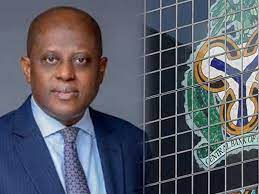
After years of pressure in the foreign exchange market, the Central Bank of Nigeria (CBN) cleared about $7 billion in outstanding forex obligations owed to airlines, manufacturers and foreign investors, helping to restore confidence in the country’s financial system.
As a result, Nigeria’s net foreign exchange reserves climbed sharply from $3.99 billion at the end of 2023 to $34.8 billion by the end of 2025, while gross reserves rose further to $50.45 billion by mid-February 2026.
The country’s balance of payments position also recorded a dramatic turnaround, shifting from deficits of $3.34 billion in 2023 and $3.32 billion in 2022 to a surplus of $6.83 billion in 2024.
Economic analysts said the improvement reflects stronger external buffers, better foreign exchange management and improved confidence in Nigeria’s ability to meet international obligations.
Investor sentiment has also strengthened considerably under the reform programme.
Capital inflows surged by almost 90 per cent in 2025, rising from $12.32 billion to $23.22 billion, driven largely by foreign portfolio investments returning to Nigerian financial markets.
The Nigerian stock market emerged as one of the biggest beneficiaries of the renewed confidence wave.
The Nigerian Exchange All-Share Index, which stood at about 53,000 points in 2023, has climbed to nearly 250,000 points by 2026, while market capitalisation expanded from about N30 trillion to N160 trillion.
Analysts described the rally as one of the strongest revaluations of Nigerian assets in recent years, reflecting growing investor belief that the reforms are beginning to reposition the economy on a more sustainable path.
Inflation, however, remains one of the administration’s biggest challenges despite signs of easing pressure.
Inflation stood at 22.41 per cent when President Tinubu took office in May 2023 before accelerating sharply to 34.80 per cent in December 2024 following subsidy removal and exchange-rate reforms.
The latest inflation figure of 15.69 per cent for April 2026 points to improving price stability, although economists caution that the decline partly reflects the rebasing of the Consumer Price Index by the National Bureau of Statistics (NBS).
Despite the moderation, food prices, energy costs and transport expenses remain elevated, leaving many households under severe financial strain.
Nigeria’s growth profile is also showing signs of gradual strengthening.
Real GDP growth, which slowed to 2.31 per cent in the first quarter of 2023 amid the cash crunch crisis, rose to 3.89 per cent in Q1 2026, while international financial institutions project growth could exceed 4 per cent within the next year.
Manufacturing activity expanded by 3.29 per cent during the quarter, while the non-oil sector accounted for over 96 per cent of total GDP, underscoring Nigeria’s gradual shift away from hydrocarbon dependence.
Government revenue performance also improved significantly.
Between January and August 2025, total government collections rose to N20.59 trillion compared with N14.6 trillion in the corresponding period of 2024.
Non-oil revenues contributed N15.69 trillion, representing nearly 75 per cent of total collections and signalling broader economic activity beyond crude oil exports.
Oil production, long regarded as Nigeria’s economic lifeline, also posted a moderate recovery.
Average crude oil and condensate production rose from about 1.25 million barrels per day in April 2023 to 1.663 million barrels per day by April 2026, representing an increase of about 32.8 per cent.
The recovery has strengthened Nigeria’s foreign exchange earnings and improved fiscal capacity, although production still remains vulnerable to theft, pipeline vandalism and infrastructure constraints.
One of the administration’s flagship social interventions, the Nigerian Education Loan Fund (NELFUND), has also expanded access to higher education financing nationwide.
As of March 2026, the scheme had disbursed N206.29 billion to more than 1.16 million beneficiaries, with N128.84 billion paid directly to institutions for tuition fees and N77.45 billion released as upkeep allowances for students.
The Tinubu administration also implemented a major wage adjustment in July 2024, increasing the national minimum wage from N30,000 to N70,000 and reducing the wage review cycle from five years to three years.
Although economists say wage increases alone cannot offset inflationary pressure, the adjustment has provided temporary relief for low-income workers struggling with rising living costs.
Nigeria’s improving macroeconomic profile is equally changing international perceptions about the country’s investment climate.
Multilateral institutions, including the International Monetary Fund (IMF) and the World Bank, have acknowledged the stabilising impact of the reforms, while global rating agency S&P upgraded Nigeria’s sovereign rating in May 2026, citing stronger macroeconomic management, higher oil production, domestic refining capacity and exchange-rate liberalisation.
Foreign policy experts said the reforms are enhancing Nigeria’s credibility with investors, lenders and development partners at a time when global capital flows remain highly competitive.
Despite the positive indicators, economic experts warned that the benefits of the reforms have yet to fully reach ordinary Nigerians.
Many citizens still experience the reforms primarily through higher prices, reduced purchasing power and worsening cost-of-living pressures.
Analysts stressed that sustaining the recovery would require stronger food supply chains, lower inflation, improved electricity generation, expanded infrastructure investment, enhanced security and disciplined fiscal management across all tiers of government.
They argued that while the early gains are significant, the next phase of the reform programme must focus on translating macroeconomic stability into visible improvements in jobs, incomes, healthcare, transportation and living standards.
For now, the emerging consensus among investors and economic observers is that Nigeria has begun rebuilding confidence after years of fiscal strain and policy uncertainty, even as millions continue to wait for the recovery to become more visible in their daily lives.