Nigeria’s Economy Stabilised, Foreign Reserves Near $50bn, Says Shettima at Invest Lagos 3.0
4 months ago 0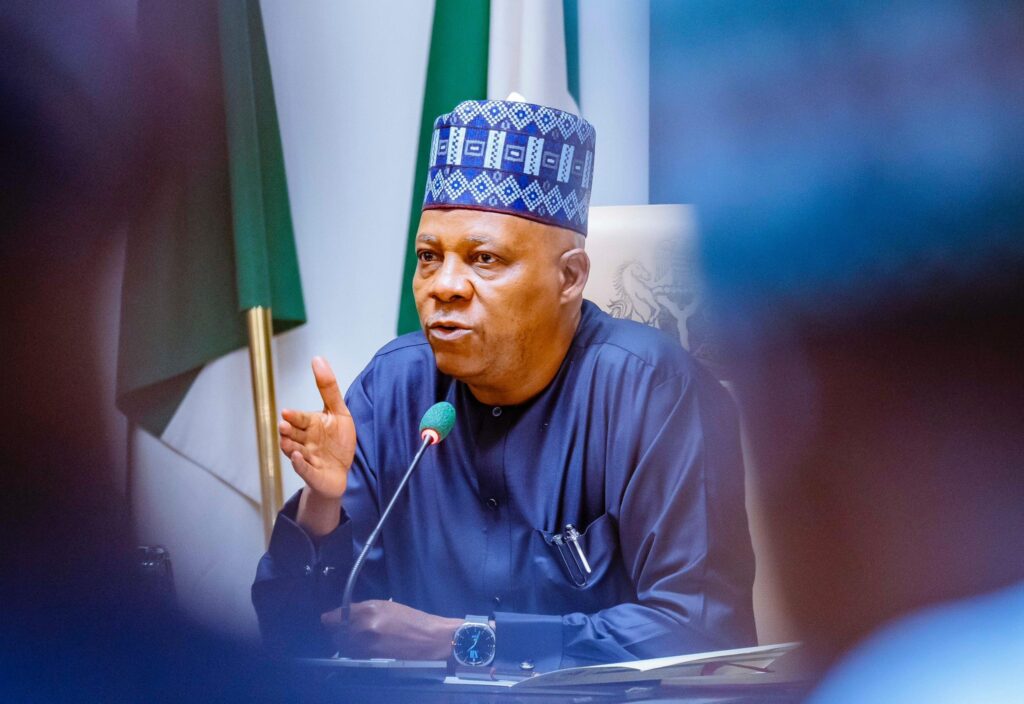
Vice President Kashim Shettima on Monday declared that Nigeria’s economy has stabilised following a series of difficult but necessary reforms undertaken by the administration of President Bola Tinubu, saying the country’s foreign reserves are approaching $50 billion and investor confidence is steadily returning.
Shettima made the remarks while declaring open Invest Lagos 3.0, the flagship investment summit organised by the Lagos State Government in partnership with the Commonwealth Enterprise and Investment Council (CWEIC), in Lagos.
The three-day summit, themed “Lagos: Business Gateway to Africa,” is expected to attract over 600 investors, sovereign wealth funds, development finance institutions, policymakers and business leaders from across the world, with the state targeting about ₦4 trillion in local and foreign direct investments.
Addressing participants, the Vice President said the Federal Government’s economic reforms were yielding positive results despite the initial challenges associated with their implementation.
According to him, the administration took difficult decisions because sustainable economic growth could not be built on unsustainable policies.
“The President has taken the bullet to make painful decisions because we understand that the economy of our dream cannot be built on illusions. It must be built on productivity, discipline, competitiveness and the courage to face reality,” Shettima said.
He noted that the removal of fuel subsidies and other macroeconomic reforms were undertaken to place the economy on a stronger foundation for long-term growth.
“When we assumed office, our foreign reserves were at very low levels. Today, our economy has stabilised and our foreign reserves are approaching $50 billion and still growing,” he said.
The Vice President assured local and international investors that Nigeria remains committed to creating a stable, transparent and increasingly competitive business environment capable of attracting long-term capital.
He described Lagos as the country’s foremost economic hub and a model for subnational economic transformation.
“Lagos is the live wire of our continent. Lagos is the furnace in which our ideas are tested against the discipline of execution. Lagos is the great doorway through which Nigeria continues to create the future,” he stated.
According to him, Lagos remains one of Africa’s most important economic centres, contributing about 30 per cent of Nigeria’s Gross Domestic Product and serving as a major hub for innovation, enterprise and commerce.
Shettima said the summit’s theme reflects Lagos’ strategic position as a gateway to African markets and a key destination for global investors.
“Lagos has retained its place as a marketplace of ideas, a centre of enterprise, a hub of innovation, a corridor of commerce and one of the most important economic engines in Africa,” he said.
The Vice President further highlighted Nigeria’s demographic and economic advantages, noting that the country’s population is projected to become the third largest globally by 2050.
Combined with opportunities presented by the African Continental Free Trade Area (AfCFTA), he said Nigeria is strategically positioned to emerge as Africa’s leading production, innovation, logistics and investment hub.
“With access to a market of over 1.4 billion people under the African Continental Free Trade Area and a combined GDP exceeding $3.4 trillion, Nigeria is well positioned to become Africa’s foremost production, innovation, logistics and investment hub,” he said.
Shettima stressed that the country’s economic aspirations cannot be achieved by the Federal Government alone, emphasizing the critical role of states in driving investment and economic growth.
He commended Lagos State for setting the pace in infrastructure development, innovation and investment promotion, describing the state as a benchmark for others across the federation.
“This is why Lagos has kept us all on our toes. Lagos is the compass of our national aspiration, the restless needle that keeps pointing us towards scale, speed, reform, enterprise and global relevance,” he said.
Also speaking at the summit, Minister of Finance and Coordinating Minister of the Economy, Taiwo Oyedele, said Nigeria’s growth story is increasingly being driven by subnational governments.
He noted that while the Federal Government has focused on creating a stable macroeconomic environment through reforms, states are becoming the primary drivers of projects, investments and job creation.
“The future of Nigeria’s growth story is being written in Lagos, Kano, Enugu, Uyo, Abeokuta, Ilorin, Kaduna, Lafia, Owerri and Umuahia. While national reforms create an enabling environment, it is our subnational governments that convert potential into projects, investments, jobs and tangible economic outcomes,” Oyedele said.
The minister highlighted recent economic indicators showing improving investor sentiment toward Nigeria.
According to him, the country’s net external reserves have grown substantially over the last three years while global rating agencies have responded positively to ongoing reforms.
He disclosed that the Federal Ministry of Finance is establishing a Nigerian Investment Green Room to identify strategic projects, remove regulatory bottlenecks and connect investors with bankable opportunities across the country.
Governor Babajide Sanwo-Olu, in his remarks, said Lagos remains Africa’s leading gateway for trade, investment and innovation.
He said the state’s growing economy, strategic location and expanding infrastructure continue to attract global investors seeking access to African markets.
“If you want to reach Africa and benefit from its boundless market and economic potential, Lagos offers the most viable and appealing route. If you want to unlock the opportunities presented by the African Continental Free Trade Area, Lagos presents that opening door,” the governor said.
Sanwo-Olu highlighted key infrastructure projects delivered by his administration, including the Blue and Red Rail Lines, investments in food security, technology infrastructure and the planned Lagos International Financial Centre.
He said Lagos is positioning itself to become a leading global financial and innovation hub while serving as the preferred destination for businesses seeking to expand across Africa.
The governor noted that the state would measure the success of the summit based on actual investments and partnerships secured rather than attendance figures or speeches delivered.
“We will judge success not by the powerful speeches or impressive turnout but by the concrete investments that create jobs, transform lives and expand opportunities for our people,” he said.
Earlier, the Lagos State Commissioner for Commerce, Cooperatives, Trade and Investment, Mrs. Folashade Ambrose-Medebem, described Lagos as Africa’s most dynamic commercial hub and one of the world’s fastest-growing megacities.
She said Invest Lagos 3.0 was designed to move beyond discussions and facilitate real investment transactions capable of accelerating economic growth.
“Lagos is open for business. Lagos is open for partnerships. Lagos is open for investment. And Lagos is a city that keeps its promises,” she said.
The summit also featured a governors’ investment showcase where Governor Alex Otti of Abia State, Governor Abdullahi Sule of Nasarawa State, Governor Hope Uzodinma of Imo State, Governor Caleb Mutfwang of Plateau State and Governor Babajide Sanwo-Olu presented investment opportunities and economic development initiatives in their respective states.
Special addresses were delivered by Minister of Aviation and Aerospace Development Festus Keyamo, Commonwealth Secretary-General Shirley Botchwey, Secretary-General of the African Continental Free Trade Area Secretariat Wamkele Mene, Chairman of the Commonwealth Enterprise and Investment Council Lord Marland and other distinguished speakers.
The summit continues until June 10 with sector-focused engagements, investment showcases, deal rooms and strategic discussions aimed at translating investor interest into tangible commitments across infrastructure, energy, technology, manufacturing, agriculture, healthcare, logistics and urban development.