FG draws $1.5bn UAE facility as Nigeria turns to alternative debt financing
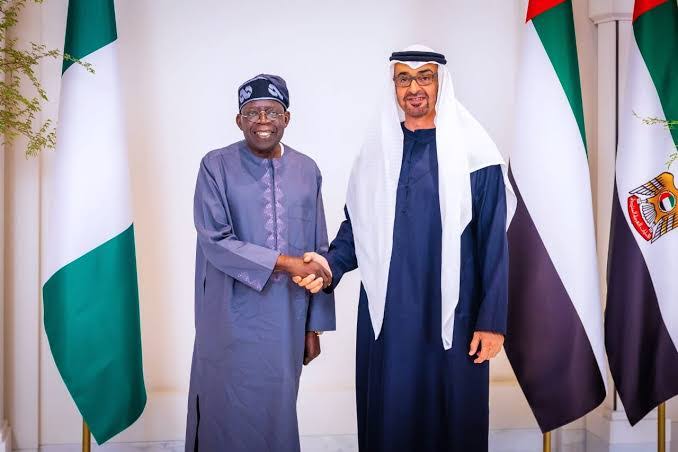
The Federal Government (FG) has accessed the first $1.5 billion tranche of its $5 billion financing arrangement with the United Arab Emirates’ largest lender, providing fresh external funding to support budget implementation, refinance expensive debt obligations and ease fiscal pressures.
The drawdown, executed through a Total Return Swap (TRS) arrangement with First Abu Dhabi Bank (FAB), marks one of Nigeria’s largest alternative financing transactions in recent years as the government increasingly explores non-traditional sources of funding amid elevated global borrowing costs.
According to a Bloomberg report, about $1.5 billion was disbursed over the past two weeks under the facility, which was approved earlier this year by the National Assembly.
The transaction forms part of a broader $5 billion financing programme designed to help the government refinance existing liabilities, fund infrastructure projects and bridge budget financing gaps without immediately returning to the Eurobond market.
Under the arrangement, Nigeria is required to provide naira-denominated government securities valued at 133.3 per cent of the loan amount as collateral, highlighting the derivative nature of the transaction.
The financing carries an initial pricing of 395 basis points above the Secured Overnight Financing Rate (SOFR), rising to SOFR plus 400 basis points thereafter. Lawmakers had earlier described the pricing as competitive when approving the deal in April.
The latest drawdown further strengthens Nigeria’s growing financial relationship with First Abu Dhabi Bank, which previously provided approximately $1.2 billion to support the construction of a section of the Lagos-Calabar Coastal Highway.
Government officials have argued that the facility offers access to sizeable external funding at a period when international capital markets remain volatile, and borrowing costs remain elevated for emerging economies.
However, international financial institutions have expressed concerns over the risks associated with derivative-based financing arrangements.
The International Monetary Fund warned that aspects of the transaction could create constraints for monetary and exchange rate policies.
According to the IMF, such financing structures often involve complex arrangements that may reduce transparency and introduce policy risks.
Fitch Ratings also cautioned that the structure could expose Nigeria to additional foreign exchange risks because dollar-denominated margin calls may arise if domestic yields increase or the naira weakens significantly.
Moody’s Ratings similarly noted that swap arrangements introduce credit risks that are typically absent in conventional commercial borrowing.
The concerns stem partly from the experience of global financial markets, where Total Return Swaps attracted significant attention following the collapse of Archegos Capital Management in 2021.
Despite the risks, analysts say the facility provides the Federal Government with an alternative funding channel at a time when access to international debt markets remains expensive.
The financing also reflects a broader trend among African countries. Angola and Senegal have previously used similar swap arrangements to raise external capital after facing difficulties accessing traditional international markets.
The latest transaction comes as Nigeria continues to manage rising debt service costs and widening fiscal pressures.
By accessing the facility, the government hopes to reduce reliance on more expensive domestic borrowing while supporting infrastructure development and budget implementation.
Although officials from the Ministry of Finance and the Debt Management Office did not comment on the latest disbursement, the first drawdown underscores the government’s increasing use of innovative financing instruments to meet its fiscal obligations.
For investors, the transaction highlights Nigeria’s efforts to diversify funding sources and maintain external liquidity, even as concerns persist over debt sustainability, exchange rate risks and the long-term implications of derivative-based borrowing.
About The Author