Food prices keep inflation elevated despite June’s easing
Nigeria’s headline inflation rate eased marginally to 15.91 per cent in June 2026 from 15.93 per cent recorded in May, offering fresh evidence that price pressures are gradually moderating even as persistently high food costs continue to weigh on household purchasing power and complicate the country’s inflation outlook.
Latest data released by the National Bureau of Statistics (NBS) showed that the Consumer Price Index (CPI) slowed slightly during the month, reflecting improved exchange rate stability, easing imported inflation and tighter monetary conditions.
The June headline inflation rate was significantly lower than the 25.29 per cent recorded in June 2025, underscoring the impact of ongoing macroeconomic reforms and a more stable foreign exchange market on overall price growth.
On a month-on-month basis, headline inflation moderated to 1.66 per cent in June from 1.75 per cent in May, indicating that prices continued to rise but at a slower pace than in the preceding month.
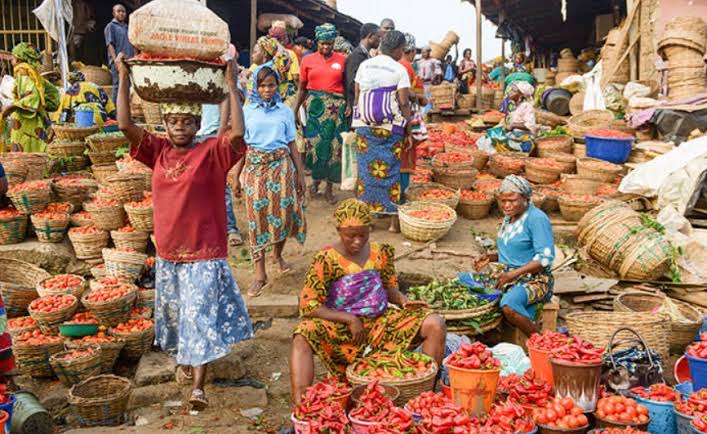
However, the moderation in headline inflation masked renewed pressure in food prices, with food inflation rising to 17.52 per cent year-on-year, while the monthly food inflation rate accelerated to 3.75 per cent from 2.98 per cent in May.
The figures suggest that although broader inflationary pressures are easing, food supply constraints, logistics costs and seasonal factors continue to keep food prices elevated, posing a major challenge to consumers.
The report showed that urban inflation stood at 16.08 per cent year-on-year, while the monthly urban inflation rate increased to 2.13 per cent from 1.99 per cent in May.
In contrast, rural inflation slowed further, with the year-on-year rate settling at 15.48 per cent, while the monthly rural inflation rate declined sharply to 0.52 per cent from 1.17 per cent.
Core inflation, which excludes volatile agricultural produce and energy prices, also continued its downward trajectory.
According to the NBS, core inflation eased to 15.92 per cent year-on-year from 25.41 per cent recorded in June 2025, while the monthly core inflation rate fell to 1.66 per cent from 1.94 per cent in May.
Analysts said the latest figures reinforce evidence that the Central Bank of Nigeria’s tight monetary policy, exchange rate reforms and improving external sector conditions are gradually filtering through the economy.
Nevertheless, they cautioned that sustained increases in food prices remain a major downside risk to inflation management.
State-level data showed significant disparities in food inflation across the country.
On a year-on-year basis, Kogi recorded the highest food inflation at 53.02 per cent, followed by Niger at 43.83 per cent and Benue at 40.83 per cent.
States with the slowest annual food inflation included Katsina at 19.15 per cent, Rivers at 23.81 per cent and Imo at 24.60 per cent.
Every month, Katsina recorded the highest food inflation at 16.82 per cent, followed by Kebbi at 9.79 per cent and Niger at 8.96 per cent, while Borno, Benue and Bayelsa recorded food price declines.
The latest inflation figures are expected to strengthen expectations that the Monetary Policy Committee of the Central Bank of Nigeria may retain its cautious policy stance at its next meeting, particularly as headline and core inflation continue to trend lower.
However, economists believe the persistence of elevated food inflation will remain a key consideration for policymakers, given its direct impact on household incomes, poverty levels and consumer spending.
They noted that sustaining the disinflation trend in the second half of the year will depend on continued exchange rate stability, improved domestic food production, lower logistics costs, stronger agricultural output and ongoing structural reforms aimed at easing supply-side constraints.
About The Author