Top 1% control 44% of Nigeria’s wealth-Salami
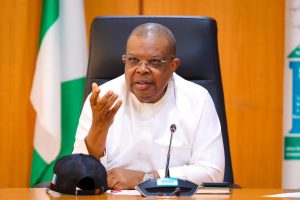
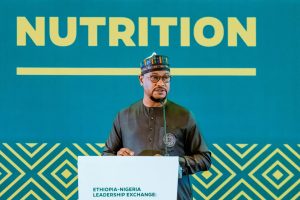
Economist and Chief Executive Officer of KAINOS Edge Consulting Ltd., Dr Doyin Salami, has raised fresh concerns over Nigeria’s widening wealth inequality, revealing that the country’s richest one per cent now control 44 per cent of total wealth, up from about 25 per cent two decades.
Speaking at Anchoria’s The Quorum Investor Forum, Salami said the growing concentration of wealth highlights the urgent need for Nigeria to pursue economic growth that is rapid, sustainable and more inclusive.
He argued that achieving inclusive growth would require policies that attract private capital, accelerate industrialisation and create jobs, rather than relying primarily on government spending.
“I was astonished to discover that the top one per cent, almost 20 years ago, controlled about 25 per cent of total wealth. Today it’s 44 per cent,” Salami said.
“In other words, the first thing that has happened over the last two decades or thereabout is an upward concentration of wealth.”
Salami also warned that Nigeria’s fiscal capacity has weakened significantly, limiting the government’s ability to finance the country’s development needs.
According to him, although the Federal Government’s revenue has increased in naira terms over the years, its real value has declined sharply when measured in dollars because of exchange rate depreciation.
He said federal government revenue, which was equivalent to about $72 billion in 2011, had fallen to approximately $16 billion to $17 billion in 2025 after conversion at prevailing exchange rates.
“I hope you understand what I’ve just said. Income decimation,” he remarked.
Salami noted that with rapid population growth and rising infrastructure needs, Nigeria can no longer depend solely on public finances to drive development.
While commending ongoing tax reforms, he cautioned that they would not immediately provide the fiscal space required to finance large-scale infrastructure and economic transformation.
He pointed to Vietnam’s reported plan to mobilise about $1 trillion from international capital markets to fund infrastructure as an example of how developing economies are leveraging private capital for growth.
The former presidential economic adviser also expressed concern over Nigeria’s prolonged de-industrialisation, warning that the shrinking manufacturing sector has weakened the country’s capacity to create jobs and improve living standards.
According to him, the industrial sector accounted for about 60 per cent of Nigeria’s economic output in the early 1980s but has now declined to about 16 to 17 per cent.
“If industry, which can transform agriculture and mining into jobs, output, exports and a higher level of living standards for the people, is not thriving, then we’ve got a big problem on our hands,” he said.
Salami maintained that reversing the decline in manufacturing and attracting private investment into productive sectors would be critical to expanding employment, boosting exports and delivering broad-based economic growth. His remarks come amid mounting concerns over rising poverty levels in Nigeria.
Recent reports by the World Bank showed the country’s poverty rate rose to 63 per cent in 2025 from 56 per cent in 2023, while PwC projected that as many as 141 million Nigerians could be living in poverty this year as weak real income growth and elevated living costs continue to erode household purchasing power.
About The Author