How Nigeria’s streets are reinventing the economy
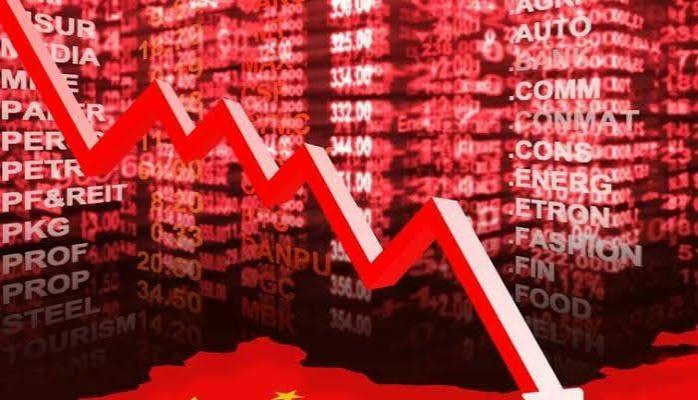
For decades, Nigeria’s economic story has largely been told through the language of Gross Domestic Product (GDP), inflation, exchange rates, interest rates, oil output and stock market performance. These indicators remain important, but they capture only part of the country’s economic reality.
Away from boardrooms and government statistical reports, another economy is quietly evolving. It begins before sunrise in neighbourhood markets, roadside stalls, kiosks, workshops, salons, motor parks and residential streets. It is an economy driven by millions of micro-entrepreneurs whose daily decisions increasingly determine household welfare, employment, consumption and social stability.
Today, that economy is being reshaped by one of the most profound adjustments in Nigeria’s recent history.
Persistent inflation, exchange-rate volatility, rising electricity tariffs, higher transport costs, elevated interest rates and weakening purchasing power have combined to alter the way Nigerians produce, trade and consume. The informal economy, long regarded as a buffer against unemployment, has become the country’s most visible laboratory of economic adaptation.
For millions of entrepreneurs, success is no longer measured by expanding profits or opening additional outlets. Simply remaining in business has become a daily achievement.
Consumers Are Buying Less, But More Frequently
Perhaps the clearest evidence of this transformation is visible in changing consumer behaviour.
Across major commercial centres, from Lagos and Kano to Aba, Onitsha, Ibadan, Kaduna and Port Harcourt, retailers report that customers now purchase smaller quantities of almost everything.
Families that previously bought groceries for several weeks increasingly shop daily. Crates of beverages have given way to single bottles. Full loaves of bread are replaced with smaller snacks. Consumers who once stocked pantries now buy only what immediate cash can support.
Markets remain crowded, yet average spending per customer has declined significantly. This reflects not falling demand, but shrinking purchasing power. Consequently, retailers are restructuring their businesses around affordability rather than volume.
The Rise of Nigeria’s ‘Small-Small’ Economy
The growing preference for smaller purchases has created what traders increasingly describe as the “small-small” economy.
Cooking oil is sold in recycled plastic containers. Rice is measured in cups; Detergents are repackaged into sachets. Tomatoes, pepper and spices are purchased in quantities that match daily incomes rather than monthly budgets.
While this approach enables households to cope with inflation, it raises operating costs for retailers, who must spend additional time and money repackaging goods while earning thinner margins.
Inflation, therefore, is changing not only prices but also the structure of retail trade itself.
Every Household Has Become a Business
Economic pressure is also redefining household economics. Where one salary previously sustained a family, many households now depend on multiple income streams.
Civil servants operate POS businesses after work; Teachers bake cakes on weekends; Graduates combine online trading with job searches; Students increasingly provide digital services to support family income; Parents manage small retail outlets after office hours,
Entrepreneurship is no longer simply an aspiration. For many Nigerians, it has become an economic necessity.
Cash Flow Has Become the New Lifeline
Unlike large corporations with access to credit lines and institutional financing, most neighbourhood businesses survive almost entirely on daily cash flow.
A poor trading day often means suppliers remain unpaid. Several slow weeks can disrupt school fees, rent payments and household consumption.
Unexpected expenses, from generator repairs to transport fare increases, can erase weeks of earnings. Without financial buffers, many businesses now operate permanently on the edge of survival.
Also, transportation has become one of the strongest drivers of retail prices. Higher logistics costs affect every stage of Nigeria’s supply chain, from moving farm produce to urban markets, distributing imported goods and delivering finished products to neighbourhood shops.
Every increase in transport costs eventually reaches consumers. Wholesalers pay more; Retailers pay more, and households ultimately absorb the additional cost.
The result is a self-reinforcing inflationary cycle that continues to reshape consumer spending.
Electricity Is Redefining Small Business Economics
Reliable electricity remains one of the greatest constraints facing small enterprises. For instance, Barbers, welders, cold-room operators, cybercafés, tailors, printers, restaurants and food vendors increasingly depend on generators or alternative energy sources.
Power is no longer an occasional operating expense. It has become one of the highest fixed costs of doing business. Many businesses have reduced operating hours.
Others have abandoned energy-intensive services altogether, while most have been forced to transfer part of these costs to consumers.
Ironically, difficult economic conditions continue to stimulate entrepreneurial activity. Residential buildings increasingly accommodate salons, grocery stores, fashion studios and restaurants.
Home kitchens have evolved into commercial bakeries. Living rooms double as online warehouses. Balconies serve as mini distribution centres. What appears informal increasingly represents a sophisticated response to changing economic realities.
Digital Payments Are Transforming Commerce
Technology has also reshaped neighbourhood business. Point of Sale (PoS) terminals, mobile banking, transfers and QR-code payments have significantly reduced dependence on physical cash.
However, failed transactions, network disruptions, delayed payment confirmations and rising transaction charges remain persistent challenges.
For businesses whose daily profits are often measured in hundreds of naira, every failed transfer or service charge directly affects sustainability.
Beyond prices, inflation is altering business psychology. Retailers avoid holding large inventories because replacement costs remain uncertain.
Consumers delay purchases until necessary. Suppliers shorten payment periods.
Prices change more frequently than ever before. Confidence, the invisible engine that drives investment and consumption, has weakened. Many business decisions are now driven by uncertainty rather than expansion.
Beyond the Macroeconomic Numbers
Nigeria’s macroeconomic indicators remain important. But they do not always capture the realities unfolding across neighbourhood markets. GDP may improve while household purchasing power weakens.
Foreign investment may rise while small retailers struggle to replenish inventory. Economic reforms may strengthen long-term fundamentals even as families bear difficult short-term adjustments.
Understanding Nigeria’s economy therefore requires looking beyond statistical aggregates to the everyday experiences of ordinary citizens.
Meanwhile, Nigeria’s informal sector employs millions, supports household incomes, drives domestic trade and serves as the country’s largest employment buffer.
Consequently, policies affecting exchange rates, transport, electricity, taxation, inflation and access to finance directly influence the wellbeing of this vast segment of the economy.
Strengthening micro, small and medium-sized enterprises through stable macroeconomic policies, affordable financing, better infrastructure, simpler regulation and improved logistics would enhance productivity, expand employment and strengthen economic resilience.
Resilience Has Its Limits
The story unfolding across Nigeria’s streets is not solely one of hardship. It is equally a story of innovation, adaptability and determination. To this end, entrepreneurs have continued to create opportunities with limited resources.
For instance, families continue to diversify incomes; Communities continue to sustain local commerce despite shrinking purchasing power. Yet resilience should never become a substitute for sound economic policy.
Ordinary Nigerians have repeatedly demonstrated remarkable ingenuity in preventing economic adversity from becoming social collapse.
But resilience has limits. If Nigeria is to achieve broad-based and sustainable economic growth, the experiences of market women, roadside traders, artisans, transport operators, neighbourhood retailers and small business owners must move from the margins of policy discussions to the centre of national economic planning.
Because, increasingly, Nigeria’s economic future is not being written only in government budgets or corporate boardrooms. It is being written every day on its streets.
About The Author