NGX seeks local ownership of $4bn Fintech wealth
NGX
The Nigerian Exchange Limited (NGX) has called for policies that would require major companies operating in Nigeria, particularly high-growth fintech firms, to list locally, as concerns grow that billions of dollars in wealth created from the Nigerian market could increasingly accrue to investors on foreign exchanges.
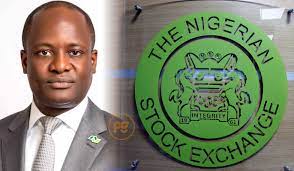
The Chief Executive Officer of NGX, Temi Popoola, made the call when he led the management of the exchange to a meeting with President Bola Ahmed Tinubu, citing plans by major Nigerian fintech companies to seek overseas listings.
Popoola specifically mentioned OPay and PalmPay, arguing that companies generating substantial revenues and profits from Nigeria should also give Nigerian investors an opportunity to participate directly in their growth and wealth creation.
The call comes as OPay, backed by SoftBank Group Corp., is reportedly considering a United States initial public offering that could value the fintech at up to $4 billion, while PalmPay is exploring a potential listing in Hong Kong. Flutterwave has also previously been linked to a potential Nasdaq listing.
Popoola said the Federal Government should explore policies that would encourage such companies to undertake dual listings, allowing them to raise capital internationally while also creating opportunities for Nigerians to own shares in businesses whose growth is being driven substantially by the domestic economy.
“It’s a free market, but we should also allow locals to participate in the wealth that these companies are creating. Some of these fintechs, like OPay and PalmPay, are considering listings abroad,” he said.
“While we encourage free and open markets, let’s make sure our locals can also benefit. As they list abroad, they should also list in our country.”
The proposal comes against the backdrop of a dramatic expansion in Nigeria’s domestic capital market, with NGX reporting that the value of listed equities has risen from about N30 trillion when President Tinubu assumed office in May 2023 to about N160 trillion currently.
Popoola said the value of companies listed on the exchange could rise further to N230 trillion by the end of 2026, driven by new listings and continued growth in the market.
The figures underline the scale of the opportunity NGX is seeking to capture as Nigeria’s financial technology industry expands. Rather than allowing some of the country’s fastest-growing companies to create their public-market value almost entirely on foreign exchanges, the exchange wants Nigerian investors to have a stake in that wealth creation.
Popoola’s position also reflects a broader effort to deepen Nigeria’s capital market and make it a more effective channel for mobilising domestic savings into productive investments.
The NGX chief argued that Nigeria could support international fundraising without shutting companies out of global capital markets, suggesting that dual listings could provide a compromise between access to foreign investors and domestic ownership.
The demand is particularly significant for fintech companies, which have become major players in Nigeria’s financial system, providing payment, banking, remittance and other digital financial services to millions of consumers.
OPay is among the companies attracting international investor attention. The fintech, which has built a substantial business in Nigeria, is reportedly considering an IPO that could place its valuation at up to $4 billion. PalmPay, meanwhile, is reportedly considering Hong Kong as a potential listing venue as it seeks to raise capital for expansion across emerging markets.
Flutterwave has also been repeatedly linked with a potential Nasdaq listing, although the company has not officially confirmed an IPO plan in recent times.
Nigeria has already seen major companies with significant domestic operations access foreign capital markets. Jumia, the Pan-African e-commerce company, is listed on the New York Stock Exchange, while IHS, a major operator of telecommunications infrastructure, was delisted from the Nigerian market before launching its IPO on the New York Stock Exchange.
For NGX, the challenge is therefore not simply attracting more companies to the exchange but ensuring that Nigerian investors are able to participate in the ownership and wealth creation associated with businesses benefiting from the country’s large consumer market.
The push also aligns with the Federal Government’s ambition to build a $1 trillion economy by 2030, with deeper capital-market participation expected to provide an important source of financing for private-sector expansion.
President Tinubu has previously backed efforts to deepen the Nigerian capital market, including plans to reform and eventually list the Nigerian National Petroleum Company Limited, which would potentially give domestic and international investors access to shares in one of the country’s most strategic assets.
The President recently commended NGX and his economic management team for the rebound in the stock market, noting that the market had expanded significantly since the beginning of his administration.
The NGX has positioned the growth of the domestic market as a key component of Nigeria’s broader economic transformation, with Popoola previously projecting that market capitalisation could reach N230 trillion by the end of 2026.
About The Author