NGX bets N70trn more on listings, market rally
NGX
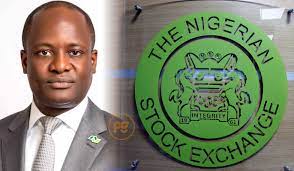
The Nigerian Exchange Group (NGX) is betting on another N70 trillion expansion in the value of companies listed on the Nigerian Exchange before the end of 2026, as major corporate listings, sustained investor appetite and economic reforms reshape Nigeria’s capital market.
The target would lift the market value of listed companies to N230 trillion from about N160 trillion currently, representing a further 43.8 per cent increase in less than five months.
More significantly, it would mean the market has added about N200 trillion in value since President Bola Ahmed Tinubu assumed office in May 2023, when the total value of listed companies stood at just under N30 trillion.
The projection, made by NGX Group Group Managing Director and Chief Executive Officer, Temi Popoola, during a meeting with President Tinubu at the State House in Abuja, highlights the scale of the capital market expansion that the exchange expects to sustain through the second half of the year.
N230trn target rests on major listings
The most immediate catalyst for the projected N70 trillion increase is the expected arrival of major new listings on the exchange.
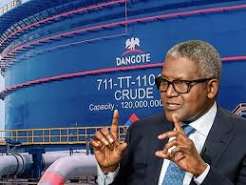
Among the most significant is the proposed listing of Dangote Petroleum Refinery and Petrochemicals, which is targeting a $5 billion initial public offering expected to be completed by October.
The refinery has already completed a $2.5 billion private placement, described as one of the largest corporate fundraising transactions undertaken by an African company.
A successful public offering of that scale would deepen the Nigerian equity market by increasing its size, liquidity and investable universe, while potentially attracting additional domestic and international institutional investors.
The Dangote refinery listing would also represent more than a conventional corporate transaction. Its size and strategic importance could materially alter the composition of the Nigerian market by bringing one of Africa’s largest industrial assets directly into the public capital market.
However, the N230 trillion projection should not be interpreted entirely as an expectation that share prices alone will generate N70 trillion in additional value.
New listings can create a substantial portion of the increase by adding previously unlisted corporate assets to the exchange’s market value, while price appreciation in existing stocks can provide an additional boost.
Market has already added N130trn since 2023
The scale of the transformation becomes clearer when measured against the market’s position in May 2023.
Listed companies were then valued at about N30 trillion. That figure has since risen to approximately N160 trillion, representing an increase of about N130 trillion, or more than five times the starting value.
Popoola attributed the expansion to stronger investor confidence and the Federal Government’s economic reforms.
“When you took over office in May 2023, the total value of the companies that were listed in Nigeria was just shy of N30 trillion. Today, Mr President, that figure is N160 trillion and by the end of this year, with the listings that we expect in our market, we expect that figure to be N230 trillion,” he said.
The figures indicate that the Nigerian capital market has undergone a significant repricing since 2023, although the expansion has also reflected the impact of inflation, currency adjustments, corporate earnings and changes in the value of listed securities.
Investor appetite remains strong
The latest market performance suggests that investor appetite has remained a major pillar of the rally.
The Nigerian stock market added about N237.8 billion in the trading week ended August 7, lifting market capitalisation to N158.51 trillion from N158.28 trillion.
The market’s year-to-date return stood at 57.81 per cent, reflecting strong price appreciation across equities and exchange-traded funds.
That performance has kept Nigerian equities among the stronger-performing markets globally this year and provides part of the foundation for NGX’s bullish year-end projection.
But the relatively modest weekly increase compared with the N70 trillion additional value required also highlights the importance of the expected listings.
At the current market size, an increase from N160 trillion to N230 trillion requires the equivalent of almost half of today’s market value to be added before year-end.
That makes major primary listings and corporate transactions particularly important to the exchange’s target.
NNPC listing could deepen the market
The potential listing of the Nigerian National Petroleum Company Limited could provide another major boost to the market over the longer term.
President Tinubu said his administration’s reforms would eventually include the listing of NNPC shares on the Nigerian Exchange.
A public listing of the national oil company would have implications beyond market capitalisation.
It could broaden public ownership of one of Nigeria’s most strategically important businesses, introduce greater participation by domestic investors and provide a new mechanism for mobilising long-term capital.
For the exchange, the inclusion of strategic national assets such as NNPC would also increase the depth and diversity of the market.
However, unlike the Dangote refinery transaction, the NNPC listing remains a longer-term policy prospect and should not automatically be treated as part of the N70 trillion expected to be delivered before the end of 2026.
Capital market becomes wealth-creation channel
The expansion of the NGX also has implications for the Federal Government’s broader economic ambitions.
A larger capital market gives companies greater access to long-term funding while providing households, pension funds, asset managers and other investors with opportunities to participate in corporate growth.
This is particularly important as the administration pursues its ambition of building a $1 trillion economy.
A deeper equity market can support that objective by mobilising domestic savings into productive businesses rather than relying predominantly on bank lending or government borrowing.
The challenge, however, is ensuring that rising market valuations translate into broader economic participation.
A market worth N230 trillion would represent a major milestone, but its economic significance would be greater if the expansion is accompanied by more companies raising growth capital, stronger retail participation, increased domestic ownership and deeper liquidity.
The test for NGX
The immediate question is whether NGX can convert the current market momentum and pipeline of listings into another N70 trillion increase within the remaining months of 2026.
The exchange has already demonstrated that the market can expand rapidly, with listed-company value rising by about N130 trillion since May 2023.
But the N230 trillion target represents a significantly more ambitious next step.
It will require a combination of successful large-scale listings, continued investor confidence and sustained equity price appreciation.
If the anticipated major listings materialise alongside the current market rally, the Nigerian Exchange could end 2026 at a valuation far above the level at which the Tinubu administration inherited it.
That would mark not only a dramatic expansion of the country’s formal capital market but also a test of whether Nigeria can turn market reforms into a deeper and more productive engine for long-term economic growth.
About The Author