NIRSAL guarantees over N100bn as AFRACA trains lenders on AI, climate finance
Financial institutions across Africa are being equipped with tools to expand climate-resilient agricultural lending, with NIRSAL Plc disclosing that it approved Credit Risk Guarantees for loans exceeding N100 billion in 2025 and has already surpassed that amount in 2026.
The disclosure was made as the African Rural and Agricultural Credit Association (AFRACA), in collaboration with NIRSAL and other partners, convened finance-sector professionals from Nigeria and other African countries in Lagos for a week-long masterclass on inclusive climate finance and artificial intelligence in financial services and agricultural finance.
Participants at the programme include representatives of commercial banks, insurance companies, development finance institutions, microfinance banks and central banks from Nigeria, Uganda, Ghana, Tanzania, the Democratic Republic of Congo and Kenya, among other countries.
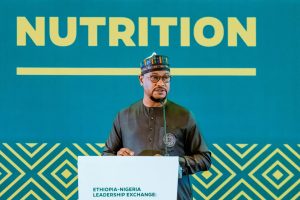
NIRSAL Managing Director and Chief Executive Officer, Sa’ad Hamidu, said the central challenge in agricultural finance was not the absence of investment opportunities but insufficient understanding and management of the risks associated with the sector.
“At NIRSAL, we have always maintained that agriculture, especially in sub-Saharan Africa, is not underfinanced because opportunities do not exist, but because the risks have not been sufficiently understood, measured, appropriately priced, and managed,” Hamidu said.
He said NIRSAL had therefore focused on building financing frameworks and risk-sharing systems that give financial institutions greater confidence to lend across agricultural value chains.
The results, according to him, are reflected in the volume of capital now being mobilised into agriculture.
NIRSAL approved guarantees for loans exceeding N100 billion in 2025 and had already surpassed that figure year-to-date in 2026, covering financing for farmers, processors, aggregators, exporters and other businesses across agricultural value chains.
Non-interest financial institutions accounted for more than 50 per cent of loans guaranteed by NIRSAL in the first half of 2026, highlighting the growing role of alternative financing models in agricultural lending.
Hamidu said the trend showed that different forms of capital could participate more actively in agriculture when appropriate risk-sharing structures reduce uncertainty.
The AFRACA Masterclass is focused on two major areas: inclusive finance for climate resilience and artificial intelligence for financial services and agricultural finance.
AFRACA Secretary-General, Ngo Bakang Anny Caroll, said the programme had returned to Nigeria for the first time since 2017 at a time when climate change and pressure on food systems were increasing the responsibilities of African financial institutions.
She said banks and other financial institutions, as custodians and allocators of capital, had a critical role in helping Africa strengthen its ability to feed itself sustainably and compete globally.
The climate-finance sessions are designed to strengthen participants’ ability to assess climate risks and structure financeable adaptation and mitigation projects.
Participants were introduced to the Africa Adaptation Atlas and climate-rationale tools developed by the Alliance of Bioversity International & CIAT under CGIAR, aimed at helping financiers use climate data and research to identify viable and resilient agricultural investments.
The programme also seeks to improve practical expertise in climate-risk assessment, green-project structuring and access to specialised climate-finance instruments.
The second component focuses on artificial intelligence and how it can be applied to improve risk assessment, transaction analysis and financial decision-making in agriculture.
Hamidu said the objective was to move beyond the enthusiasm surrounding AI and identify practical applications that could strengthen agricultural finance and complement climate finance, blended finance and grant mechanisms.
The programme also deepens the partnership between AFRACA and NIRSAL, combining AFRACA’s continental knowledge-sharing network with NIRSAL’s experience in agricultural risk-sharing and finance facilitation.
The masterclass is expected to continue with technical sessions and practical engagements on AI applications in financial services and agricultural finance.
For Africa’s agricultural sector, the central economic issue remains access to appropriately structured finance. The NIRSAL figures suggest that stronger risk-sharing mechanisms can mobilise significant commercial capital, while climate data and AI could increasingly help lenders assess risks and identify more bankable agricultural projects.
About The Author