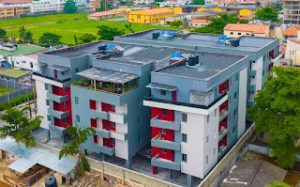
FHA holds property worth nearly N5trn as housing projects expand

The Federal Housing Authority (FHA) holds property worth nearly N5 trillion, according to its Managing Director and Chief Executive Officer, Oyetunde Ojo, as the authority expands housing delivery across Abuja, Lagos, Ibadan, Kano and other parts of the country.
Ojo disclosed the figure during an FHA media chat broadcast by Arise News, linking the value of the authority’s property portfolio to its collection of ground rent from allottees and occupants of its estates.
“We have close to about N5 trillion worth of property because we collect ground rent,” Ojo said.
The disclosure highlights the scale of assets under FHA management as the Federal Government intensifies efforts to expand housing supply and mobilise private capital into the sector.
Ojo said between 10,000 and 15,000 housing units are ready for delivery under the current administration, while the government continues to work with private investors to accelerate housing development.
He cited the MOFI Real Estate Investment Fund (MREIF) as one of the financing mechanisms available to private investors, saying about N200 billion had been released to MOFI and was available for investors to access.
The FHA chief also provided updates on several housing projects across the country.
In Ajoda, Ibadan, about 120 housing units have been completed, with additional units under construction, while another 100 units have been delivered in Lugbe, Abuja.
At Gwari, Abuja, nearly 400 housing units are expected to be commissioned soon. Ojo said the project was developed without funding from the Federation Account.
In Jibi, Abuja, 1,550 housing units procured for the Nigerian Army were constructed in less than a year and are expected to be commissioned soon.
The Karsana development in Abuja comprises 3,112 housing units, with the first phase of about 2,000 units expected to be commissioned soon. Road construction is also underway in the area to improve access.
In Kano, between 500 and 600 housing units are expected to be commissioned by the Ministry of Housing and Urban Development, while another 500 units in Lagos are also nearing completion.
The FHA has also commenced housing projects in several states, including Odukpani in Cross River State.
The Federal Government’s broader housing programme under President Bola Tinubu began in February 2024 with the launch of the 3,112-unit Karsana project under the Renewed Hope Cities and Estates Programme.
Since then, construction has commenced on various Renewed Hope Estates and Cities, alongside other housing developments supported by government and private-sector partnerships.
In Abuja, the government recently commenced construction of 250 housing units for federal civil servants in Dukpa, Gwagwalada, comprising two- and three-bedroom bungalows.
The project is expected to complement 350 units already delivered under the Federal Integrated Staff Housing Programme, bringing the combined number to 600 units.
Meanwhile, the Federal Mortgage Bank of Nigeria is expected to complete 962 housing units in Abuja following the recovery of the Kaba District housing project, which had been financed with a $65 million loan.
Despite the increase in housing construction, Nigeria’s housing challenge extends beyond the number of units available.
Limited access to affordable mortgages, fraudulent property transactions, failed developments and weak consumer protection remain major constraints.
The Federal Government has proposed a National Housing Finance Authority as part of wider reforms to strengthen mortgage financing, expand access to the National Housing Fund for informal-sector workers and increase diaspora participation in housing investment.
A proposed National Housing and Built Environment Regulation Policy would also introduce developer licensing, escrow protection for buyers’ funds, stronger construction standards, improved land administration and a National Housing Data Observatory.
The reforms could improve confidence in the sector by strengthening protection for homebuyers and reducing risks associated with off-plan developments.
For Nigeria’s housing market, the nearly N5 trillion FHA property portfolio, alongside thousands of new units under construction, underscores both the scale of public assets and the size of the housing investment opportunity. The bigger challenge remains converting those assets and new developments into affordable, financeable homes for Nigerians.
About The Author