FMBN launches lease-to-own scheme to widen access to homeownership
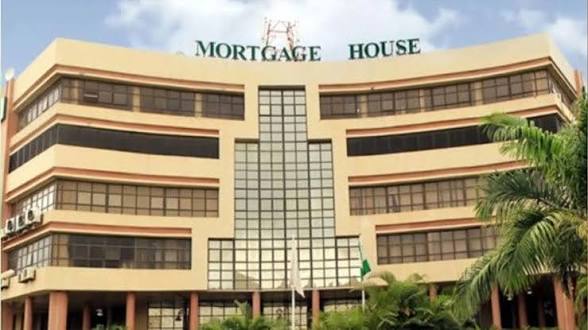
The Federal Mortgage Bank of Nigeria (FMBN) has launched a non-interest lease-to-own housing scheme for National Housing Fund (NHF) contributors, expanding financing options for Nigerians seeking to own homes amid persistent affordability challenges.
The product, known as Ijarah Muntahia Bittamleek, allows eligible contributors to occupy a property under a lease arrangement before ownership is transferred, subject to agreed terms and fulfilment of contractual obligations.
FMBN announced the scheme in Kano on Tuesday, October 27, alongside the commissioning of its Ijarah-01 Estate in Bichi, where the first beneficiaries received keys to their homes.
The initiative offers an alternative to conventional interest-based mortgages and is intended to broaden access to housing finance across income groups and regions. However, the bank has yet to disclose the scheme’s financing costs, repayment periods, property prices, eligibility thresholds or the number of beneficiaries covered by the pilot.
FMBN Managing Director and Chief Executive, Shehu Usman Osidi, said the product was open to eligible NHF contributors nationwide and was not restricted by religion or geographical location.
The Minister of Housing and Urban Development, Muttaqha Rabe Darma, urged the bank to simplify applications, speed up processing and ensure transparent transactions, saying the scheme’s success should be measured by the number of Nigerians who become homeowners.
He also called for expansion beyond Kano to Lagos, Port Harcourt, Enugu, Ibadan, Maiduguri, Sokoto and Abuja.
The pilot estate, developed by AYAB Construction Company, comprises two- and three-bedroom bungalows supported by basic infrastructure and essential facilities.
Kano State Governor Abba Kabir Yusuf, represented by the Commissioner for Housing, Ibrahim Yakubu Adamu, pledged the state government’s support for the bank’s housing delivery efforts.
The launch comes as FMBN scales up financing to address Nigeria’s housing deficit. The bank approved more than N208 billion in housing and mortgage loans in 2025, compared with N71.5 billion in 2024, representing growth of at least 191 per cent.
Disbursements exceeded N120 billion in 2025, supporting housing construction, mortgage financing, home renovation and other housing-related initiatives. The bank also financed 6,911 affordable housing units, achieving about 96 per cent of its annual target of 7,200 units.
NHF collections rose to N152.4 billion in 2025 from N103 billion in 2024, reflecting increased contributions to the scheme.
FMBN has also expanded its housing finance offerings through a Diaspora NHF Mortgage Loan launched in August 2026. The product allows eligible Nigerians abroad to access loans of up to N100 million at an annual interest rate of nine per cent, with repayment periods of up to 10 years.
The new lease-to-own scheme adds another option, but its broader economic impact will depend on affordability, access to suitable housing and the bank’s ability to replicate the pilot beyond Kano.
For prospective homeowners, the key test will be whether the scheme translates into manageable payments and completed homes at a scale that makes ownership attainable for more Nigerian workers and families.
About The Author