The Woman Behind Ita-Faji: How Fajimilola’s Name Became a Lagos Landmark

…From an Ogu woman’s farm to one of Lagos Island’s historic commercial centres
Alhameen Oluwaseyi
Long before Lagos became Nigeria’s commercial capital, before its skyline was defined by skyscrapers and before the Island became synonymous with banking, finance and international commerce, ordinary trading points were already shaping the economic destiny of the emerging coastal city.
One of those places was Ita-Faji.
Today, the name is instantly recognisable to generations of Lagosians. Yet behind the familiar name lies the remarkable story of a woman whose personal enterprise, according to historical research and oral traditions, became permanently embedded in the geography and economic history of Lagos.
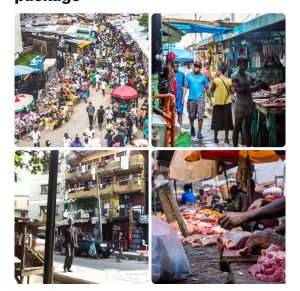
Her name was Fajimilola.
Around the 18th century, an Ogu woman from Maun/Mahun in the present-day Ipokia area of Ogun State migrated to Lagos Island. Historical accounts associate her arrival with Oba Akinsemoyin, who ruled Lagos roughly between 1704 and 1749.
One scholarly account says Fajimilola had provided shelter, protection and assistance to Akinsemoyin when he was in exile in Maun. After his return to Lagos, the king invited her to Lagos as a gesture of appreciation. Another oral tradition recorded by researchers says she was invited because of her knowledge of traditional medicine after successfully treating the king.
The differences in these traditions notwithstanding, the accounts converge on one important point: Fajimilola came to Lagos with the support of the king and established herself as a woman of considerable influence.

The beginning of Oko-Faji
Upon arriving in Lagos, Fajimilola was given a substantial piece of land on which she settled with her family.
According to the historical research, the land contained an Iroko tree that Fajimilola regarded as sacred. She subsequently cultivated part of the property as a farm, which became known as Oko-Faji.
The farm produced cassava, yam, pepper, sugar cane and other agricultural products, while animals were also reared on the land.
And this is where the story of Ita-Faji really begins.
Fajimilola did not simply produce agricultural goods; she also sold them.
Trading took place around her residence, creating a small commercial centre where people came to exchange agricultural products and other necessities.
The location became known as Ita-Fajimilola, literally referring to the frontage or area in front of Fajimilola’s house.
Over generations, the longer name was shortened to Ita-Faji.
What began as the trading frontage of one woman’s residence gradually developed into a major market.
From farm produce to a thriving market
The evolution of Ita-Faji demonstrates something fundamental about Lagos’s economic history: markets were not necessarily born from government master plans or formal commercial institutions.
Sometimes, they began with production, proximity and entrepreneurship.
Fajimilola’s farm supplied the first commodities. Her trading activities attracted buyers. Other traders followed. As the volume of commerce increased, the trading point expanded.
Foodstuffs, fufu, herbs, traditional medicines, goats, chickens, shea butter, soup ingredients and eventually meat became part of the market’s commercial activities.
The meat trade became particularly important.
Historical research records that Fajimilola allocated part of the land to meat sellers as that business expanded. Over time, Ita-Faji became strongly associated with meat trading—a reputation that survived the transformation of Lagos itself. 
Thus, the economic DNA of Ita-Faji was established remarkably early:
agriculture → processing → retail → market formation → distribution.
It was a miniature version of the commercial chain that would later make Lagos one of West Africa’s great trading centres.
Fajimilola: trader, leader and power broker
Fajimilola’s story becomes even more extraordinary when her wider influence is considered.
Historical scholarship describes her variously as a successful businesswoman, trader, diviner, spiritual leader, war chief, political actor and philanthropist.
One study records that by about 1745, the market had expanded significantly and Fajimilola had become influential among traders and market women. She was also associated with the political and spiritual establishment of the period. 
Another academic work on Lagos’s commercial transition describes Fajimilola as one of the major slave traders/exporters of her period and links the wealth she accumulated to the establishment of Oja Ita-Faji and Oko-Faji.
That aspect of her story cannot be ignored simply because modern sensibilities rightly judge the slave trade harshly. It was part of the economic environment of 18th-century coastal West Africa and demonstrates the complexity of the commercial networks from which early Lagos developed. 
Fajimilola’s story, therefore, is not a simple tale of a market woman selling vegetables.
It is the story of commerce, land, agriculture, politics, spirituality and power intersecting in one individual.
Ita-Faji becomes a melting pot
Perhaps the most important legacy of Ita-Faji was not simply the volume of goods traded there.
It was the people.
The market attracted traders from different parts of Yorubaland and beyond. Researchers describe it as a meeting point for people from Lagos, the Yoruba hinterland, Oguland and other parts of the West African coast.
Traders from places including present-day Benin Republic, Ghana and Togo were also reported to have patronised the market.
In this sense, Ita-Faji became much more than a marketplace.
It became a social and economic bridge.
People came to buy and sell. They exchanged information, languages, traditions and ideas. Commercial relationships produced social relationships, and economic interaction contributed to wider inter-group relations.
A scholarly study consequently describes Ita-Faji as a melting pot in which ethnic background and social status became less important than the common purpose of trade and commerce. 
That is perhaps one of the earliest examples of what Lagos would eventually become—a city where migration and commerce continually created new identities.
The economics of Ita-Faji
The story also provides an important window into the economic development of early Lagos.
Markets were not simply places where goods changed hands.
They were engines of revenue.
Historical research indicates that Ita-Faji generated income for traders while the authorities collected regular rates from market participants. Foreign and long-distance traders also patronised the market, while revenue from commerce contributed to local infrastructure and security. 
The market therefore performed several economic functions simultaneously:
• Food distribution: moving agricultural produce from farming communities to urban consumers.
• Employment: creating livelihoods for traders, transporters, artisans and other service providers.
• Revenue generation: providing market-related income to the authorities.
• Inter-regional trade: connecting Lagos with the hinterland and neighbouring West African territories.
• Price and supply integration: bringing goods from different production centres into a common marketplace.
• Social integration: bringing communities together through commerce.
In other words, Ita-Faji was part of the economic infrastructure of early Lagos.
Colonial Lagos and the transformation of the market
The arrival and consolidation of colonial rule brought another phase of transformation.
The market’s traditional character gradually encountered modern roads, shops, regulations and public-health requirements.
Historical records cited by researchers indicate that the sacred Iroko tree associated with Fajimilola was eventually removed to facilitate road construction.
Modern shops emerged, rents were introduced and new commodities joined the traditional products.
The meat trade also became subject to greater regulation. A modern abattoir was established for meat sellers under the supervision of the Lagos Town Council’s Public Health Department. By the 20th century, authorities were increasingly concerned about sanitation and the health implications of meat processing and street trading. 
This was another important chapter in the evolution of Lagos:
the traditional market was being absorbed into an increasingly regulated urban economy.
A woman’s name survives the centuries
There is another remarkable dimension to the story.
Fajimilola’s name did not disappear with her death.
It became a place.
Her farm was remembered as Oko-Faji.
Her trading frontage became Ita-Fajimilola.
Ita-Fajimilola became Ita-Faji.
And Ita-Faji became one of the enduring place names of Lagos Island.
A historical work on Lagos’s early development specifically notes that place names such as Faji Market and Ita-Faji preserve the memory of the important roles women played in the city’s history. 
That is a powerful legacy.
Many of the people whose names appear on modern maps are kings, colonial administrators, politicians or wealthy male merchants.
Fajimilola represents something different.
She represents the entrepreneur whose economic footprint became geography.
The bigger lesson for modern Lagos
The story of Ita-Faji offers a lesson that remains relevant to Lagos and Nigeria today.
Economic development does not always begin with a large corporation.
It can begin with a farmer.
A trader.
A market stall.
A woman who brings goods from her farm to the people around her.
As demand grows, other traders arrive. Distribution networks develop. Employment is created. Revenue is generated. Infrastructure follows. A neighbourhood forms around commerce.
That process—small enterprise becoming an economic ecosystem—is one of the oldest foundations of Lagos.
Fajimilola’s story therefore deserves to be remembered not merely because a market bears a shortened version of her name, but because she provides an early example of female entrepreneurship, migration, market formation and economic integration in Lagos.
Her story also challenges simplistic narratives about who built Lagos.
The city’s development was not the product of one ethnic group or one generation.
It was shaped by the interaction of indigenous communities, migrants, traders, farmers, political authorities and entrepreneurs from different parts of West Africa.
Fajimilola was one of those people.
She arrived from outside Lagos.
She established herself.
She cultivated land.
She traded.
She attracted other traders.
And eventually, the city absorbed her name.
The enduring legacy
More than two centuries later, the streets and commercial activities around Ita-Faji remain a reminder that Lagos has always been an economic city before it became a megacity.
Its history was written not only in palaces and government houses but also in farms, markets and trading posts.
And somewhere in that history stands Fajimilola—a woman whose farm became Oko-Faji, whose trading frontage became Ita-Fajimilola, and whose name was eventually shortened into the familiar Ita-Faji.
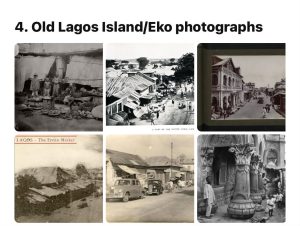
The story of Lagos, in many ways, is the story of people who came, traded, built and left something behind.
Fajimilola came as a migrant.
She became an entrepreneur.
Her marketplace became an institution.
And her name became a landmark.
About The Author